





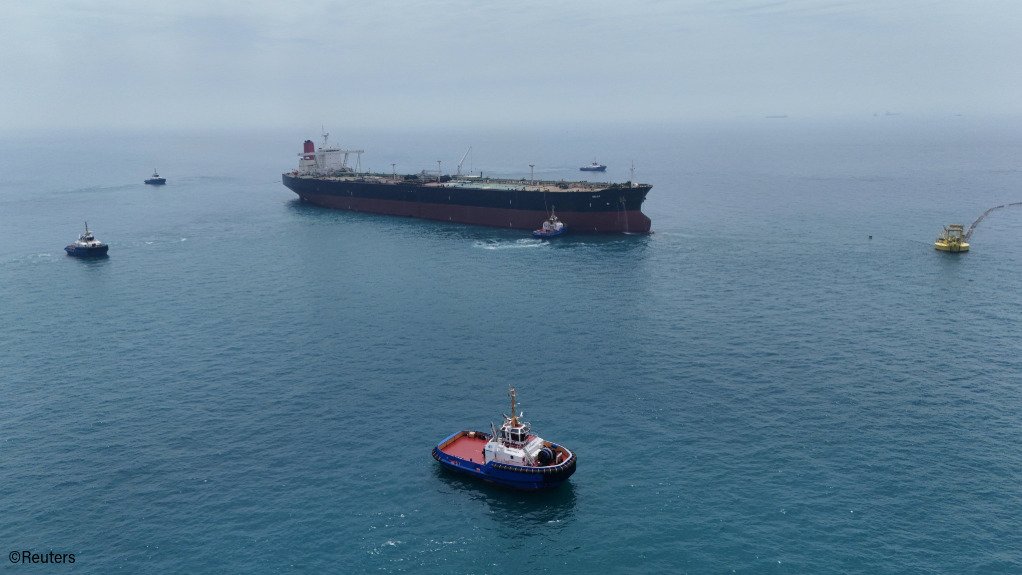

NEW DELHI/SINGAPORE – Middle Eastern crude oil markets could come under further pressure if the Strait of Hormuz reopens on Friday following the US-Iran interim deal, releasing-millions of barrels of oil stranded in the Middle East Gulf into global markets, industry executives said.
The wave of supply comes after Gulf producers ramped up exports via ship-to-ship transfers off the United Arab Emirates and Oman this month, which depressed spot differentials for Middle East crude to discounts on Tuesday.
"The reopening of the Hormuz Strait could unleash some 93-million barrels of stranded non-Iranian barrels from the Persian Gulf, while producers are expected to continue supplying cargoes through less visible channels," Kpler analyst Muyu Xu said in a June 17 note. Some traders estimated that about 50-million barrels are set to be released as some cargoes had already been shipped out.
In addition, the lifting of US restrictions on Iranian crude could also release some 72-million barrels stranded on tankers west of Chabahar, with volumes set to rise further if Washington grants broader sanctions relief, Kpler said.
Iran's fleet has been gearing up to boost exports with three of its tankers this week exiting the strait, which carried about a fifth of the world's oil and liquefied natural gas shipments before the US and Israel attacked Iran on February 28.
US President Donald Trump and Iranian President Masoud Pezeshkian digitally signed the 14-point agreement to end the war on Wednesday, US and Iran officials said. Iran's foreign ministry said the agreement was already in effect.
ASIAN BUYERS COMMITTED TO SUPPLY ARRIVING JUNE TO AUGUST
While supply is set to surge, most Asian refiners have already booked crude cargoes to arrive in June to August and several refineries in China are scheduled to shut for maintenance, refining and trade sources said, reducing demand for immediate supplies.
Consultancy Energy Aspects tracked more than 1.8-million barrels a day of Chinese refining capacity that will be shut for turnarounds in July, including nearly 1.2-million barrels a day at private firms.
China's throughput, already at a near four-year low in May, is expected to slide further to about 12.4-million barrels a day this month, before recovering above 13-million barrels a day in July with State-owned refiners raising runs, it added.
Many Chinese refiners paused spot buying this week as they eyed the reopening of the strait and details of the agreement. Although weaker crude prices improved refinery economics and narrowed losses, fuel demand in China is expected to stay subdued as a result of the country's rapid adoption of electric vehicles.
"A large-scale increase in crude buying appears unlikely unless Beijing relaxes restrictions on product exports and/or proceeds with another round of strategic petroleum reserves replenishment," said Kpler's Xu.
Some Middle Eastern crude suppliers offered cargoes to independent refiners in eastern Shandong province, two sources said, but at prices higher than sanctioned oil from Iran and Russia.
Crude sellers will need to cut prices further to attract demand once the strait opens, given that some of them, including TotalEnergies, still have unsold cargoes, said one Singapore-based trader. The sources declined to be named as they were not authorised to speak to the media.
"Refiners are expecting profitability to be quite poor in the second half of the year," a South Korean industry official said.
"So rather than it being a matter of securing a specific crude, this is becoming a fight over economics," he added.
ASIA OIL DEMAND SHIFTING BACK TO MIDEAST
Still, refiners are preparing for the eventual rise in Middle Eastern supply, which is expected to cool Asia's demand for oil from the Americas.
Taiwanese state refiner CPC said it was ready to import heavier grades with a higher sulphur content, to produce more bitumen and sulphur to meet domestic demand if the strait reopens.
Some Middle Eastern oil producers have asked Indian refiners to consider buying the committed supplies under their term deals, which would reduce their purchase of oil via spot tenders, sources at three refiners said.
Kpler expects a gradual recovery in Indian demand for Gulf oil to potentially support an additional 400 000 barrels a day to 600 000 barrels a day of Middle Eastern imports through August as refiners rebalance their crude slate.
"Increased supply of Middle Eastern crude oil would deepen contango in regional oil benchmarks," an Asian trader said.
Benchmark Dubai's premium to swaps returned to positive territory on Wednesday after slipping into a discount of 46 cents on Tuesday, Reuters' data showed.
In a contango market, prompt prices are lower than those in future months indicating comfortable supplies.
EMAIL THIS ARTICLE SAVE THIS ARTICLE FEEDBACK
To subscribe email subscriptions@creamermedia.co.za or click here
To advertise email advertising@creamermedia.co.za or click here


