





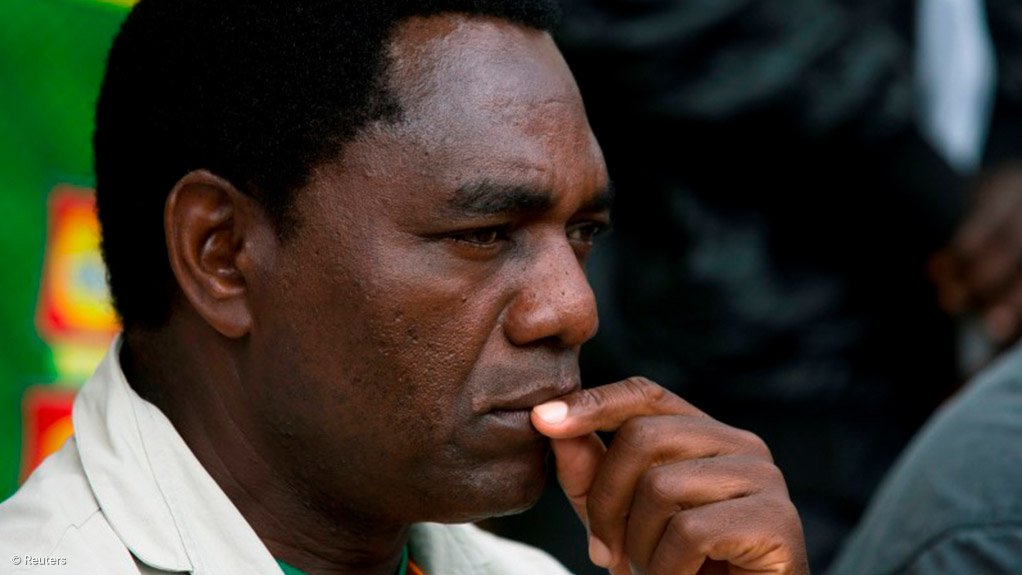
Late electoral reforms and weak checks on power expose democratic fault lines and raise the stakes for Hichilema’s second term.
Zambia’s 13 August election delivered a second five-year term for President Hakainde Hichilema, who secured 60.5% of the vote, against National Reconciliation Party for Unity and Prosperity (NRPUP) candidate Brian Mundubile’s 37.8%. With last-minute changes to electoral law and a fragmented opposition, the result was not unexpected.
The expanded National Assembly now has 226 directly elected members (up from 156) plus 40 proportional representation (PR) seats reserved for women, youth and people with disabilities. Constitutionally, the president can appoint up to 11 members of parliament (MPs), bringing the total to 277 seats.
So far, Hichilema’s United Party for National Development (UPND) has won 138 seats, the NRPUP 60, with independents and smaller parties winning the rest. With the UPND’s presidential seats and expected 24 of the 40 PR seats, the ruling party has 160 (62% of the house).
This overturns expectations that voters would use the parliamentary ballot to curb the UPND’s power. However, the numbers don't reveal how many new MPs are former UPND or NRPUP figures who switched parties. Zambia has a long record of floor-crossing once seats are secured, although this is limited by the constitution. Even so, the opposition retains a substantial bloc, and the presidential results mask local variation in how voters judged the government.
Roughly 57% of registered voters participated, down substantially from 70% in 2021 – likely reflecting living-cost frustrations and unequal election campaign conditions.
Other issues also marred the polls, among them a 14 August raid by Zambian security forces on a Lusaka property, in which former transport minister Mutotwe Kafwaya was shot and killed. Eleven people, including senior opposition figures, were arrested for possessing military-grade weapons for an armed insurrection. Mundubile denied the claims, but he and senior opposition figures now face treason charges.
There is a striking coincidence between this situation and Hichilema’s arrest after the 2016 election for allegedly endangering the president by obstructing his motorcade. Hichilema was held in a maximum-security facility for over 100 days until the Commonwealth intervened. The Commonwealth Secretariat has again expressed concern over the current post-election climate.
Several election observers noted that Zambia held a largely peaceful vote – but on an uneven playing field. The European Union (EU), Southern African Development Community and African Union-Common Market for Eastern and Southern Africa missions all raised concerns about the implementation of last-minute electoral reforms.
The Constitutional Amendment Act No 13 (2025) created the new 226-seat parliamentary map. Allocations were done in April, with PR seats approved in May – three months before polling. Critics say adding most new constituencies in UPND-leaning rural areas benefitted the party.
Also, the PR system discouraged parties from nominating women for constituency seats, seeing seats reserved for women as a substitute for women’s representation rather than being complementary. Female candidacy fell to 12.5% from 21.1% in 2021.
The change in electoral rules so close to the polls created uncertainty for parties, voters and election administrators (UPND was the only party to file a candidate for all available seats). The observer missions said electoral reform should strengthen competition, not leave the rules contested just before voting.
Hichilema’s campaign also benefitted from his position as head of government. EU observers documented the use of state resources at campaign events and found that presidential and vice-presidential visits were exempt from the Electoral Commission of Zambia’s (ECZ) five-day campaign timetable that applied to other candidates. Some unscheduled visits by Hichilema or his running mate resulted in opposition events being blocked or cancelled.
Transparency International Zambia’s independent monitoring matched the ECZ’s tallies within 1.1%, but flagged unsealed ballot boxes (which risk tampering) and delayed announcements in 32 of 221 constituencies checked. The Christian Churches Monitoring Group found turnout implausibly exceeding its estimates in 30 constituencies.
On 14 August, the ECZ suspended counting for around six hours over reports of violence against polling staff and theft of marked ballots. At the same time, Mundubile, citing his party’s parallel count, pre-emptively claimed victory – a statement that ECZ warned candidates against making.
The NRPUP says it will challenge Hichilema’s win in court, which could extend Zambia’s transition period from seven to 15 days, as occurred after the closer 2016 polls. However, the 2026 winning margin is far larger – over a million votes (22.6%) compared to just over 100 000 (2.7%) in 2016. A recount probably wouldn’t close that gap, and a costly court-ordered rerun would be disruptive.
The economic vote was likely decisive in giving Hichilema his second term. Although the president’s macro-economic record on debt restructuring, lower inflation and improved relations with international lenders has not improved household welfare, more immediate and visible interventions gained traction among voters.
These include the Constituency Development Fund, which increased from K1.6-million ($84 160) per constituency in 2021 to K40- million (US$2.1-million) in 2026, higher student allowances at public universities, reduced power cuts and improved fertiliser payments in rural areas.
Mundubile’s Tonse Alliance showed that anti-UPND sentiment could be consolidated into a real presidential challenge, inheriting strongholds of the former ruling Patriotic Front. The alliance’s 60 parliamentary seats give it a base, but a coalition built mainly on opposing the incumbent doesn’t constitute a governing alternative. Creating one requires a formal party structure with an agreed-upon line of succession, not centred on an individual.
A policy platform on jobs, energy and living costs that voters can organise around beyond opposing Hichilema is also vital. And legal challenges to the election result must be based on evidence, not merely grievances, to prevent a court defeat that would cost the opposition what credibility it has left.
For the UPND, the stronger mandate gives the party the space to deliver on energy, jobs and living costs. It also creates a heavier duty to strengthen parliamentary scrutiny rather than rush legislation through with little debate, as occurred with the recent electoral reforms.
Zambia has shown democratic resilience, but the polls exposed real vulnerabilities. Hichilema enters his last term with a stronger mandate and fewer institutional checks on how he uses it. The test is no longer whether he can win elections, but whether he leaves behind a system that enables his successor to fairly compete in the democratic spirit the country is known for.
Written by David Willima, Researcher, Climate Risk and Human Security, ISS Pretoria & Zenge Simakoloyi, Research Officer, Africa Peace and Security Governance, ISS
EMAIL THIS ARTICLE SAVE THIS ARTICLE ARTICLE ENQUIRY FEEDBACK
To subscribe email subscriptions@creamermedia.co.za or click here
To advertise email advertising@creamermedia.co.za or click here


