





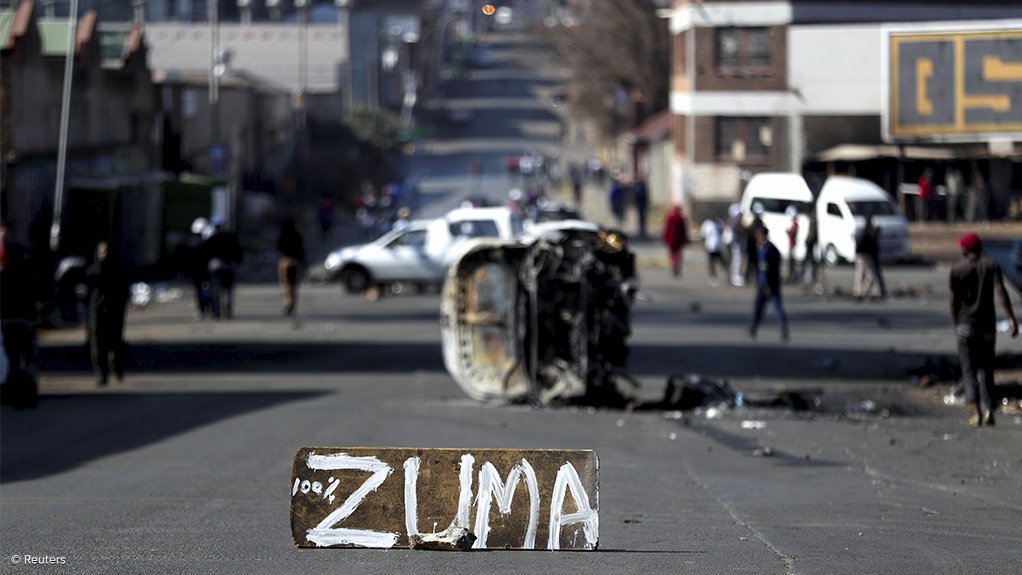
The disinformation shared during the July unrest, sowed anger and contributed to the widespread violence and looting in KwaZulu-Natal and Gauteng, the SA Human Rights Commission heard on Friday.
"We do know that concerning and at times harmful content was being spread, which appears to have contributed to the anger and facilitated the incitement to violence and disorder," Media Monitoring Africa (MMA) director, William Bird, told the commission.
Bird said one of the biggest failures during the unrest was the state's inability to respond to the violence.
"One of the biggest problems that we saw in the unrest was the failure by various bodies and non-government [entities] to communicate what was going on. It was only when media started to get there, we started to get a better sense of what was going on.
"As a result, there was a clear sense that the state had no answer to anything. The police and intelligence services were nowhere to be found," he said.
During his testimony at the commission's hearing into the unrest that caused destruction and led to widespread looting last July, Bird said that their goal was to review what had also occurred and to prevent and act on them.
Bird said they used their online public complaint platform Real411 to review posts shared during the unrest.
Some of the complaints received on the platform during the July unrest included fake tweets shared of prisoners refusing to eat and going on a hunger strike in protest of former president Jacob Zuma's incarceration.
He said MMA also received posts of old taxi strikes being shared online.
"We know that the unrest and the violence and the deaths were all tragically far too real, but there were all of these other things going on to help stoke and promote and encourage and incite that."
There was also a WhatsApp message showing a fake letter of apology by the Venda nation for alleged mistreatment of Zuma by President Cyril Ramaphosa, he said.
"So, again these things have a very clear line and link to the politics that was occurring at the time and tying directly into that and encouraging violence," he said.
Bird said the second group of posts received on Real411 spoke directly to the incitement to violence.
"Burn everything forces. President Zuma was sent to prison by thugs with robes who take bribes. Burn everything. We must find addresses of judges," said one post.
Bird said there was also an expletive-ridden tweet depicting an image of the Constitutional Court with the message: "You better hurry up mother f***** #Concourt we waiting for your f****** judgment on Pres Zuma this time around if you get it wrong, we burn your mother f***** court."
He said the account associated with this tweet had since been suspended.
Bird said there was also a WhatsApp group called Indians will know us which contained images of firearms on display and messages of hate speech and incitement to violence against Indians in the Phoenix, Chatsworth and Isipingo areas.
"Obviously, these things in a time of great anxiety, in a time of actual ongoing violence, are things that are clearly deeply and profoundly problematic."
There was also a group of posts that sowed fear.
Bird highlighted the video shared on TikTok of prisoners being released and also a WhatsApp message falsely claiming Checkers Hyper in Roodepoort had been set alight by looters.
"In addition to the horrifying incidents of actual violence against various communities, we received a number of reports of social media posts which falsely claimed to show evidence of current incidents of racial abuse against certain communities, but which used old footage from previous events."
He said another trend was the false or misleading claims about Zuma's arrest and detention.
He highlighted a tweet by the JG Zuma Foundation falsely claiming that it was "just pure malice to incarcerate President Zuma whilst litigation on his detention without trial case was ongoing".
"Those kind of things that border on the outrage and clearly false, are things that just feed into that sense of anxiety, that sense of anger and helplessness and confusion which is clearly an attempt by various entities to encourage people not to know what is going on and panic."
"Disinformation and online incitement presents significant threats to human rights and democratic principles."
Bird also made a few recommendations to curb the spread of disinformation.
He said the critical area that had to be addressed for any further crisis was urgent, ongoing and rapid up-to-date communication.
"We have seen the critical importance of that with Covid-19 and if we don't learn from that, we're going to just see further loss of life."
Bird also recommended a rights-based approach.
"We think it's essential because any approach that seeks to undermine human rights is going to be short-sighted, counterproductive and should be avoided at all costs."
He said all efforts to address disinformation must fall within the dictates of the Constitution and must be grounded firmly in international human rights law, including respect for freedom of expression and access to information.
He said any responses from social media platforms, government and other stakeholders must be guided by appropriate protections for freedom of expression, inclusivity, and minimisation of online harm.
"Any criminal sanctions for speech risk having a chilling effect on the exercise of the right to freedom of expression [and] must be approached with heightened caution.
"The principles of openness and accountability must further inform efforts to address disinformation and incitement and hold those responsible [and] accountable for their actions."
EMAIL THIS ARTICLE SAVE THIS ARTICLE FEEDBACK
To subscribe email subscriptions@creamermedia.co.za or click here
To advertise email advertising@creamermedia.co.za or click here


