





- Review of the Constitutional Court's jurisdiction0.51 MB
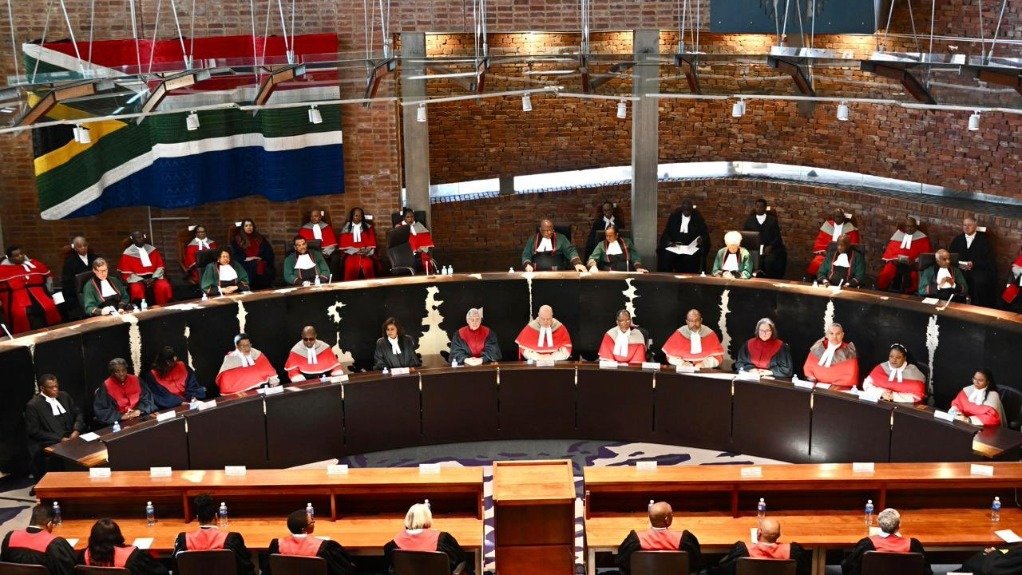
A new Freedom Under Law (FUL) report has proposed urgent structural reforms for the Constitutional Court, to address what it reveals are severe case backlogs and lengthy delays.
On Tuesday, FUL launched its report titled "A review of the Constitutional Court’s jurisdiction and operating practices in light of its increased workload and consequential delays".
The document examines how a dramatic rise in appeals, growing backlogs, and procedural inefficiencies have placed the country’s apex court under increasing pressure.
The research report recommended implementing stricter procedural rules and smaller judicial panels to efficiently manage mounting caseloads and ease the burden on South Africa's highest judicial body.
The Constitutional Court’s jurisdiction was significantly expanded more than a decade ago, however its institutional design and operating procedures remain largely unchanged.
Every application for leave to appeal must still be considered by all 11 justices, with a minimum quorum of eight judges required even for preliminary decisions.
This has led to mounting delays, with at least half of all petitions pending for more than six months and an average of 210 days required to hand down a judgment following an initial hearing, according to the FUL report.
The report followed mounting public anxiety over delays at the Constitutional Court, including concerns in 2024 surrounding a short-lived proposal to use retired Constitutional Court justices to assist the bench in clearing applications.
FUL executive officer Judith February says how the court functions is a critical concern for South Africa’s constitutional democracy.
“As the country’s highest court, it determines legal principles that all other courts must follow and has the power to strike down legislation and government action. If the Court is unable to fulfil its role effectively as the ultimate guardian of the rule of law, the consequences extend far beyond the legal community and affect society as a whole,” she says.
February notes that the court’s growing workload, outdated processes and structural constraints are compromising its ability to decide matters efficiently and timeously.
“If judgments are increasingly delayed and the court is seen to be struggling to manage its workload, public confidence in the judiciary itself may begin to erode,” she warns.
To modernise and ensure the court remains accessible and efficient, FUL recommended implementing streamlined procedural rules, structural reforms, and professional screening processes modelled after international apex courts.
FUL research consultant Chris Oxtoby highlights that the court’s open-ended “interests of justice” test unintentionally encourages speculative appeals.
Because litigants and lawyers cannot reliably predict when leave to appeal will be granted, the system is frequently clogged with frivolous cases.
To address these inefficiencies, FUL’s research compares South Africa’s Constitutional Court with apex courts in the UK, Germany, Canada, the US, Singapore, Australia, and India.
The study finds that most of these comparable courts effectively manage massive caseloads through smaller panels of judges, professional screening systems and stricter procedural rules.
Based on this comparative study, the report outlines that practical procedural measures could be introduced relatively easily, such as imposing page limits on applications to the Court, developing a more rules-based approach to the interests of justice test, and delivering reasoned judgments explaining why applications for leave to appeal are refused.
These include reducing the size of the panel of judges who deal with new applications.
FUL pointed out that these would involve more fundamental structural reforms, such as establishing separate chambers to deal with constitutional and general matters, merging the Constitutional Court and the Supreme Court of Appeal into a single apex court, or restricting the Court’s jurisdiction through a constitutional amendment.
By modernising its screening processes and structuring panels similarly to international apex courts, South Africa can ensure that its highest court remains accessible and efficient without sacrificing the quality of its jurisprudence, Oxtoby explains.
“The court’s authority depends not only on the quality of its judgments, but also on its ability to decide matters promptly, predictably and transparently. South Africa cannot afford an apex court that is overwhelmed and increasingly unable to perform its constitutional function,” he added.
EMAIL THIS ARTICLE SAVE THIS ARTICLE ARTICLE ENQUIRY FEEDBACK
To subscribe email subscriptions@creamermedia.co.za or click here
To advertise email advertising@creamermedia.co.za or click here


