





The National Treasury will direct R20-billion of the projected R70.8-billion revenue overrun for the coming two years towards the Budget Facility for Infrastructure (BFI) pipeline.
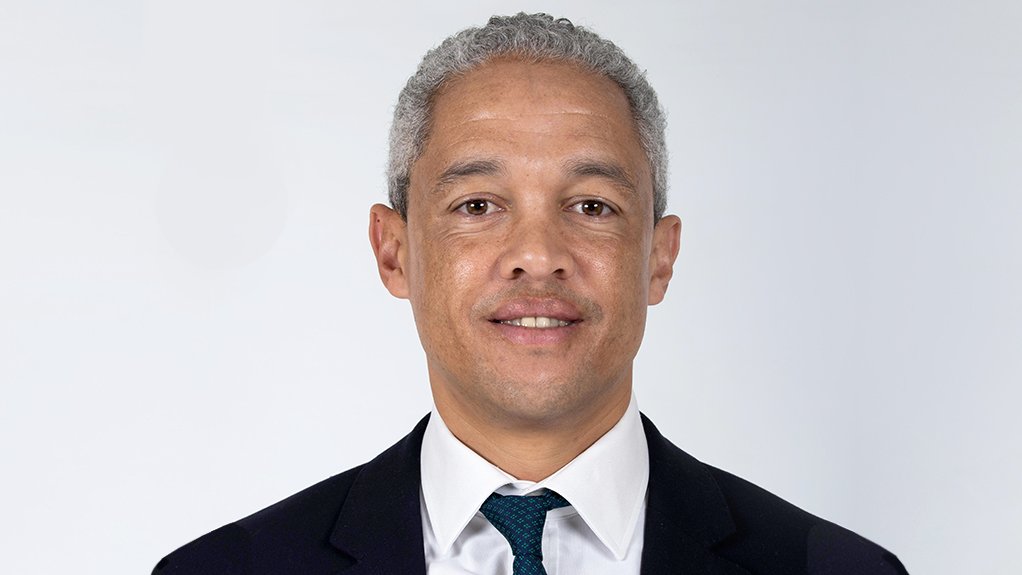
Director-general Dr Duncan Pieterse said this ringfenced amount for the BFI took account of the fact that government was currently meeting its fiscal target and that, besides building a R10-billion contingency reserve buffer, it was seen as sensible to direct the bulk of the revenue overrun towards public infrastructure.
Pieterse was speaking ahead of the Medium-Term Budget Policy Statement (MTBPS) delivery in Parliament, on October 21.
In his MTBPS address, Finance Minister Enoch Godongwana highlighted that the BFI represented another key reform which is delivering credible results.
“The BFI ensures that scarce public resources are directed to well-prepared, implementation-ready projects. Fiscal support approved through the BFI now stands at more than R100-billion,” he said.
Further, Godongwana noted that the infrastructure bond had raised over R14-billion since its inaugural issuance in December 2025, with these funds earmarked for infrastructure projects in the BFI pipeline.
He also noted that the BFI was expected to broaden the investor base, deepen domestic capital markets and mobilise institutional savings for infrastructure investments.
Through the BFI’s quarterly submission windows, a pipeline of assessed infrastructure projects was being developed and matched to appropriate funding, financing and delivery mechanisms.
In the first two submission windows of 2026/27, 17 projects were accepted into the BFI pipeline, with two approved for funding, three returning to sponsors for further development and the remaining 12 projects under consideration.
Government has approved funding of R2.5-billion for the expansion of the Gautrain Rapid Rail Link system for the first quarter of 2026/27 and R608-million for the sanitation phase of the Sol Plaatje municipality’s Integrated Bulk Water Supply project.
Some of the key projects under consideration for the second quarter of 2026/27 include R1-billion towards Phase 1 of the Tshwane Bulk Electricity programme, R18-billion for Transnet’s Cape Corridor Rail Infrastructure Reinstatement programme and R13.6-billion for the Central Corridor Infrastructure project.
CRITICAL INFRASTRUCTURE CONSIDERATIONS
Government has also established a Credit Guarantee Vehicle (CGV) to derisk private investments into critical infrastructure, beginning with the expansion of the transmission grid.
Godongwana also highlighted that, since its incorporation in August, development partner the World Bank had provided conditional commitments of $553-million towards the CGV's capitalisation.
The initial capitalisation is expected to support between $1.5-billion and $2-billion in guarantees.
The CGV will become fully operational once the licensing, capitalisation and institutional establishment processes are complete. The CGV is now advancing towards being operational by 2027.
INFRASTRUCTURE CONDITIONAL GRANT REVIEW
Godongwana also highlighted that National Treasury had completed a review of infrastructure grants to provinces and municipalities, noting that between 2017/18 and 2023/24, national government transferred R887-billion through infrastructure conditional grants.
However, Treasury also found that while most funds were spent, many infrastructure projects were often delayed, incomplete or failed to deliver the intended benefits.
“Conditional grants are exactly that, conditional. Funds must be used for their intended purpose and approved projects.
“Transferred funds must result in completed projects, functional infrastructure and reliable services for communities,” Godongwana said.
EMAIL THIS ARTICLE SAVE THIS ARTICLE ARTICLE ENQUIRY FEEDBACK
To subscribe email subscriptions@creamermedia.co.za or click here
To advertise email advertising@creamermedia.co.za or click here


