





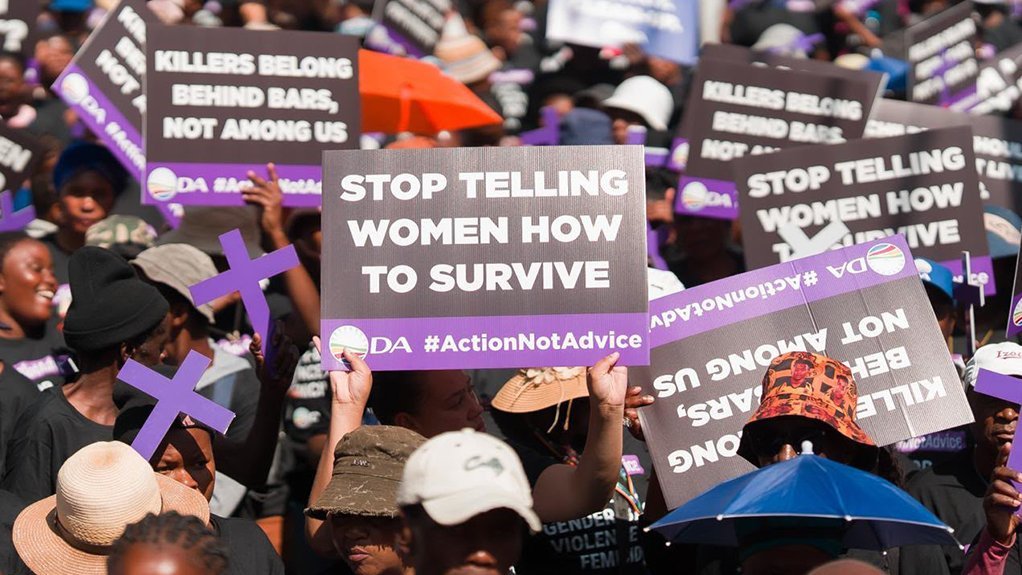

Framing gender-based violence and femicide (GBVF) in South Africa strictly as a "crisis" traps society in recursive cycles of protest rather than fostering sustained institutional change.
This was the core argument presented by leading researchers and advocates during a recent Academy of Science of South Africa (ASSAf) webinar.
The panel emphasised that addressing South Africa's high rates of violence requires moving past temporary moral outrage towards fixing structural deterioration, demanding institutional accountability, and implementing a whole-of-society intervention strategy.
University of the Witwatersrand social science researcher Lisa Vetten argued that while the term "crisis" is useful for mobilising public outrage, it creates a repetitive loop.
With the rise of social media, this narrative locks the public into predictable patterns of protest that ultimately end in the same disappointments and systemic failures.
To break this cycle, Vetten proposed shifting the vocabulary to deterioration, decline, and degeneration.
These terms highlight the slow, invisible breakdown of vital infrastructure and systems.
She noted that South Africa lacks sufficient personnel to handle the volume of GBVF cases, and that existing staff do not have the basic resources required to execute their duties effectively.
Vetten also pointed to systemic decay, which she said directly erodes the State's capability to respond to survivors.
Non-profit civil society organisation Women For Change survivor support lead Michael Masina echoed Vetten’s concerns, pointing directly to the slow deterioration of the country's shelter network.
He emphasised that South Africa possesses a robust legal and policy architecture, such as the Constitution, the Domestic Violence Act, and the National Strategic Plan on GBVF, but fails drastically in implementation.
Masina highlighted critical friction points within the criminal justice system that actively harm survivors, noting Public Protector reports, which confirmed severe bottlenecks in administrative processing.
He highlighted that survivors face preventable delays and are repeatedly forced to disclose painful details of their abuse to different officials and that there is an urgent need to identify exactly who is responsible for specific system failures and enforce consequences.
Public health expert Nwabisa Shai explained that if GBVF is declared a national disaster, it must be met with an urgent, structured response such as immediate investments in evidence-based prevention alongside robust survivor support.
Shai used a socio-ecological model to break down the intersecting drivers of violence against women and girls in South Africa, highlighting that deep-seated gender inequalities, widespread poverty, and economic insecurity systematically increase women's vulnerability.
She noted that systemic failures are compounded by the widespread availability of firearms, which directly drives up femicide rates.
Shai also pointed to poor communication and a lack of constructive conflict resolution skills, creating severe vulnerabilities within intimate partner relationships.
The panel concluded that South Africa cannot protest its way out of systemic violence. Long-term safety depends entirely on shifting from reactive outrage to the rigorous, well-funded rebuilding of the country's social care and judicial infrastructure.
EMAIL THIS ARTICLE SAVE THIS ARTICLE ARTICLE ENQUIRY FEEDBACK
To subscribe email subscriptions@creamermedia.co.za or click here
To advertise email advertising@creamermedia.co.za or click here


