





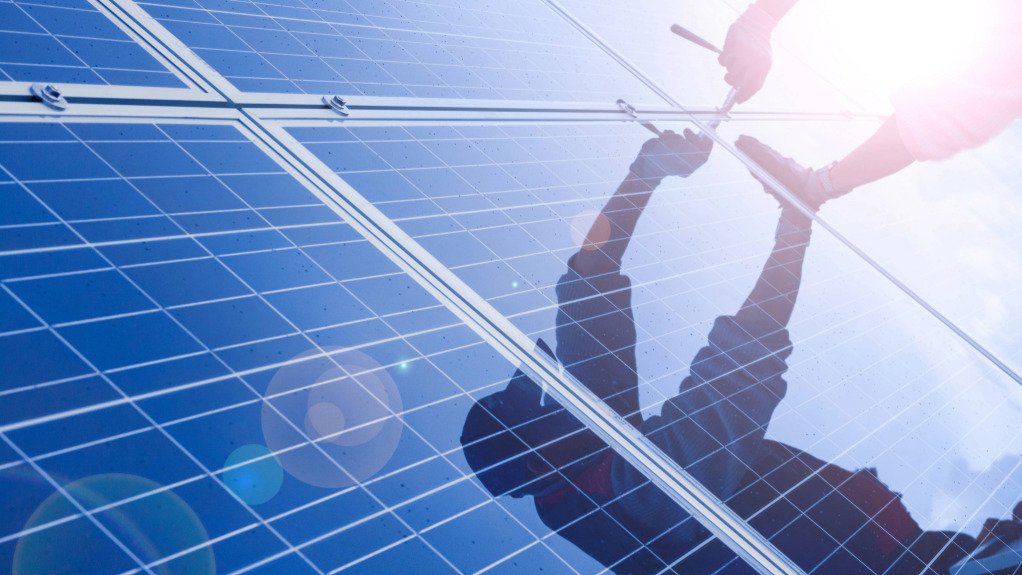

State-owned power utility Eskom says it will extend its waiver of registration-related charges beyond September 30 for eligible customer-owned solar generation systems of up to 50 kVA connected directly to its distribution network.
The utility highlights that the extension gives qualifying Eskom direct residential customers additional time to register their grid-connected rooftop solar installations without paying Eskom’s registration-related charges, while supporting the safe, reliable and efficient integration of customer-generated electricity into the national grid.
“Eskom supports the continued growth of residential solar and greater customer participation in the energy transition, which Eskom has reviewed to align with international best practice.
“Registration is a standard feature of modern electricity systems as countries integrate increasing levels of customer-owned generation into their networks,” Eskom distribution group executive Junaid Munshi says.
The utility notes that registration matters as it supports the safe, reliable and efficient operation of the country’s electricity grid by providing the crucial installation data required for network planning, voltage management, equipment protection and worker safety.
Meanwhile, civil society group the Organisation Undoing Tax Abuse (Outa) regards the extension by Eskom as meaningful progress, but asks the power utility to clarify the legal requirement to register small-scale embedded generation (SSEG) systems that do not export power to the national grid.
“We appreciate that Eskom has listened to the concerns raised by Outa and the public.
“People have spent significant amounts of their own money installing solar because electricity has become increasingly expensive and, for many years, unreliable. They should not then be penalised with unnecessary fees and administrative hurdles for reducing their dependence on the grid,” Outa CEO Wayne Duvenage says.
However, Outa also remains unconvinced that compulsory distributor registration is necessary or proportionate for small residential solar systems that operate behind the customer’s meter, do not export electricity to the grid and have been safely installed and certified by a suitably qualified and registered electrician.
“The various fees and meter upgrade costs may have been taken off the table for now, but the bigger question remains: why should a household be compelled to register a safe, compliant solar system that sits behind its meter and does not feed electricity back into Eskom’s network?
“If Eskom believes compulsory registration of an SSEG system behind the meter is necessary, it should clearly explain the legal basis for that requirement and what practical problem registration solves,” Duvenage adds.
Outa argues that compulsory household registration is an unnecessary bureaucratic barrier, as Eskom already estimates rooftop solar capacity effectively despite low registration rates. It urges Eskom to instead focus on encouraging safe and self-funded energy generation.
Outa says it will continue engaging with Eskom on the legal and practical basis for the compulsory registration of small, non-exporting household systems.
For customers who nevertheless choose to register their systems with Eskom, Outa recommends understanding the full implications beforehand, including possible costs, tariff changes and deposit requirements.
EMAIL THIS ARTICLE SAVE THIS ARTICLE ARTICLE ENQUIRY FEEDBACK
To subscribe email subscriptions@creamermedia.co.za or click here
To advertise email advertising@creamermedia.co.za or click here


