





The public comment phase for the much-anticipated revision to South Africa’s electricity pricing policy (EPP) has been initiated following Cabinet’s recent approval of the draft framework and amid growing affordability concerns.
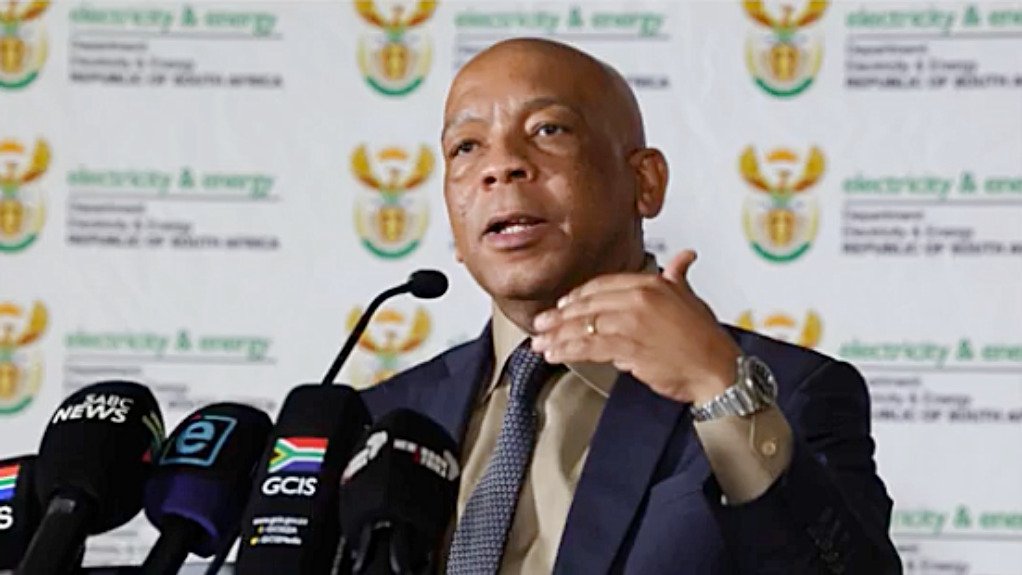
In a briefing on the proposed changes, Electricity and Energy Minister Dr Kgosientsho Ramokgopa acknowledged the pressures being faced by households and businesses as a result of tariffs that had increased by over 900% since 2007.
He thus placed particular emphasis on the draft EPP’s proposal to increase the monthly free basic electricity (FBE) allowance for indigent households from 50 kWh currently to between 200 kWh and 300 kWh.
However, he said the increase would be implemented without increasing the yearly FBE grant envelope of R21-billion, arguing that it was premised on various efficiency gains and cost savings.
These included possible savings from using decentralised solar and battery microgrids to provide electricity to underserved areas, as well as from administration improvements linked to the proposed centralisation and modernisation of the register used to identify eligible indigent households.
The current municipal registers are considered to be unreliable and out of date, with research indicating that millions of eligible households are not receiving the intended benefit even though transfers are being made to municipalities.
Also included in the revision is a proposal to provide more electricity-dependent industries with tariff support using a standardised Negotiated Pricing Agreement (NPA) framework. The Minister indicated such NPAs could be extended even to industrial sectors not considered to be in distress but where the growth and jobs impacts would be material.
Recently, two ferrochrome producers secured tariffs of 62c/kWh from Eskom, which confirmed that it would not be making a profit from the arrangement. Instead it justified the move as a way of avoiding further demand losses, and that it would help it to partly offset unavoidable coal costs arising from take-or-pay agreements.
Under the new NPA framework, the draft policy proposes transparent financial treatment, including explicit handling of NPA-related revenue impacts, as well as a structured approach in relation to economic objectives.
The other elements proposed in the draft EPP include:
- A five-year transition to cost-reflective tariffs;
- Greater billing transparency, including a breakdown of energy, network and ancillary service charges, as well as municipal surcharges;
- Moves to eliminate discriminatory tariffs to address prevailing pricing differences between municipalities and customer categories;
- The compensation of prosumers through net-billing credits;
- Protecting consumers from any price volatility arising from the introduction of a wholesale market;
- Allowing customers a choice of suppliers by providing fair grid access and implementing transparent and cost-reflective network charges;
- The publication by the National Energy Regulator of South Africa of a ten-year price forecast as a planning tool for businesses and municipalities;
- Setting benchmarks for acceptable technical losses above which consumers should not be charged, while ensuring that losses from theft were not passed on to paying customers; and
- Rationalising and standardising municipal tariffs to eliminate historical inconsistencies.
The draft EPP remains premised on licensed electricity suppliers earning sufficient revenue to cover their full costs and make a reasonable return, while promising stronger monitoring, compliance and verification measures to ensure a consistent application of the pricing principles.
The Department of Electricity and Energy has committed to consider integrating the public comments received into the final EPP, which will also be submitted to the National Economic Development and Labour Council for consultation.
The final policy would then require Cabinet approval before being Gazetted for implementation.
The revised EPP is due to be published in the August 21 Government Gazette and will remain open for public comment until September 20.
EMAIL THIS ARTICLE SAVE THIS ARTICLE ARTICLE ENQUIRY FEEDBACK
To subscribe email subscriptions@creamermedia.co.za or click here
To advertise email advertising@creamermedia.co.za or click here


