





JOHANNESBURG (miningweekly.com) – The decarbonisation journey of the steel industry is continuing to reinforce demand for the higher-grade ores and lump products of the kind produced by South Africa’s Kumba Iron Ore.
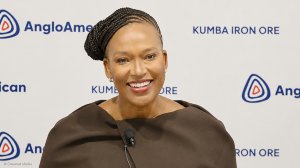
These materials improve blast furnace productivity, lower emission intensity, and support the transition towards lower carbon steelmaking pathways, Kumba CEO Mpumi Zikalala reported during the interim results presentation of the Johannesburg Stock Exchange-listed company, covered by Mining Weekly. (Also watch attached Creamer Media video.)
Despite increasing price pressures, decarbonisation policies have strengthened as a result of the implementation of the Carbon Border Adjustment Mechanism (CBAM) framework in Europe. Under CBAM, agglomerated products such as pellets will face an import levy, depending on the quantum of embedded emissions and prevailing carbon prices.
These penalties are likely to trend higher longer term, making lump iron-ore a more attractive alternative in the region.
The potential of lump to replace pellets is significant, given that imported pellets occupy roughly a 35% share in total EU imports.
Additionally, total iron-ore demand is set to rise as urbanisation and industrialisation reshape steel demand in developing economies.
While China's demand plateaus, the growth in other markets will more than offset this reduction.
Key contributors to this growth are new steel capacities in India and Southeast Asian markets.
Kumba is forecasting total 2026 production of between 31-million and 33-million tons, as it cuts back to allow for the planned ultra-high dense media separation (UHDMS) incorporation period.
UHDMS, which is mineral processing technology being implemented by Kumba at its Sishen iron-ore mine in South Africa’s Northern Cape, is expected to increase the volume of premium iron-ore to 55% of Sishen's production, up from the current 18%. At its core, UHDMS is said to provide greater flexibility across a wider range of ore grades and densities.
The guided 2026 production includes about 22-million tons from Sishen and about ten-million tons from the Kolomela iron-ore operation.
In 2027, production is forecast to increase by around 12% to 13% to between 35-million and 37-million tons amid plans to supplement production with finished stock built up ahead of the UHDMS tie-in.
“Our C1 unit cost guidance remains unchanged at $45 per ton. The increase to $46 per ton in the first half is largely due to a strong rand and above inflation increases in key input prices.
“However, we remain focused on cost and capital optimisation, and our full potential programme will be rolled out in the second half of the year and we expect to start to see some of the benefits coming through,” Zikalala added.
Full-year 2026 capital expenditure is expected to be between R13.2-billion and R14.2-billion.
Although macro volatility is expected to remain, Zikalala expressed excitement about what Kumba can achieve with the elements under its control.
“Firstly, we are putting in place a new full potential programme to build from our stable operating base in order to take operational excellence to the next level across our entire business, and that includes our mining as well as better cost competitiveness and enhanced returns on our key capital projects including the UHDMS project.
“Secondly, we want to improve the competitiveness of our ore export channel. We will work with our partners to support improved logistics performance while securing sustainable capacity over the longer term. Success here will allow us to unlock another level of upside from the full potential programme.
“Thirdly, across the business, we’re looking to enhance our return on capital with real discipline on capital allocation, supported by specific interventions from our full potential programme.
“We do have all the right ingredients required to succeed, with a clear strategy, world-class assets, a fantastic team, and strong partnerships.
“Together, these foundations position Kumba well to deliver the next level of performance over the years ahead,” said Zikalala.
Questioned on what can be expected from State-owned Transnet’s rail contribution, Zikalala reiterated the outcome of an independent assessment that pointed to more than 500 km of just over 860 km of rail needing to be replaced.
“Now, over the last couple of years, they have been replacing that, but last year they didn't have the rails that were required ahead of the shut, and as a result the amount that was replaced was actually significantly lower than what we wanted to see.
“So, we’re excited by the 101 km that was replaced this year but remember we’re still working back towards the 500 km mark, so this work will continue as we move forward, because fundamentally this infrastructure has been there for some time and needs to be replaced," the head of the Anglo American group company explained.
Pointed out were that the speed restrictions do not extend throughout the railway line network owing to some sections of rail being more worn than other sections.
The 101 km of rail replaced assisted with the upliftment of the speed restrictions within a particular section, and the rebuild remains on track and will continue for a couple of years.
“We’re excited by the volumes of work that are essentially taking place and we, as Kumba, are part of the Ore Users Forum, which includes all the users of the line, and we collectively work with Transnet on the ore corridor restoration programme that they are busy with, and heading up into the second shut, we'll plan the shut with Transnet, and as a result, make sure that the execution of that shut will also be done properly,” Zikalala explained.
Current estimations are that Transnet has replaced around 170 km of the rail line, and the rail replacement is a multi-year programme.
The independent technical assessment also dealt with port refurbishment still needing to be done to enable higher output.
EMAIL THIS ARTICLE SAVE THIS ARTICLE ARTICLE ENQUIRY FEEDBACK
To subscribe email subscriptions@creamermedia.co.za or click here
To advertise email advertising@creamermedia.co.za or click here


