





September 09, 2026.
For Creamer Media in Johannesburg, this is Polity’s daily podcast.
Making headlines:
South Africa’s 3% inflation goal is robust, Central Bank study shows
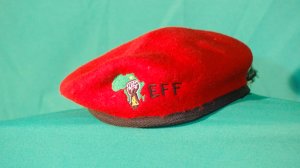
EFF heads to court over Parly’s 'irrational' reversal on removal of impeachment evidence leader
And, Congo extends state control over mining with bid to lock down geological data
South Africa’s 3% inflation target can withstand a range of economic shocks as expectations have become better anchored and more forward-looking, the central bank said in a new study.
In the absence of major shocks, there’s a 78% chance that inflation will remain between the central bank’s 2% and 4% tolerance band, authors Theo Janse van Rensburg, Jeffrey Rakgalakane and Rudi Steinbach said in an economic note.
South Africa formally lowered its inflation target to 3% in November with a 1 percentage point tolerance band, replacing the 3% to 6% range that had been in place for 25 years. The central bank had aimed for the band’s 4.5% midpoint since 2017.
Since the outbreak of the Iran war on February 28, the nation has faced mounting price pressures. Restrictions on traffic through the Strait of Hormuz, a key global supply route, has pushed up oil and fertiliser costs, raising inflation to 4.5% from 3% before the war started.
The central bank responded by raising interest rates by 25 basis points in May to 7%, before pausing in July after revising its inflation forecasts lower and to support economic growth.
The EFF has filed an urgent application at the Western Cape High Court, seeking to review and set aside Parliament's decision to rescind the appointment of Advocate Griffiths Madonsela as chief evidence leader of the Section 89 Impeachment Committee in the Phala Phala matter.
The party contends that the Committee's sudden reversal represents a “dangerous capitulation” to executive overreach.
According to the EFF, the legal challenge is vital to "safeguard the independence of Parliament from executive control" and to fortify the legislature's constitutional mandate to hold the executive accountable without fear or favour.
The EFF officially nominated Madonsela for the role on July 22.
Following the nomination, parliamentary officials questioned Madonsela regarding potential conflicts of interest, specifically whether any past dealings with President Cyril Ramaphosa would cloud his judgment.
Democratic Republic of Congo plans to tighten control over geological data that guides billions of dollars in mining exploration, potentially extending state influence over the development of future mineral discoveries.
The country is accelerating geological mapping, airborne surveys and digitisation of historical archives to build a comprehensive national geological databank on its critical minerals and reduce exploration risk, officials say.
The plan will tighten Kinshasa's grip on the world's biggest cobalt producer and second-largest copper supplier, according to an official and seven industry sources, and could be even more significant than the country's policies that reshaped the global cobalt market, some analysts say.
A nationwide geological mapping programme has gained momentum this year after a $180-million contract with Spain's Xcalibur, a global leader in geodata mapping, began in January, Raoul Wazenga Vitima, director general of the National Geological Survey of Congo, told Reuters.
That’s a roundup of news making headlines today
Don’t forget to follow us on the X platform, at the handle @PolityZA
EMAIL THIS ARTICLE SAVE THIS ARTICLE ARTICLE ENQUIRY FEEDBACK
To subscribe email subscriptions@creamermedia.co.za or click here
To advertise email advertising@creamermedia.co.za or click here


