





For Creamer Media in Johannesburg, I’m Halima Frost.
Making headlines: Mass shootings show the face of South African murder is changing; Senegal power cuts highlight need to embrace gas, minister says; And, Congo's Ebola outbreak has killed more than 4 000, government data shows
Mass shootings show the face of South African murder is changing
On a recent Saturday night, a minibus taxi drew up to a tavern in the gold-mining town of Carletonville west of Johannesburg. Eight men armed with AK-47 rifles alighted from the vehicle before gunning down patrons. Eighteen people died.
Just hours after the September 26 attack another 10 people were shot dead at an entertainment venue near Cape Town. Days earlier gunmen stormed a house in the coastal city of Durban, killing 11.
While South Africa has long struggled with one of the world’s highest homicide rates, the nature of murder in the country is changing. While most of those killed die at the hands of people they know, an increasing number are being killed in mass shootings linked to competition among criminals as organised crime becomes increasingly entrenched in the economy.
Drugs, extortion, illegal mining and violence between the operators of mini-bus taxi routes are the most-often cited motives.
What the mass killings do represent is the growth of organised crime, with the World Bank estimating criminal activity cost South Africa $40-billion in 2023.
Executive director of the African Centre for Security and Intelligence Praxis David Africa says “The state quite clearly has lost control of the crime situation”.
Senegal power cuts highlight need to embrace gas, minister says
Power cuts in Senegal in September have underscored the need to embrace gas as a means of electricity generation, the West African country's energy minister said.
Senegal faced frequent power cuts throughout September in the capital and elsewhere
A Minister said yesterday that electricity demand was rising rapidly and that hot weather caused it to hit a higher-than-expected peak of 1 400 megawatts in August
While Senegal has an installed capacity of more than 2 300 MW, the system was not able to meet demand due to insufficient fuel supply and technology breakdowns, he said
Senegal mainly depends on diesel to generate electricity and is moving towards gas to lower costs, aiming to cut its dependence on costly imported fuels
The country is expected to build around 340 km of gas pipelines to enable it to transport its own natural gas, Minister said
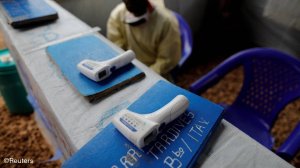
And, Congo's Ebola outbreak has killed more than 4 000, government data shows
The number of deaths in Democratic Republic of Congo's Ebola outbreak has surpassed 4 000, government data showed today, as the worst epidemic in the country's history resists containment efforts.
The outbreak, caused by the Bundibugyo species of Ebola, became the largest and deadliest in Congo after surpassing the 2018-2020 epidemic.
It is now second only to the 2014-2016 West African Ebola outbreak, which infected over 28 600 people and killed more than 11 000 across Guinea, Liberia and Sierra Leone.
Government figures showed on Friday that the death toll had risen to 4 018, and confirmed cases had reached 8 300 across seven provinces.
Over 2 000 patients have recovered from the disease.
Congo's government and the UN said last month there were signs that transmission was slowing in some parts of Ituri province, where the outbreak began. But it continues to spread fast across eastern Congo, including in neighbouring North Kivu.
That’s a roundup of news making headlines today
Don’t forget to follow us on the X platform, at the handle @PolityZA
EMAIL THIS ARTICLE SAVE THIS ARTICLE ARTICLE ENQUIRY FEEDBACK
To subscribe email subscriptions@creamermedia.co.za or click here
To advertise email advertising@creamermedia.co.za or click here


