





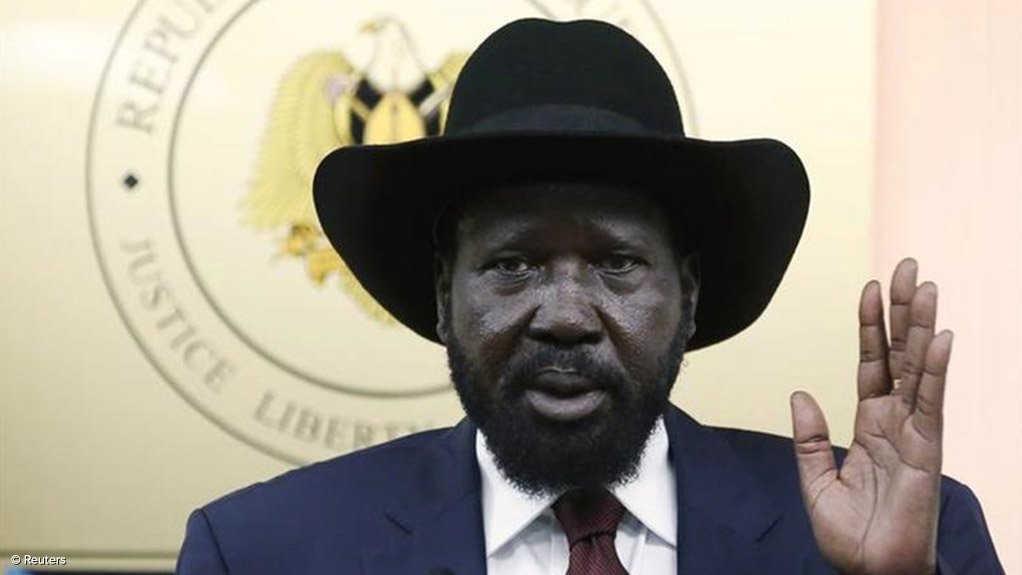
Attention should shift to preserving the peace deal that underpins the current government and is key to averting large-scale violence.
South Sudan’s cabinet last week approved legal amendments in preparation for the December 2026 elections. The day before, on 10 September, the United Nations Commission on Human Rights in South Sudan reported that the country lacked ‘many of the safeguards and conditions for peaceful and credible polls’ – an assessment the government swiftly rejected.
South Sudan hasn’t held national elections since its 2011 independence due to recurring cycles of armed conflict and political stalling. Now, major political and technical problems again preclude credible polls that would have ended the prolonged transition.
The country’s first elections, scheduled for 2015, were delayed after civil war broke out in 2013. Since then, polls have been postponed five times. The first peace deal lasted barely a year and was followed by the 2018 Revitalised Agreement on the Resolution of the Conflict in the Republic of South Sudan (R-ARCSS).
President Salva Kiir Mayardit and First Vice-President Riek Machar’s political rivalry has characterised post-independence conflicts and peace processes, often obscuring the crisis’ underlying triggers, such as militarisation of politics and elite bargaining.
Periods of rapprochement, such as after the 2018 agreement, helped reduce bloodshed and ushered in some stability. But as other conflicts intensified, including in eastern Democratic Republic of the Congo and Sudan, South Sudan’s transition receded from international attention, weakening the pressure needed to push for the agreement’s implementation.
Over the past year, Kiir has undermined the accord’s power-sharing arrangement through unilateral cabinet dismissals, the replacement of opposition lawmakers, and delays in security sector reforms. Considering that the country’s transitional government is anchored on the agreement, abandoning it would dismantle the political settlement that ended the conflict in 2018.
Kiir’s first move was to place Machar under house arrest in March 2025 after an attack on a military base by the White Army militia, who predominantly belong to the Nuer, Machar’s ethnic group. The government accused Machar of orchestrating the attack, and he, along with several close associates, faces treason charges.
Kiir has resisted international calls to release Machar. The vice-president remains a powerful and aggrieved political actor with deep ethnic, military and political networks capable of mobilising significant opposition, particularly in Upper Nile, Unity and Jonglei. If released before elections, he could threaten Kiir’s bid to extend his term.
Tanzania and Uganda held elections in October 2025 and January 2026, respectively, amid violent repression, with key opposition candidates detained. A similar approach in South Sudan’s militarised and fragile political environment could plunge the country back into renewed conflict reminiscent of 2013.
Since Machar’s arrest, Kiir has made several unilateral reshuffles in the Revitalised Transitional Government of National Unity, contrary to the 2018 deal’s power-sharing provisions. The administration has purged Machar’s wing of the Sudan People’s Liberation Movement/Army-in-Opposition (SPLM/A-IO) from government and replaced it with members of Peace Building Minister Stephen Par Kuol’s SPLM/A-IO splinter faction. The faction is allied with Kiir and supports the current flawed electoral process.
Kiir has also unilaterally amended the 2018 deal to remove legal ‘obstacles’ to conducting elections, thereby violating the agreement. The 22 July amendments removed the preconditions for holding elections, including a national census and a new constitution. He also sought to reduce the deal’s supremacy in the country’s legal system, thereby enabling the government to implement its provisions selectively.
Machar’s SPLM/A-IO wing says any electoral process should occur in line with the peace deal and involve all parties to the agreement. It says failure to implement the deal’s key provisions remains the main obstacle to holding free, fair and credible polls.
To counter the government’s growing dominance, Machar’s SPLM/A-IO wing has allied with other armed actors, such as the National Salvation Front. The groups have conducted several joint military operations against state forces – drawing condemnation from the Ceasefire and Transitional Security Arrangements Monitoring and Verification Mechanism.
With less than four months to voting day, the government continues to water down the peace deal amid a growing insecurity and humanitarian crisis. Over 2.5-million people are internally displaced, and more than 10 -illion need assistance.
Meanwhile, significant technical and political problems with polling preparation remain unresolved, notably the underfunding of the National Elections Commission and the lack of a voter register. Widespread insecurity also makes it hard for the electoral body to reach all areas, and hinders citizens’ movement.
Kiir’s insistence on holding elections in December presents two possible scenarios. First, by pushing ahead with non-credible polls, Kiir could win the election and remain in office. But by ushering in a new, illegitimate political dispensation, that outcome would deepen instability.
Second, Kiir may be setting the stage for another transition extension. By engaging in last-minute electoral preparations, he may be signalling a commitment to the polls he knows probably won’t happen, in order to build a case for an extension.
Both scenarios would render the 2018 peace agreement obsolete – risking a return to large-scale fighting. Kiir seems to favour the first scenario, to consolidate power and secure total control.
Any endorsement by international partners for holding elections under current political conditions would be counterproductive. It would signal acquiescence in dismantling the 2018 deal, risking a reversal of hard-won progress.
African Union High Representative for South Sudan, Jakaya Kikwete, should push international partners to establish common minimum conditions for elections. Ugandan President Yoweri Museveni, a close ally of Kiir, should persuade him to reconsider his current course. International pressure for Machar’s release should continue, along with efforts to prevent further unilateral actions by Kiir and contravention of the 2018 agreement.
Finally, given that credible elections cannot be organised within the remaining time, international actors should push for a consensual extension with a clear, time-bound roadmap to elections. This could salvage the deal and save the country from a return to entrenched large-scale violence.
Written by Guyo Chepe Turi, Research Officer, East Africa Peace and Security Governance, ISS Nairobi & Said Abdullahi, Research Intern, Conflict Prevention, Management, Resolution and Peacebuilding in the Great Lakes Region, ISS Nairobi
EMAIL THIS ARTICLE SAVE THIS ARTICLE ARTICLE ENQUIRY FEEDBACK
To subscribe email subscriptions@creamermedia.co.za or click here
To advertise email advertising@creamermedia.co.za or click here


