





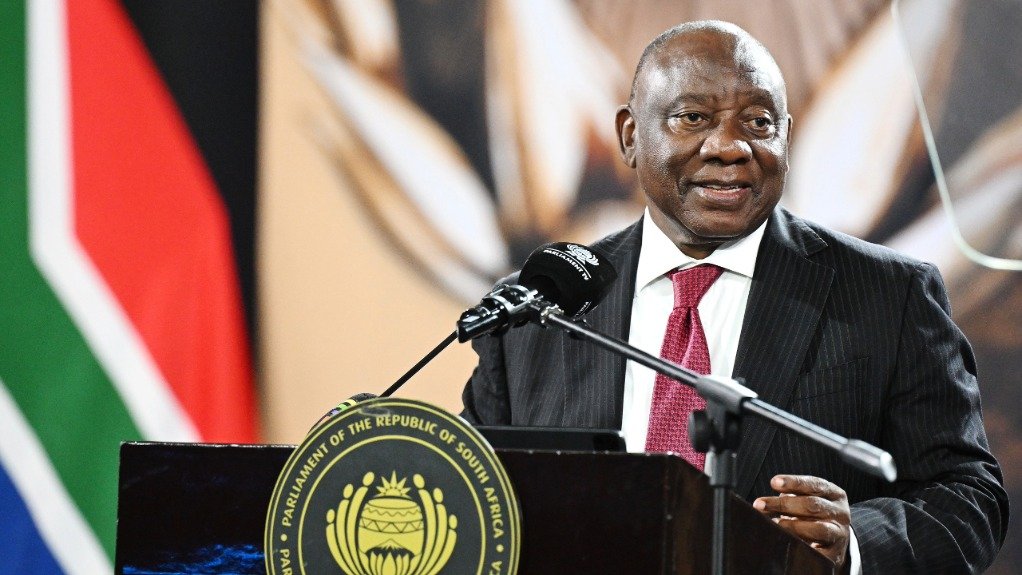
The Western Cape High Court has granted President Cyril Ramaphosa an urgent interim interdict, pausing Parliament’s Section 89 impeachment process.
Delivered on Friday, the ruling halts the parliamentary process pending a separate legal review regarding the Phala Phala game farm scandal.
Last month Ramaphosa asked the court that impeachment proceedings be paused until the court finalises a separate application by the President for a review of an independent panel’s report on an incident at the President’s Phala Phala game farm.
In a statement following the ruling, the Presidency stated that the President respects the ruling, and that he sees it as a “validation of judicial independence” and the separation of powers as per the Constitution.
Spokesperson to the President Vincent Magwenya stressed that the President remains “fully committed” to cooperating with lawful accountability mechanisms.
Concurrently, Parliament’s Section 89 Impeachment Committee chairperson Makashule Gana confirmed that the committee has noted the court’s pause on public hearings.
Gana specified that the committee will study the judgment fully to establish whether processing evidence or configuring framework rules can legally continue while the public phase remains on hold.
MIXED REACTIONS
The ANC has welcomed the court ruling, stating that it affirms the President's constitutional rights and it urged other political parties to respect the judiciary's decision and to “cease politically motivated distortions”.
The ANC said it deeply respects the independence of the judiciary and “welcomes the legal clarity” in the ruling.
The party noted that the judgment removes legal hurdles, allowing the courts to hear the judicial review application to set aside the Section 89 Panel Report “unencumbered”.
The ANC said the judgment “vindicates its core conviction regarding equality before the law”.
The party said it will study the full judgment in detail before releasing comprehensive commentary.
However, the DA has asserted that the recent court judgment does not clear Ramaphosa of wrongdoing, and it does not determine the truth of the allegations against him.
DA leader Geordin Hill-Lewis clarified that the ruling strictly establishes the procedural sequence between judicial and parliamentary processes.
While acknowledging Ramaphosa’s right to legal recourse, the opposition party emphasised that public accountability “must remain paramount”.
The DA is pushing for an immediate conclusion to the legal deadlock and called on the judiciary to grant priority court dates, citing “immense national importance”.
Hill-Lewis insisted that the review application must be resolved with the highest degree of urgency, stressing that legislative scrutiny must not grind to a halt while awaiting final court decisions.
The DA urged Parliament to continue with preparatory steps, if they are legally allowed under the current court order, to ensure the impeachment committee is ready when the judicial review concludes.
The party said Ramaphosa must be granted a comprehensive and proper opportunity to respond to all allegations, and it maintained that the presidency cannot be used as a shield to place any individual beyond public and legal scrutiny.
ActionSA, meanwhile, expressed "deep concern" over the court's decision to grant an interim interdict, warning that it risks "turning justice delayed into accountability denied".
ActionSA Parliamentary Chief Whip Lerato Ngobeni said while the party respects judicial independence, it is "increasingly worried" that constitutional accountability is becoming "hostage" to procedural litigation.
Ngobeni pointed out that successive court applications that routinely suspend impeachment proceedings threaten to make Parliament's constitutional oversight powers illusory.
The party noted the court's dissenting judgment, which argued that Ramaphosa failed to establish a valid basis for the extraordinary interim relief he sought.
In ActionSA's view, Parliament should have been permitted to continue discharging its constitutional oversight responsibilities while substantive legal issues were being determined.
Ngobeni emphasised that the Section 89 Committee exists to establish facts, evaluate evidence, and determine if the constitutional threshold for impeachment has been met.
She said preventing the committee from performing its work delays a mandate of "exceptional public importance" and undermines the principle that no one, including the President, is above constitutional scrutiny.
The party will look at legal and parliamentary steps to protect Parliament's constitutional oversight role and ensure that accountability is not indefinitely postponed.
RISE Mzansi reaffirmed its commitment to parliamentary oversight, noting that it study the full judgment.
“During this period, the work of Parliament continues, which is to hold the President and the executive accountable through written and oral questions, Committee hearings, oversight inspections, and all other mechanisms provided by the Constitution and the rules,” said RISE Mzansi national communications director Mabine Seabe.
IFP Chief Whip in the National Assembly Nhlanhla Hadebe said that while the ruling may temporarily affect the continuation of the Section 89 process, it does not diminish Parliament's constitutional obligation to exercise oversight and ensure accountability in accordance with the Constitution and applicable legal processes.
The party said it remains committed to ensuring that all constitutional processes are conducted lawfully, fairly, and with due regard for the integrity of Parliament and the constitutional rights of all parties
EMAIL THIS ARTICLE SAVE THIS ARTICLE ARTICLE ENQUIRY FEEDBACK
To subscribe email subscriptions@creamermedia.co.za or click here
To advertise email advertising@creamermedia.co.za or click here


