






The content on this page is not written by Polity.org.za, but is supplied by third parties. This content does not constitute news reporting by Polity.org.za.
The Portfolio Committee on Trade, Industry and Competition has noted with concern the confirmation that the United States will impose a 30% import tariff on certain South African exports, effective from 7 August 2025. The committee also noted recent media statements issued by the government and other stakeholders in this regard.
On 10 June 2025, the committee engaged the Department of Trade, Industry and Competition (DTIC) on the current status of South Africa’s trade relations with the United States, as well as with other international partners. The committee specifically discussed the announced imposition of import tariffs by the United States on several countries globally including South Africa. These tariffs impact on various sectors and countries. In the case of South Africa, they may affect strategic sectors such as automotives, agriculture (particularly citrus) and steel, all of which are important for South Africa’s economy and employment.
Historically, South Africa has maintained a strong trading relationship with the United States, as South Africa’s second-largest national trading partner. Exports to the United States accounted for approximately 8% or R156,6 billion of South Africa’s total global exports of goods in 2024. In 2023, South Africa’s export basket consisted of approximately 43% manufactured products (mainly automotives and vehicle components); 50% mining commodities (such as platinum, aluminium, titanium, and diamonds) and 7% agriculture (such as citrus, and fruit and vegetable juices).
South Africa is also the largest importer of goods from the Unites States in sub-Saharan Africa. While trade has been mutually beneficial, with imports valued at approximately R120,2 billion in 2024, South Africa has consistently recorded a trade surplus with the United States.
In terms of investment, there are more than 600 United States companies in South Africa, including Ford Motor Company, Coca-Cola, IBM, Google, Microsoft, Unilever, Pfizer, Merck, Medtronic and PepsiCo. In 2023 United States investment created 132 000 jobs in South Africa, on the one hand, on the other, South Africa is the biggest source of foreign direct investment to the United States from the African continent, through companies such as Sasol, Sappi, Nando’s, Sibanye-Stillwater Mining and Aspen Pharmacare. In 2023, 7 000jobs were created in the United States by the South African companies.
Due to the significant trade and investment relationship between South Africa and the United States, the committee is concerned about the impact of the tariffs particularly on automotives, steel and agricultural products, among others, as affected South African exports will become less competitive in the United States once the tariffs take effect. These sectors form part of significant value chains that exist between the two countries.
Furthermore, South Africa is a crucial supplier of raw materials to many United States’ supply chains. The country also possesses strategic mineral reserves such as chrome, manganese and gold, from which the United States can benefit. Therefore, the trading relationship with the US offers opportunities for mutual development and growth.
The South Africa-United States bilateral trade relationship has been underpinned by three trade regimes: the African Growth and Opportunity Act (AGOA), the Generalised System of Preferences (GSP) and the World Trade Organisation (WTO) terms. The AGOA and the GSP jointly provide duty-free market access for around 25% of South African exports to the United States; while 75% of South African exports enter the United States under WTO terms. The imposition of the additional tariffs would mean that products previously eligible for duty-free access or lower tariffs into the United States will now be subject to an additional 30% tariff. Therefore, the committee is concerned about the impact of the tariffs, particularly on automotives, steel and agricultural products, among others, as affected South African exports will become less competitive in the United States once the tariffs take effect.
Given the current levels of exports to the United States and the significant value chains that exist between the two countries, the additional tariffs would make many South African products more expensive in the United States market and could potentially disrupt the existing value chains. As a result, the demand for South African products may decline leading to a decline in exports to the United States. This, in turn, could result in decreased local production and job losses, particularly if it cannot find alternative export markets.
The tariffs could also affect the composition of South African exports to the United States as currently South Africa is able to export a significant proportion of manufactured products to this market, accounting for approximately 43% of exports to that market. Whereas 38,7% of South Africa’s global exports consist of manufactured goods.
South Africa has adopted a new trade policy knowns as the “Butterfly Strategy”. The Strategy seeks to support industrialisation and includes the following key pillars:
The promotion of product and market diversification, including leveraging the African Continental Free Trade Area, to enable the domestic economy to adapt to and recover from international challenges;
A multi-pronged strategy to stimulate goods and services exports through trade negotiations and leveraging various bilateral and multilateral platforms;
The simplification of procedures to enhance agility of trade policy in response to emerging challenges;
The identification of new sources of global economic growth, trade, and investment flows, and the development of appropriate strategies to support domestic industrialisation.
The committee supports efforts to negotiate a deal with the United States including the enhancement of the Trade and Investment Framework Agreement as a platform to address bilateral trade and investment issues of concern to both sides. It appeals for parties to continue negotiations to reach a mutually beneficial resolution as soon as possible.
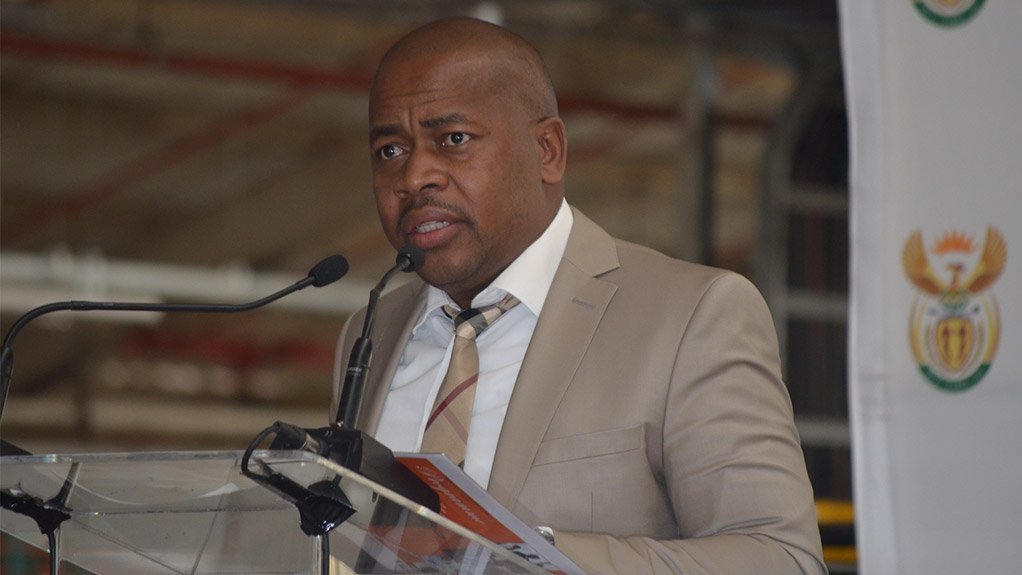
The Chairperson of the committee, Mr Mzwandile Masina, emphasised: “In light of the fact that this issue is not unique to South Africa, many countries, including South Africa, are still engaging in negotiations with the United States. Therefore, stakeholders should refrain from making reckless public statements that may compromise the efforts of the South African negotiating team. All South Africans should partner with government and speak with one voice during this critical period of negotiations given the impact that this could have on the broader economy.”
Mr Masina also called on government to deepen its engagement with the United States to find an amicable solution. The committee, in line with its mandate, will continue to oversee the government’s efforts to finalise negotiations with the United States and minimise the impact of these tariffs on the economy, particularly regarding to jobs. In addition, the committee urges the DTIC to actively pursue its Butterfly Strategy, especially in relation to the diversification of export markets.
Issued by the ParliamentaryCommunication Services on behalf of the Chairperson of the Portfolio Committee on Trade, Industry and Competition, Mzwandile Masina
EMAIL THIS ARTICLE SAVE THIS ARTICLE ARTICLE ENQUIRY FEEDBACK
To subscribe email subscriptions@creamermedia.co.za or click here
To advertise email advertising@creamermedia.co.za or click here


