





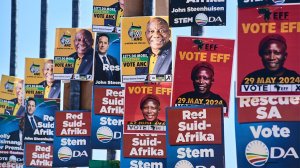
Civil society organisation Abahlali-Base Freedom Park community organiser Peter Monethe said on Thursday that although there is a growing and rapid decline in public trust in political parties, it is difficult for civil society organisations to compete against the visibility and reach of well-funded political machines in an electoral setting.
Monethe was speaking during a roundtable discussion organised by Public Affairs Research Institute on the possibilities of civil society organisations contesting local government elections.
He highlighted that civic movements faced a significant resource disadvantage.
Unlike major political parties such as the African National Congress (ANC) or Economic Freedom Fighters, which he said had substantial campaign budgets for advertising and merchandise, civil society movements depended entirely on self-reliance.
He explained that funding for civil society movements came from personal sacrifices, such as members donating portions of their own salaries to support their colleagues.
Activist and author Tessa Dooms pointed out that proposals for specific legislative changes were unproductive, as the necessary reforms for devolving power from political parties to civic organisations lacked political incentive.
Instead, she highlighted that the focus must shift to transforming political culture to foster active civic participation in the contestation of power.
She noted a growing, yet inaccurate, mythology which had emerged, suggesting that civic movements were focused solely on electoral reform, designed to produce independent contention.
She said the narrative was incorrect, noting a 2020 Eastern Cape court case which showed that what citizens and civil society groups demanded was more comprehensive reform.
Dooms clarified that reducing party power in elections was not just about backing independent candidates, but about shifting political culture toward direct accountability.
“To remove some of the party power in terms of electoral participation and electoral accountability is not the same as saying we need to focus on independent candidates. It is saying that we need to focus on direct elections and direct accountability as a bigger part of our mix in terms of both legislation and political culture,” she stated.
She said while an independent candidate often stood in isolation, politics remained a numbers game.
“To be effective, you need a caucus,” she noted.
This was seen in the City of Johannesburg, with Dooms noting the "Super Seven" group of small parties with only one or two seats each.
She explained that by organising, they successfully secured City of Johannesburg speakers and mayors.
However, she said their agenda was built on securing positions rather than serving the people.
The real challenge is to create similar caucuses driven by ideals and community power rather than political horse-trading, she added.
She said local government remained the most viable arena for communities to reclaim representation from party machinery.
EMAIL THIS ARTICLE SAVE THIS ARTICLE ARTICLE ENQUIRY FEEDBACK
To subscribe email subscriptions@creamermedia.co.za or click here
To advertise email advertising@creamermedia.co.za or click here


