





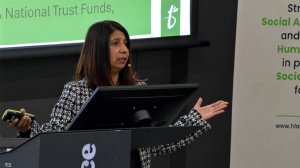
Ahead of International Women’s Day, social investment pioneers, corporate leaders, and civil society advocates have renewed the call to treat gender-based violence (GBV) as a critical national crisis.
Speaking at the Gender-Based Violence and Femicide (GBVF) Business Conference in Johannesburg on Wednesday, prominent experts outlined a comprehensive framework to eradicate the scourge.
They stressed that the path forward required deep cultural shifts, long-term prevention programming, systemic corporate accountability, and robust economic empowerment for women.
Reflecting on the country’s multi-decade battle against GBV, Virginia Francis of Tshikululu Social Investments highlighted landmark milestones achieved since 2001.
These include the establishment of the first dedicated rape management centres and the implementation of the National Strategic Plan on GBVF.
However, Francis warned that the complexity of GBV meant reactive systems were no longer enough. Eradicating violence demanded dual-focus strategies that treated response services and proactive prevention with equal weight, she said.
Addressing critical gaps in funding, she underscored the vital intersection of international aid, multilateral grants, and private sector corporate investment.
She urged businesses to view GBV not as a corporate social investment checkbox, but as a systemic issue requiring immediate and long-term strategic funding.
Corporations are encouraged to co-fund and combine capital to absorb the substantial costs of large-scale prevention initiatives.
Businesses with limited financial capacity can still offer substantial value by contributing their core strategies, logistical expertise, and operational skills, Francis said.
She suggested that healthcare initiatives such as HIV funding, integrate a GBV prevention framework into existing programmes, while stating that funding must support the testing, adaptation, and scaling of intervention models tailored to the unique cultural and regional realities of different communities.
Meanwhile, Hlanganisa Community Fund for Social & Gender Justice board chairperson Lebogang Ramafoko shifted to the root socioeconomic causes of violence, emphasising that community organisations and local initiatives remained the “true backbone” of survivor support and localised accountability.
Ramafoko pushed for an "intersectional approach" to the crisis, noting that violence did not occur in a vacuum, explaining that it was heavily exacerbated by overlapping identities, systemic discrimination, and deeply entrenched social norms.
True prevention, she noted, was structurally linked to women's economic liberation. To create systemic change, Ramafoko challenged the corporate sector to move past “passive compliance” and take a highly proactive stance.
She called for the elimination of the gender wage gap, which she said directly fostered economic independence, giving women the financial autonomy to leave abusive environments.
She said companies must address the disproportionate burden of unpaid care work placed on women through progressive workplace support.
Businesses must actively implement internal policies, dedicate resources, and promote fair practices that protect and uplift women within the workforce, she added.
By aligning financial investments, shifting cultural norms, and establishing economic equity, South Africa could build a sustainable, accountable framework capable of protecting its most vulnerable citizens, she argued.
EMAIL THIS ARTICLE SAVE THIS ARTICLE ARTICLE ENQUIRY FEEDBACK
To subscribe email subscriptions@creamermedia.co.za or click here
To advertise email advertising@creamermedia.co.za or click here


