





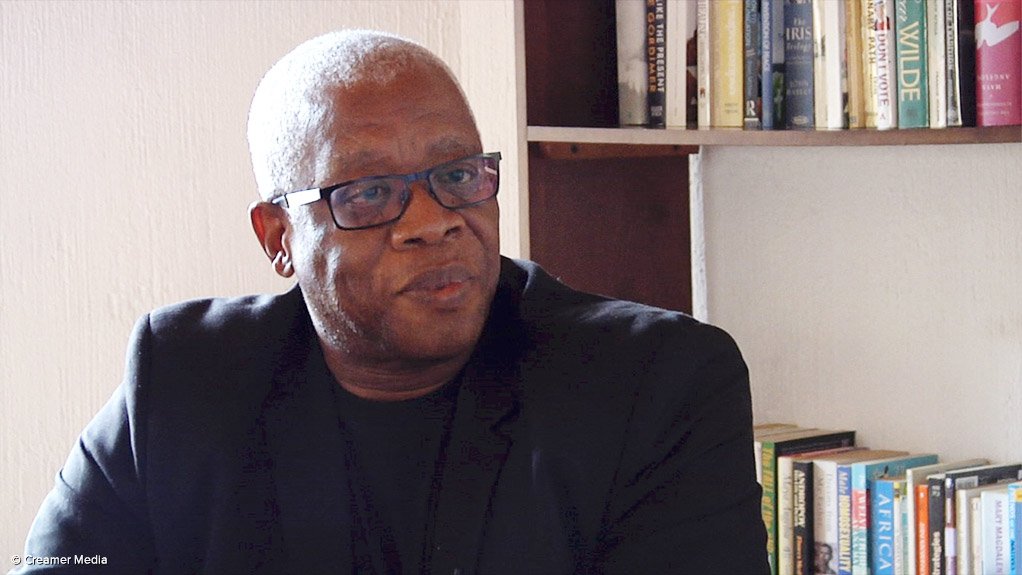
Political analyst Aubrey Matshiqi on Thursday said that the challenge in President Cyril Ramaphosa's recently announced economic and social stimulus package is to make sure that words become a reality or come very close to becoming reality.
In an exclusive interview with Polity, Matshiqi said that we were not talking about business as usual but rather of a global economy that was being devastated by the virus.
He said the African economy would be devastated by the Covid-19 outbreak and that the South African economy was, even before the onset of the pandemic, in a state of crisis.
“The South African economy is in a state of crisis as evidenced by the fact that three of the major ratings agencies have downgraded this country to junk status. We are also talking about a country that is the most unequal society on the planet. We are talking about a country with high levels of unemployment, especially amongst young people, meaning its potential is compromised by the fact that young people have no opportunities. We are talking about a country where poverty is rampant and we are talking about a country where if you look at the poor social indicators and you disaggregate them in terms of race and gender, the social and economic conditions are much poorer amongst those South Africans who are women and amongst those South Africans who are black,” he said.
Matshiqi said inequality between blacks and whites, for historical reasons, and because of the failures of this government over the past 26 years, was still a major challenge.
He reminded too of the added element of intra-racial inequality, which had developed amongst those who were oppressed.
Matshiqi said President Ramaphosa announced the stimulus package to fight Covid-19 at a time of deepening, social and economic crisis.
He told Polity that the fact that half a trillion rand had been set aside to ameliorate and mitigate the impact of the virus, without considering anything outside that measure, was commendable.
“The President said good things about rethinking our economy; for instance, measures like giving unemployed people R350 per month, which in part is a response to a demand which has been with us for almost three decades - that South Africa, because of its levels of poverty, institute a basic income grant. Raising the quantum of social grants for children and the elderly is also a good measure.”
He said, overall, statements about where the South African economy should go post Covid-19 suggested that our country may be going in the direction of social democracy, the kind of social democracy many on the left had been demanding.
“Whether this, after Covid-19, will be a reality is another question altogether, given what I have said about words are not being always what they describe.”
On the measures to ameliorate the conditions facing workers, particularly those in the small business sector, the test is whether the scheme happens, because many small businesses were complaining that the measures announced to help them had not materialised.
He said that alone spoke to the capacity of the State.
Matshiqi said Covid-19 came at a time when the South African State lacked the capacity it required to respond to an emergency of this nature.
He warned that the country was now faced with two challenges at the same time, to build capacity to meet the challenges brought by the pandemic and to build overall capacity to cope with the challenges that will come after this crisis.
As bad as the impact of Covid-19 has been, in all probability what would be worse would be the social, economic and political impact of the virus after the crisis.
He warned that we had to prepare for a scenario in which the virus, like HIV/Aids, would be with us for many years
“The world may have to prepare itself socially and economically to live side by side with this virus and its mutants because we can’t rule out that possibility and the possibility of new waves attacking countries as economies open.”
Matshiqi said while the economic and social stimulus package was a step in the right direction he doubted whether the State had the requisite capacity to roll out what the President had announced.
He added that the private sector had the dual role of helping in rebuilding our economy as it began to open and to lend some of its capacity and its expertise to the public sector in the process of building capacity in the State.
EMAIL THIS ARTICLE SAVE THIS ARTICLE ARTICLE ENQUIRY FEEDBACK
To subscribe email subscriptions@creamermedia.co.za or click here
To advertise email advertising@creamermedia.co.za or click here


