





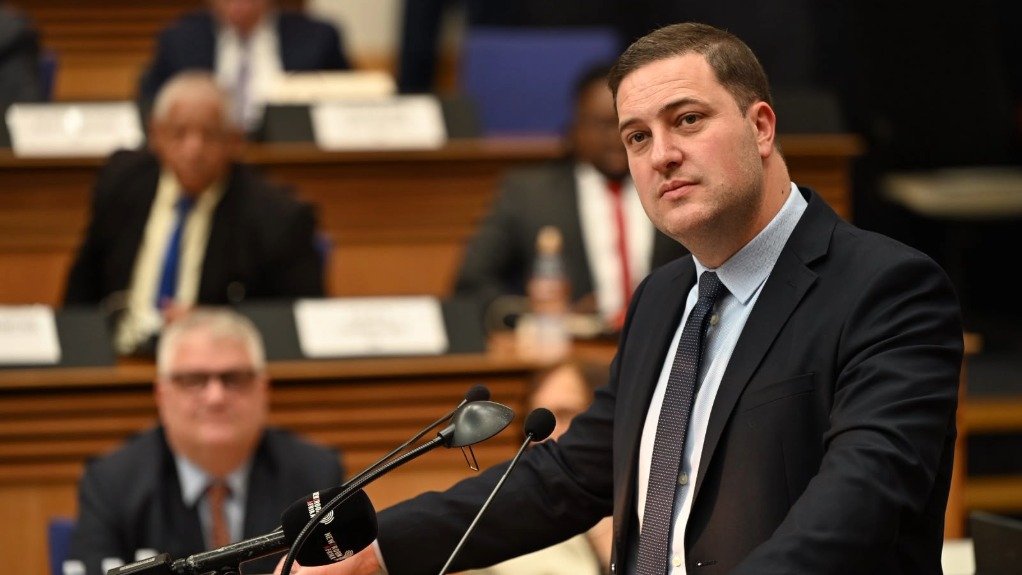

Cape Town Mayor Geordin Hill-Lewis has announced that the City will oppose a legal application by the South African Human Rights Commission (SAHRC) to halt the release of 49 municipal sites destined for residential and commercial development.
The mayor condemned the SAHRC's interdict, labelling it as "electioneering" coming just a week before elections and six months after the City answered the commission's initial enquiries.
Hill-Lewis accused the Chapter 9 institution of “behaving like a political party”, noting that the SAHRC raised no objections during extensive public participation processes and has not targeted land releases in other metros.
While the SAHRC says its application relates to affordable housing, the 49 contested sites include 28 properties zoned for residential use to meet local housing demand in lower and middle-income communities such as Mitchells Plain, Maitland, Goodwood, Kraaifontein, Somerset West, and Durbanville.
The remaining sites, auctioned in February 2026, target commercial and industrial development to boost employment in Atlantis, Mitchells Plain, Delft, and Parow, Hill-Lewis said.
He further noted that the City has accelerated its land release under the current Mayoral Priority Programme, releasing more sites in this term of office than in the preceding decade.
The current pipeline includes 14 sites released for affordable housing (including 6 in the inner city), yielding 7 000 residential units (4 000 affordable and 2 500 social housing units).
Hill-Lewis said there are 39 sites in the pipeline (including 11 in the CBD), with a projected yield of 40 000 units (21 000 affordable and 1 500 social housing units).
He noted the tenanted projects include Maitland Mews (200 social rental units), Goodwood Station (over 1 000 units), and Bothasig Gardens (over 400 units).
Financially, the land release programme has generated R628-million during this term, which is being reinvested directly into municipal services and bulk infrastructure.
Over the last five years, Cape Town handed over 12 401 units – more than double the runner-up, eThekwini (5 355), and outperforming the combined totals of Gauteng's three metros (Ekurhuleni, Johannesburg, and Tshwane), which reached 11 910 units.
To reduce dependency on State grants, Cape Town has implemented strategic incentives to make affordable housing developments commercially viable, passed land discount guidelines and funded site infrastructure, Hill-Lewis said.
He explained that the City has offered permanent rate discounts on properties used for social housing and discounted monthly utility bills for social housing tenants and pointed to mixed-income and mixed-use models to cross-subsidise affordable units.
Additionally, the City is backing informal sector micro-developers through major Municipal Planning By-law amendments, a R20-million bulk infrastructure incentive fund, and a new Local Planning Support Programme in informal settlements to enable residents to transition into formal, dignified accommodation.
The metro also maintains a stock of roughly 50 000 Council Rental Units, subsidising maintenance by R977-million a year without national grant assistance. Furthermore, its 'No Cost Transfer Programme' has transferred over 14 000 free-standing, semi-detached, or maisonette-style properties to tenants since 2017, unlocking hundreds of millions of rands in asset ownership.
Cape Town’s housing delivery model is pivoting away from State-subsidised social housing toward affordable housing models defined by the Financial Sector Code, Hill-Lewis said.
This shift is a direct response to a collapse in national funding, he added, noting that since 2017, total national grant funding for affordable housing has dropped by 41.1% when adjusted for inflation and population growth, alongside a 38% decrease in other key housing grants.
The City currently has 2 500 construction-ready social housing opportunities in and around the CBD that are completely stalled because the Social Housing Regulatory Authority (SHRA) has failed to approve funding, he stated.
Since approving the Maitland Mews development in 2021, the SHRA has not approved a single funding submission on City-released land, despite receiving six submissions – five of which were for qualified inner-city land parcels, he said.
The ongoing delays put prepared development partnerships and municipal land parcels at severe risk, he warned.
EMAIL THIS ARTICLE SAVE THIS ARTICLE ARTICLE ENQUIRY FEEDBACK
To subscribe email subscriptions@creamermedia.co.za or click here
To advertise email advertising@creamermedia.co.za or click here


