







The seemingly tough year experienced by the Brazil, Russia, India, China and South Africa (Brics) economic grouping during 2013 was expected to continue this year, as the bloc increasingly faced internal challenges.
The combined growth of Brics, which had lost momentum since 2010, was expected to “flatline” at 3.5% in 2014, below the average 5.5%-a-year growth experienced since 1998.
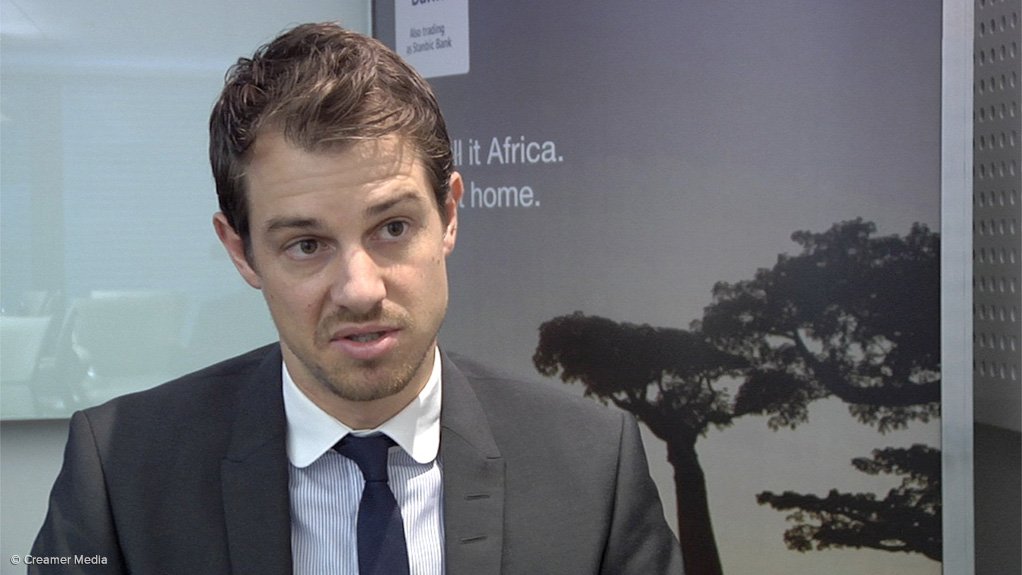
Despite emerging support from the external environment that had previously been considered a threat to the economic grouping, the “cloud” over the 2014 outlook would emerge from within the bloc, particularly China, China strategist Jeremy Stevens said at a Standard Bank Brics-Africa Outlook briefing in Rosebank, on Wednesday.
“It is undeniable that the build-up of liquidity and leverage in China is placing strain on financial markets,” he said, citing China’s surge in money supply from $8-trillion to $18.3-trillion – double the size of its gross domestic product (GDP) – over the past five years, problematic local government debt and corporate leverage.
The Asian country’s growth was forecast to slide from 7.6% in 2013 to 7.1% in 2014.
“Though key components of the real economy – manufacturing, industry, exports and consumption – have fared relatively well over the past few months, industrial performance is highly correlated to policy – and credit-dependent exports appear to already be moderately weakening, [while] consumption remains too small a share of the economy to drive headline growth,” Stevens explained.
India would register growth of 5.2% in 2014, up from 4.7% in 2013, while Russia’s growth increased from 1.8% in 2013 to 2.4% in 2014. Brazil’s GDP growth would remain flat at 2.2%.
While the Brics economic group of countries headed for a tough year that was “certainly less inspiring than we have become accustomed to”, Stevens said that the outlook was “far from dire”.
He explained that while each Brics country was likely to see macroeconomic metrics stay close to cyclical bottoms, each of the bloc’s economies, barring China at -0.5 percentage points and Brazil at 0.0 percentage points, were expected to accelerate marginally, with Russia registering +0.8 percentage points, India +0.6 percentage points and South Africa +0.4 percentage points.
Senior research analyst for the African political economy unit Simon Freemantle said it was too soon to “panic” and it would be “foolhardy” for the global economy to ignore Brics.
Despite a notable slowdown, the Brics have seen overall output jump from $9.5-trillion to $15.5-trillion within five years, with its contribution to global output up from 15% in 2009 to 20% last year. This was expected to jump to 25% by 2018.
Between 2009 and 2013, the economic grouping’s overall output increased over 60%.
Freemantle pointed out that the emerging economies’ cumulative trade with Africa during 2012 was just 20% shy of the European Union’s 27-nation grouping, which comprised far more countries and historical platforms on the continent.
The potential cooling of the Brics economic momentum, as well as the slowing of growth in interactions with Africa should not detract from the overall view of Brics-Africa ties.
These ties suggested a long-term and structural synergy, despite a downgrade in the estimated trade between Africa and the Brics countries.
Standard Bank had estimated that Brics-Africa trade, which reached nearly $350-billion in 2013 – a 5% hike on the prior year, would rise to between $400-billion and $420-billion by 2015 – a decrease on the 2009 estimates of $500-billion.
Meanwhile, Africa should not dismiss the role China would play in the continent’s development, as the Asian nation remained Africa’s largest trade partner within the bloc, with an estimated trade of $210-billion, accounting for 60% of total flows last year.
Freemantle further noted that between 2009 and 2012, China’s cumulative investment in Africa more than doubled from $9.33-billion to $21.23-billion.
India-Africa trade increased marginally to $72-billion last year, while Brazil-Africa trade reached an estimated $27-billion.
Brazil’s trade with Africa failed to match the growth of its Brics counterparts, growing by a cumulative 5% compared with the 70% growth in Brics-Africa trade since 2008.
Last year, Africa’s exports to Brazil rose from $14.3-billion in 2012 to $15.8-billion, while Brazil’s exports to Africa declined from $12.2-billion to $11.4-billion.
Freemantle commented that Russia had also battled to gain ground in trade with Africa, with Russia-Africa trade contracting 2% to $9.2-billion in 2012.
“Russia is still battling to regain lost influence and momentum in Africa. Given structural inconsistencies between Russia and most African economies on the trade front, this marginal status is likely to remain fixed,” he explained.
Russia’s exports, mostly resources and agricultural commodities, to Africa, particularly North Africa, reached $6.6-billion last year, a fall from the $7.2-billion recorded in 2012. Imports from Africa increased from $2.3-billion in 2012 to $2.6-billion during 2013.
“To place this in context, China imported roughly the same amount from Africa in the first week of 2013 as Russia did in the entire year,” Freemantle stated.
South Africa’s 2013 trade with the rest of Africa remained flat at $25-billion, with exports to the continent registering at just under $16-billion and imports at $9-billion.
“South Africa rests increasingly on its ability to export manufactured goods into the rest of Africa. Indeed, where South Africa runs a sizeable trade deficit with most of its emerging and traditional trade partners, with Africa its surplus is notable. In 2013, South Africa exported almost twice as many goods to the rest of the continent as it imported and this even within the context of a rise in crude oil imports from Nigeria [owing], in large part, to sanctions imposed on trade with Iran,” the analyst noted.
However, Freemantle pointed out that the trade statistics excluded South Africa’s trade with its Southern African Customs Union partners, namely Swaziland, Lesotho, Botswana and Namibia.
“Include these four markets, and South Africa-Africa trade leaps in 2013 to touch $38-billion – making South Africa easily the third-largest Brics trade partner for Africa,” he highlighted.
African exports to the Brics bloc, particularly China, slowed between 2012 and 2013 to between $3-billion and $5-billion, compared with a surge of $40-billion between 2010 and 2011.
EMAIL THIS ARTICLE SAVE THIS ARTICLE FEEDBACK
To subscribe email subscriptions@creamermedia.co.za or click here
To advertise email advertising@creamermedia.co.za or click here


