





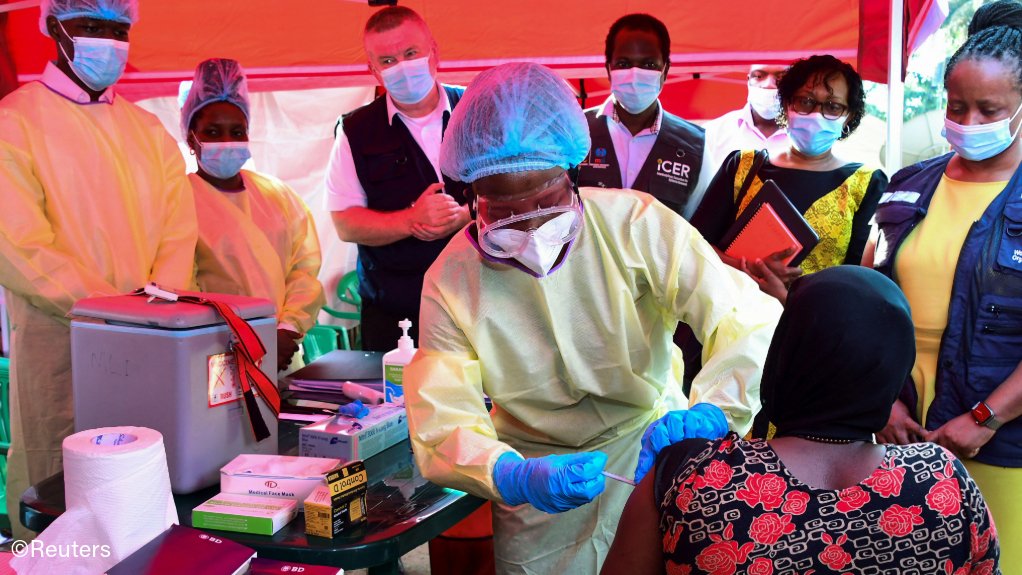
In an Ebola outbreak, hours matter.
Yet the response to the deadly and fast-spreading epidemic in the Democratic Republic of Congo is weeks if not months behind - and missing thousands of people who may be at risk.
Interviews with global health officials and documents from a meeting led by the World Health Organization (WHO) and Africa Centres for Disease Control and Prevention show how behind the curve authorities are in fighting the latest outbreak.
Caused by a strain of the virus known as Bundibugyo for which there is no vaccine or treatment, the outbreak has already caused a suspected 220 deaths and 900 cases, according to the WHO. It has spread to Uganda, where there are seven cases.
Health teams are racing to find thousands of people who may have been exposed to the virus while also grappling with myriad challenges that make it difficult to contain.
Problems at a local level include lack of basic supplies as well as mistrust from a community scarred by previous outbreaks. Globally, the response is hampered by the withdrawal of the US from the WHO and wider funding cuts, many health sources said.
Documents from Friday's virtual coordination meeting show that, as of last week, only 7% of the 1,261 people identified as contacts of suspected Ebola patients had been found and followed up. The WHO put the number at more than 2,000 on Wednesday.
‘OUTPACING THE RESPONSE’
The outbreak is "outpacing the response", WHO Director-General Tedros Adhanom Ghebreyesus posted on Wednesday.
"Attacks on health facilities make tracking cases and their contacts nearly impossible."
In eastern Congo, the worst-hit area, hospitals have been attacked and isolation tents burned by angry mobs reclaiming bodies of loved ones, apparently unaware of risks from infectious corpses.
That is hindering the operation to stop the spread of the virus and track those at risk in an area already wracked with conflict and with poor health infrastructure, three experts said.
In a document summary of the meeting on Friday, the partners agreed that reaching more contacts is now the key priority as funding and emergency response personnel trickle in.
"Bottom line: No vaccine exists. No therapy exists. The virus circulated undetected for six weeks. Cross-border spread is confirmed. Healthcare workers are dying. Every day without a fully resourced response is a day the outbreak gains ground," a presentation by the WHO Africa team from the meeting reads.
Professor Salim Abdool Karim, a leading South African epidemiologist and one of the key figures advising Africa CDC, said the outbreak was moving at “breakneck speed”.
“If you had to choose a bad place for this to happen, it would be Ituri,” he added of the province at its epicentre.
While Congolese officials are well-versed in fighting Ebola - this is the 17th outbreak since 1976 - shortages remain a problem, including of the right tests to detect Bundibugyo rather than other Ebola viruses.
This was also a factor delaying initial detection.
“There are very few people on the ground – and there are other problems as well, like getting fuel for the vehicles. It goes on and on,” Karim said.
US MISSING
Several sources, including one US official briefed on the Ebola response and another working with WHO, said problems would have been solved more easily and quickly in the past, when the US worked with WHO and often co-led the international response to outbreaks.
The US left the organisation in January and has cut international aid funding more broadly, alongside a number of other wealthy countries.
“The organisations that would have been able to do this work are not there anymore,” said one US official briefed on the response.
Amadou Bocoum, CARE’s country director, said his emergency response team had been cut by a third.
With the scale and origins of the outbreak unclear, it was a "hell of a job" to find all potential cases and contacts, said Marion Koopmans, a Dutch virologist on the WHO's emergency committee.
Ebola spreads through direct contact with the bodily fluids of infected people once they have symptoms, contaminated materials, and bodies of those who have died with the illness. The contacts of Ebola patients need to be found and then watched over for 21 days, the incubation period of the virus. If they get symptoms, they can isolate, stopping further spread.
“We’re going back to the basics of Ebola outbreak responses when we didn't have the means to contain it like we did before vaccines and therapeutics,” said Dr. Alan Gonzalez, deputy director of operations for Medecins Sans Frontieres, which has asked staff worldwide to apply to reinforce the workforce in Congo.
There is also a major psychological obstacle.
“People are afraid,” said Mamadou Kaba Barry, head of mission in Congo for the Alliance for International Medical Action, which has run 60 health centres in Ituri for several years. He said some cases are disappearing and other suspected cases are not being reported because of the mistrust.
He and many others fear a repeat of the worst-ever Ebola outbreak, which spread across West Africa in 2014-2016 and caused more than 28 000 cases and 11 000 deaths.
“In West Africa, people hid, thinking, 'What's the point of dying and having my family unable to recover my body?'" he said, adding that a decade on, some lessons still need to be learned.
“We never get used to Ebola. It's always frightening.”
EMAIL THIS ARTICLE SAVE THIS ARTICLE FEEDBACK
To subscribe email subscriptions@creamermedia.co.za or click here
To advertise email advertising@creamermedia.co.za or click here


