





The ANC is rolling out a targeted local government intervention programme to address systemic failures in water, electricity, refuse, and roads, through a dual strategy of enforcing strict financial discipline while actively rescuing collapsing municipalities ahead of the local government elections.
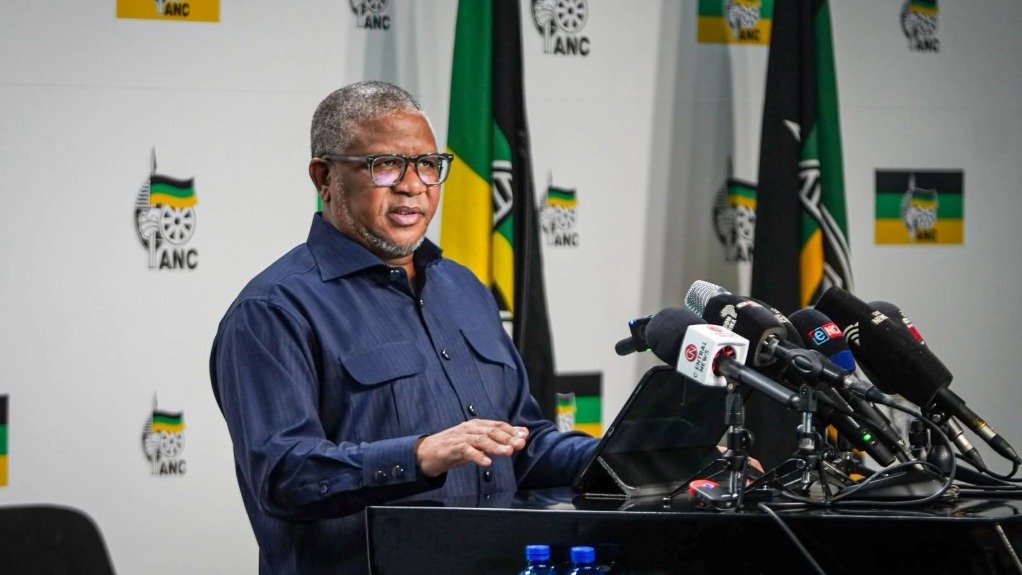
Speaking at Luthuli House, ANC secretary-general Fikile Mbalula said the ANC was leveraging constitutional mechanisms to intervene directly where local councils had faltered.
He emphasised that public funds must be rigorously protected through parliamentary oversight, particularly the withholding of grants from underperforming municipalities.
He noted the recent Auditor-General reports, which he said indicated the beginning of a municipal recovery, stating that the number of municipalities achieving clean audit outcomes had increased, and that municipalities were achieving near-total billing accuracy.
While the party viewed these shifts as evidence that competent management could restore municipal health, Mbalula cautioned that these preliminary successes were not yet victories to be celebrated.
Acknowledging the deep societal anguish caused by water scarcity, Mbalula stated that “no dispute is worth a human life”.
He said government was deploying urgent rescue teams and drilling boreholes in areas where piping infrastructure was not yet established.
The ANC was “using its success in halting loadshedding for over a year” as a blueprint for fixing water infrastructure, he noted.
The President’s new National Water Action Plan aimed to mirror this operational seriousness to secure a reliable water supply nationwide, Mbalula said.
BBBEE
Meanwhile, Mbalula defended broad-based black economic empowerment (BBBEE) against what he described as an orchestrated effort to discredit policies of redress.
He cited stark economic data to underscore the necessity of transformation, pointing out that the richest tenth of the population held roughly 86% of all wealth and that a few thousand individuals held more wealth than the poorest 32-million South Africans combined.
He noted that South Africa remained the most unequal country in the world.
"An economy owned by so few is not only unjust, it is unstable. BBBEE is not a cost; it is an investment in stability and social peace,” Mbalula said.
The ANC's long-term economic strategy focused on “tangible workforce benefits” rather than ownership alone.
Key priorities included, processing raw minerals locally to maximise economic value and job creation; safeguarding workers as AI integrated into local industries and converting the current Social Relief of Distress Grant into a permanent basic income support system.
Mbalula dismissed critical research and media commentary aimed at undermining redistribution policies, asserting that economic inclusion remained a lawful and non-negotiable demand for all citizens.
EMAIL THIS ARTICLE SAVE THIS ARTICLE ARTICLE ENQUIRY FEEDBACK
To subscribe email subscriptions@creamermedia.co.za or click here
To advertise email advertising@creamermedia.co.za or click here


