





As South Africa commemorates 30 years since the adoption of its democratic Constitution, the African National Congress (ANC) called on citizens to defend, deepen, and uphold constitutional democracy, which guarantees rights and equality for everybody.
In a statement, the party reaffirmed its dedication to a "united, inclusive, prosperous and non-racial" South Africa, while addressing contemporary challenges such as xenophobic tensions and the need for fair immigration policies.
Commemorating three decades of constitutional democracy, the ANC emphasised that the supreme law of the land represented the culmination of generations of sacrifice.
The party urged South Africans to actively oppose racism, tribalism, xenophobia, and sexism and to defend the rule of law and constitutional rights.
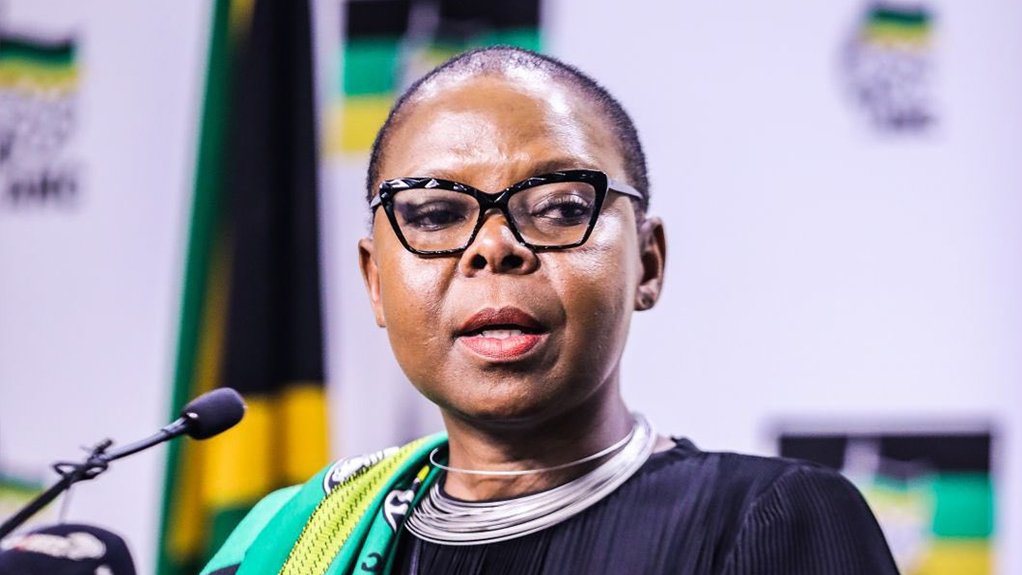
“… continue working together to create a united nation, adhering to the principle that ‘South Africa belongs to all who live in it, united in diversity’,” said ANC national spokesperson Mahlengi Bhengu.
She described the constitutional commitment to pan-Africanism, solidarity, and unity among African peoples as “unshakable”.
Acknowledging current challenges, the ANC recognised that frustrations regarding undocumented migration that had led to outbreaks of violence against African migrants.
Foreign Ministries from nations such as Kenya, Malawi, and Lesotho issued warnings to their citizens in South Africa following increased violent, anti-immigrant protests.
The ANC emphasised that these issues must be handled responsibly and humanely, as it advocated for a partnership approach with Southern African Development Community neighbours.
Bhengu said the ANC reaffirmed its commitment to a society based on social justice and human rights, highlighting that, "we honour all those who suffered, sacrificed and laid down their lives for freedom and justice in our land".
ACHIEVEMENTS
Bhengu pointed out that the ANC recognised that no Constitution was static or perfect.
“… Constitutions evolve as societies evolve. What remains permanent, however, are the founding values of human dignity, equality, non-racialism, non-sexism, democracy and social justice that underpin our constitutional order,” she said.
Bhengu explained that over the past 30 years, the democratic State had expanded access to basic services, education, water, sanitation, healthcare, electricity, social grants and public infrastructure to those who were deliberately excluded under apartheid.
The ANC further celebrated the transformation of institutions of State, including the judiciary itself, pointing to gender transformation in the legal fraternity and the apex court.
“… today, women constitute the majority in the Constitutional Court," she stated.
She noted that the Constitution remained a living instrument for socioeconomic transformation and redress, highlighting that through Section 25 and progressive legislation such as the Expropriation Act, democratic South Africa continued to pursue land reform and restorative justice to reverse the legacy of dispossession.
“For the ANC, land reform is not symbolic, but a catalytic instrument for economic transformation, rooted in the historic Freedom Charter declaration that ‘The land shall be shared among those who work it’ and that ‘The people shall share in the country’s wealth’,” she explained.
Bhengu noted the structural inequalities created by apartheid, which persisted in the economy, in patterns of ownership, management, access to opportunity and spatial development.
She said the struggle for economic transformation, inclusive growth, industrialisation, job creation, skills development, land reform and agrarian transformation, therefore, remained central to the full realisation of the Constitution’s promise of a better life for all.
The ANC said it noted with concern the “growing pushback” against the transformative values of the Constitution by those it said were opposed to affirmative action, broad-based black economic empowerment, land reform and universal healthcare.
The party rejected what it termed attempts to “undermine transformation, sponsor secessionist tendencies, weaken national unity or reverse the democratic gains achieved since 1994”.
EMAIL THIS ARTICLE SAVE THIS ARTICLE ARTICLE ENQUIRY FEEDBACK
To subscribe email subscriptions@creamermedia.co.za or click here
To advertise email advertising@creamermedia.co.za or click here


