





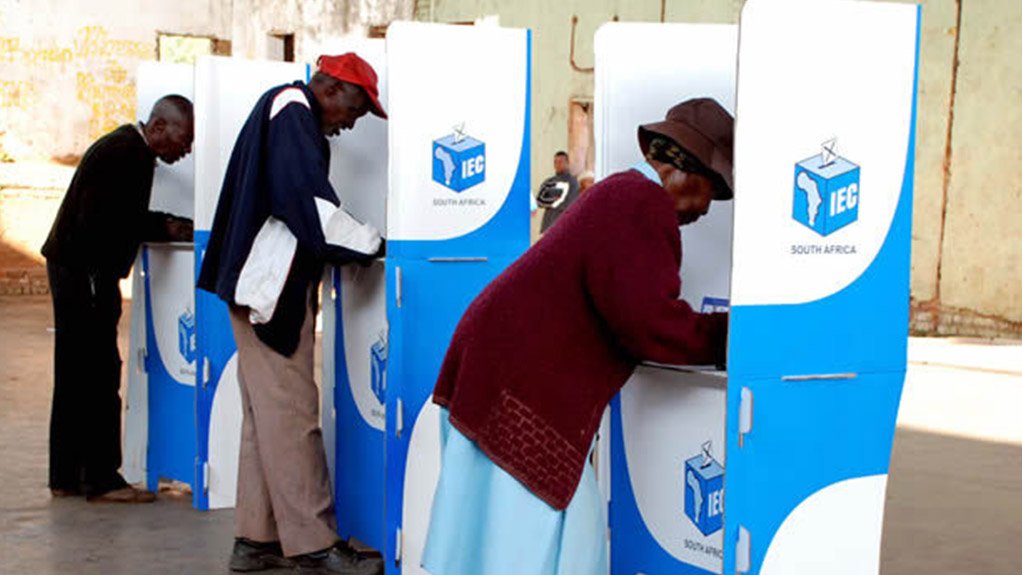
As South Africa prepares for the highly anticipated local government elections, the intersection of AI, political campaigning, and digital disinformation has triggered intense national scrutiny.
At a recent high-level roundtable focused on combating fake news, public officials and independent fact-checkers converged to sound the alarm on a rapidly evolving digital landscape that threatens to compromise voter trust.
Speaking at the roundtable, Sandile Nene of the Government Communication and Information System (GCIS) reflected on the challenges governments face when communicating in a modern digital era.
According to Nene, South Africa has plunged headfirst into the "attention economy" – an environment defined by "content everywhere" where algorithms aggressively dictate what citizens see and believe.
For the GCIS, cutting through this algorithmic noise is not just a strategic objective; it is a constitutional and socioeconomic obligation.
"There is always a correlation between an informed society and economic development," Nene explained, citing historical frameworks from the World Summit on the Information Society and mandates within South Africa’s National Development Plan (NDP).
"Information received from print, electronic, and broadcast media is vital for an informed citizen. That becomes our responsibility."
However, this mandate faces severe headwinds. Global trust deficits in public institutions and traditional media are opening the floodgates for unethical AI exploitation.
The stakes are uniquely high for South Africa, with a global study by Accenture indicating that South Africa stands to benefit by roughly R1.3-trillion if it can successfully roll out ethical AI frameworks.
Yet, the unintended consequences of unregulated AI present an immediate danger, Nene said.
GCIS data highlights that roughly 29-million South Africans live at the "bottom of the pyramid." Classified as information-deprived within the government's segmentation model, these citizens often lack alternative means or tools to verify content, Nene explained.
To counter this, GCIS has established core partnerships with the Council for Scientific and Industrial Research and international digital platforms to drive content moderation and takedown strategies.
Furthermore, the State relies heavily on its primary partnership with the Electoral Commission of South Africa to safeguard institutional legitimacy.
Nene warned against the "unspoken harm" of peer-to-peer sharing, where misleading content – such as fake election victory declarations – continues to spread organically via WhatsApp or Telegram even after being formally flagged or labelled.
He reminded citizens that under domestic law, individuals can be held legally accountable for resharing or liking harmful content that incites violence or generates mass confusion.
While government focuses on systemic policy adjustments, independent monitoring groups are tracking how these threats manifest in real time.
Experts from Africa Check and the Centre for Analytic Behavioural Change (CABC) provided a stark look at the tactical realities of the digital battlefield.
Africa Check researcher Cayley Clifford emphasised a surprising nuance: while public anxiety surrounding advanced AI is high, South Africa’s disinformation ecosystem is already thriving using basic techniques.
Most of misleading content relies on "false context" – genuine, unedited images or videos stripped of their original backgrounds and repurposed to deceive.
When AI is deployed, Clifford drew a sharp distinction between two tiers of manipulation, noting that highly convincing deepfakes remain relatively rare owing to the advanced technical skills and steep computational resources required to produce them.
Clifford said clumsy fabrications are highly prevalent. Created rapidly using free online software, these are easily spotted by their poor lip-syncing, distorted details, or generic aesthetics.
CABC researcher and dialogue facilitator Tom Gshlain shifted the focus to the alarming speed and affordability of these technologies.
The primary danger of contemporary AI is not necessarily its perfection, but its scale, he said, adding that it allows harmful, polarising narratives to be generated and weaponised faster than fact-checkers can flag them or digital platforms can take them down.
The CABC’s social monitoring across X, Facebook, and TikTok has captured a worrying democratic shift in text-to-video manipulation.
Most concerning is the complete erasure of financial barriers. Malicious actors no longer require State-sponsored budgets to manipulate local narratives.
With voice-cloning tools like Resemble AI delivering up to 95% accuracy for as little as R33 per month, and specialised video generation suites accessible for roughly R115 per month, a highly destructive political disinformation campaign now costs less than a standard Internet data bundle.
As South Africa moves closer to election day, public officials and researchers agree that State policy and automated content takedowns are only half the battle.
The final line of defence rests on the digital discipline of the individual voter.
If a political graphic, breaking news alert, or sensational audio clip triggers an immediate, intense emotional response, experts urge citizens to pause.
Voters are encouraged to check internal and external clues, practice media verification skills on educational platforms and maintain one golden rule: if you are ever in doubt, do not share it further.
EMAIL THIS ARTICLE SAVE THIS ARTICLE ARTICLE ENQUIRY FEEDBACK
To subscribe email subscriptions@creamermedia.co.za or click here
To advertise email advertising@creamermedia.co.za or click here


