





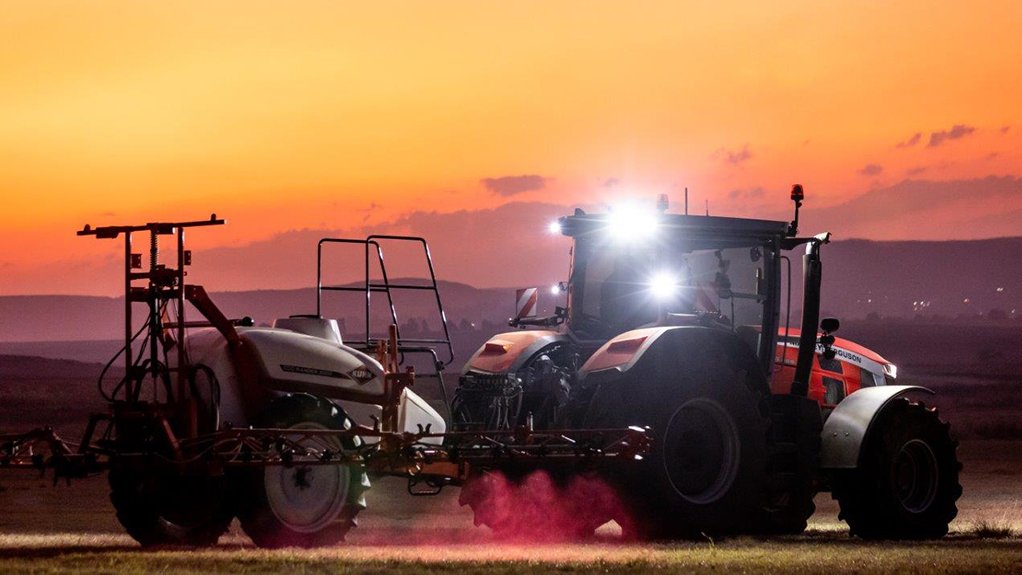
Industry body Agri SA has welcomed Finance Minister Enoch Godongwana’s announcement of temporary fuel price relief worth R10-billion in the 2026 Medium-Term Budget Policy Statement (MTBPS).
Agri SA deems it an important fiscal intervention to ease pressure on agricultural production costs and food prices.
Government plans to reduce the general fuel levy by R3 a litre for diesel and by R1.50 a litre for petrol from November 4 to December 1, following which the relief will be reduced to R1.50 a litre for diesel and R1 a litre for petrol until January 5, 2027.
For Agri SA CEO Johann Kotzé, Godongwana’s announcement comes at a critical time for South African agriculture, on the eve of the summer grain planting and summer fruit production seasons.
He explains that with El Niño conditions expected to bring heightened climatic risks, and with fertiliser and fuel costs remaining persistently high, producers are entering this production period under considerable financial pressure.
“Diesel is a major input across agricultural operations and the entire food system. The intervention will provide much-needed relief at a time when farmers are making important production and investment decisions,” Kotzé notes.
Another agriculture organisation, TLU SA, also welcomes the temporary fuel relief announcement, however, it cautions that temporary relief cannot compensate for years of deteriorating infrastructure, inefficient logistics and rising operating expenses.
Agri SA also welcomes the targeted allocations in the budget’s Adjusted Estimates of National Expenditure such as R183-million carried forward to Foot-and-Mouth Disease vaccine procurement, R242-million in additional funding to rehabilitate flood-damaged agricultural infrastructure, and R1.46-billion for rehabilitating flood-damaged national and provincial roads, which are vital to agriculture logistics and market access.
In turn, Agricultural Business Chamber of South Africa (Agbiz) welcomes government's increase of a contingency reserve to R10-billion in respect of potential threats associated with El Niño and other risks.
Agbiz chief economist Wandile Sihlobo says the Department of Agriculture will have to closely assess the impact of El Niño in the sector in 2027 and tap into these resources to help the most affected farmers in the sector.
Sihlobo further says that the R1.5-billion allocated in the MTBPS over the next three years for additional extension officers in the agriculture sector is positive, especially as the State releases more land to assist new entrant farmers.
On this matter, TLU SA says the value of this expenditure must be measured against the actual support delivered to producers. Similarly, TLU SA says the additional R810-million having been announced for the South African Police Service vehicle fleet must be assessed against improvements in operational policing, including the protection of farming communities.
LONGER-TERM QUALMS
Agri SA does, however, emphasise the importance of effective implementation of government’s relief and support measures. “For one, FMD remains a major threat to livestock production and export markets, and the country requires a sustained, properly funded vaccination and biosecurity programme rather than reliance on emergency measures,” the organisation states.
Similarly, Agri SA believes infrastructure investment must extend beyond disaster recovery. Kotzé comments that reliable roads, water systems and logistics networks are essential to lowering production costs, attracting investment and expanding agriculture exports.
The organisation also remains concerned about the need for predictable and adequate agriculture development finance through a stronger Land Bank and dedicated investment in climate resilience.
“The MTBPS provides welcome short-term relief, but agriculture's long-term contribution to economic growth, employment and food security depends on sustained investment in the systems that support production,” Kotzé says.
Moreover, TLU SA laments that government continues to spend substantial amounts of taxpayer money without consistently achieving the intended results.
It cites the example of R887-billion having been transferred through infrastructure conditional grants between 2017/18 and 2023/24 but projects still being frequently delayed, left incomplete or failing to deliver their intended benefit entirely.
“While Godongwana has acknowledged that substantial infrastructure funding has been spent without delivering the intended results, the question is why this was allowed to continue and what consequences there will be for those responsible,” says TLU SA GM Bennie van Zyl.
He adds that the additional R21.8-billion allocation for local government to meet rising basic services costs will only go so far if the management problem is not solved.
“If municipalities cannot maintain roads, provide reliable water and electricity or manage their existing resources properly, additional funding will mean very little unless the underlying problems are corrected,” Van Zyl states.
Agbiz agrees, saying that farmers continue to face constraints in business activity and rising costs as a result of ineffective municipalities.
TLU SA ultimately calls for transparent, measurable reporting on government-funded projects, including whether projects were completed, whether procurement processes were lawful and competitive, and whether the intended economic and social benefits were achieved.
“Taxpayers need evidence that money is being managed responsibly, that competent people are making the decisions and that those who waste public funds are held accountable,” Van Zyl notes, concluding that South Africa cannot afford to continue measuring government performance by the size of budget allocations instead of by what actually changes on the ground.
EMAIL THIS ARTICLE SAVE THIS ARTICLE ARTICLE ENQUIRY FEEDBACK
To subscribe email subscriptions@creamermedia.co.za or click here
To advertise email advertising@creamermedia.co.za or click here


