





Early warnings must be heeded to protect coping capacity and prevent a foreseeable shock from becoming an irreversible setback.
A strong El Niño event is expected to persist from this year until February 2027, transforming global weather systems and triggering devastating climate extremes. The World Meteorological Organization has reported a 100% chance of El Niño conditions developing, caused by unusually warm ocean waters in the central and eastern Pacific.
Previous El Niño events show how fatal these cycles can be, even under cooler global conditions. The 2015-2016 cycle triggered intense droughts, flooding and extreme temperature rises, leading to malnutrition, disease outbreaks, heat stress and respiratory illnesses for over 60-million people globally.
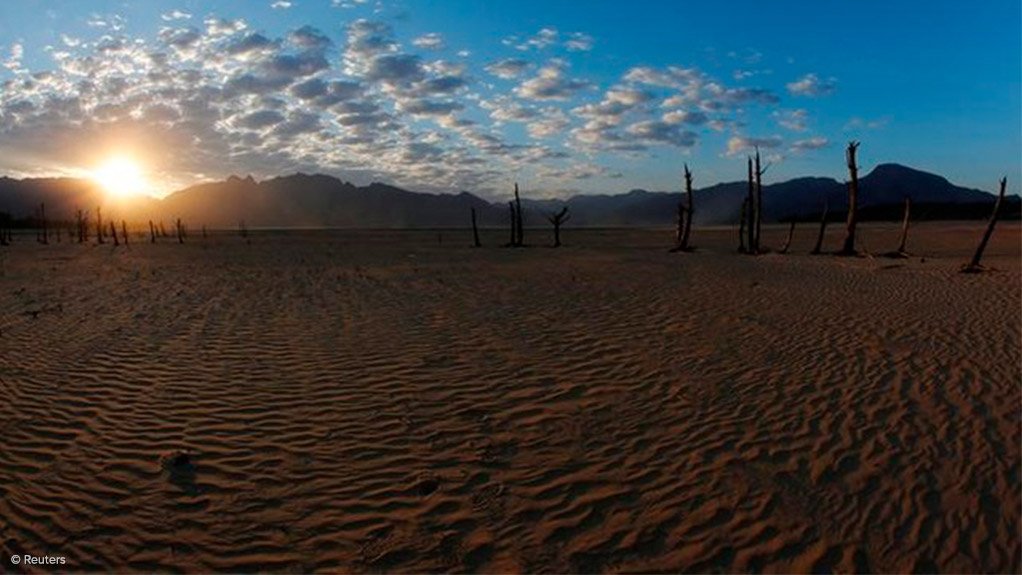
In Southern Africa, it was part of a broader sequence of dry conditions where effects accumulated over years and partly contributed to the Cape Town Day Zero water crisis. This history is key, as the anticipated El Niño effects could last for years.
The world’s climate system has reached its warmest ever. This El Niño event will trigger a dangerous chain reaction of risks on top of an already hotter atmosphere, land surface and ocean. Ecosystems, water systems, food producers and vulnerable households are already exposed to recurring heat and weather extremes. Where these pressures intersect with poverty, food-price pressures, conflict, displacement and weak infrastructure, wider human security issues can ensue.
Water will be one of the initial pressure points. Drought lessens water availability for households, agriculture, livestock and energy production, increasing competition around boreholes, rivers, irrigation systems and grazing routes. Flooding causes damage to water infrastructure, contamination of drinking water sources, disruption of the sanitation system, and increased exposure to water- and vector-borne diseases.
While water will be the first point of insecurity, food security is where those pressures become felt in households and markets. Rainfall deficits, delayed planting and prolonged dry spells can reduce crop yields. Intense rainfall can potentially destroy crops and interrupt nutrition and livelihoods.
In Africa, El Niño can drive drought in one area while increasing flood risks in another. Regions such as East Africa and the Greater Horn will be directly affected. In equatorial countries like Kenya, Somalia, southern Ethiopia and Uganda, above-average October-December rainfall is expected. For Southern Africa, below-normal rainfall could occur during the October-April rainy season.
West Africa and the Sahel will likely experience varied impacts. Rather than one extensive drought, unpredictable timing and distribution of rainfall are expected. Parts of Mali, Niger, Nigeria and Chad will experience below-normal rainfall. Central Africa shows mixed conditions varying among areas, with inconsistent outcomes.
Anticipatory action is key to ensuring resilience. A window of opportunity exists to use the available forecasts to reduce the severity of losses and damages. The goal should be to ensure that households, communities and institutions can absorb shocks without losing the assets and systems that underpin recovery and resilience.
Research shows that investing early can generate substantial economic returns by reducing losses and response costs. African institutions should use the forecast window to invest in preparedness before the El Niño-related shocks lead to food, water and livelihood crises.
Doing so requires pre-arranged finance and coordinated action across climate, disaster-risk, water, food, health and security institutions. In the 2023-2024 El Niño season, the Regional Anticipatory Action Working Group mobilised almost US$31-million to protect over two-million people across seven Southern African countries before the effects materialised. Communities received financial support, drought-resistant crops and early warning messages.
Studies in Malawi and Zambia reveal how an insurance mechanism can release money before a drought causes its worst damage – but only if the forecast, funding and delivery systems are ready to act quickly. Such mechanisms offer governments early liquidity to provide water, drought-resistant seeds, livestock support and financial assistance. But preparedness must be region-specific, continuously updated and responsive to changing forecasts.
In Africa, foundations for a more anticipatory response to El Niño exist, including frameworks for disaster-risk reduction, climate adaptation, peace and security, early warning and resilience. However, the connection between these frameworks is inconsistent, and forecasts don’t always lead to coordinated decisions that reach vulnerable communities.
At the continental level, the African Union’s Africa Multi-Hazard Early Warning and Early Action System strengthens coordination and anticipatory action. The African Centre of Meteorological Applications for Development provides continental climate information, and several regional centres translate forecasts into more geographically specific assessments.
Africa has progressed in expanding multi-hazard early warning systems, with 41 countries reporting such systems in 2026, compared to 14 in 2015. The challenge is the gap between knowing that a shock is coming and having the systems, resources and authority to act in time.
First, governments and regional institutions must determine where the triggers for drought, flooding, or any livelihood stress would be and what measures are needed when those thresholds are reached. Warnings should be communicated in local languages and through trusted channels, including local authorities, pastoralist networks and civil society.
Second, plans must be funded. Without some pre-arranged financing, institutions might need to issue an emergency declaration or a humanitarian appeal. Third, water systems need to be strengthened against both scarcity and flooding. This includes repairing and protecting water supply infrastructure, emergency water provision in drought-prone areas, maintaining flood-control systems, and protecting sanitation systems.
Finally, El Niño does not respect institutional boundaries. Preparedness requires coordination among meteorological, agricultural, water, health, disaster-risk, humanitarian and security institutions, enabling them to plan for interconnected risks rather than respond to each impact separately.
El Niño is an opportunity to strengthen Africa’s broader risk management. Will decision makers act early enough to protect coping capacity and prevent a foreseeable shock from becoming an irreversible setback?
Written by Kgaugelo Mkumbeni, Research Officer, Climate Risk and Human Security, ISS Pretoria
EMAIL THIS ARTICLE SAVE THIS ARTICLE ARTICLE ENQUIRY FEEDBACK
To subscribe email subscriptions@creamermedia.co.za or click here
To advertise email advertising@creamermedia.co.za or click here


