





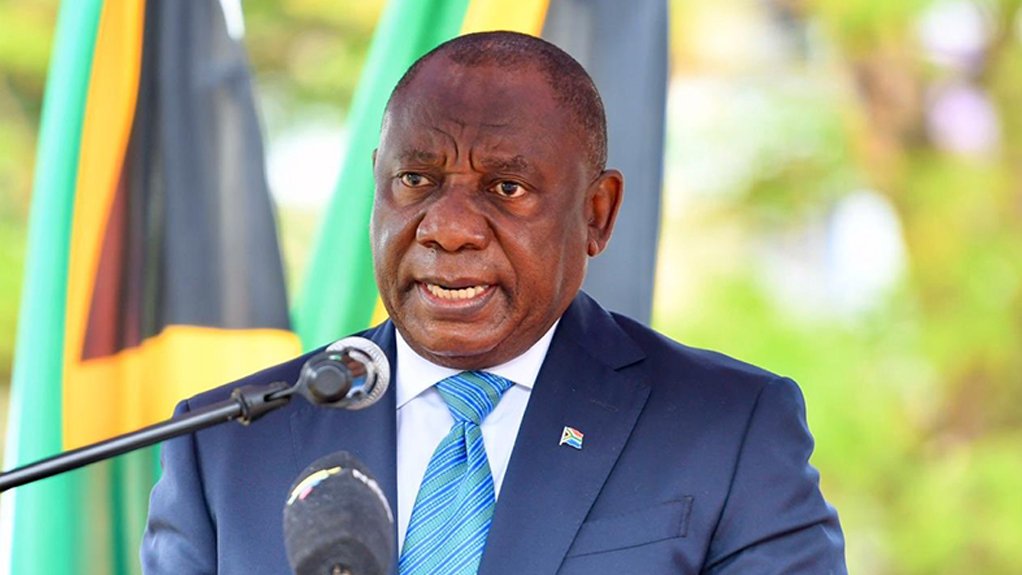
ActionSA has officially laid criminal charges against President Cyril Ramaphosa in the ongoing Phala Phala farm theft saga, alleging a deep-seated cover-up and the under-reporting of stolen funds.
The criminal charges, filed at the Bela-Bela Police Station, in Limpopo, are of perjury and fraud and allege that Section 34(1)(b) of the Prevention and Combating of Corrupt Activities Act 12 of 2004 (PRECCA) was contravened.
The charges arise from reports indicating that at least R15-million of Ramaphosa’s money was stolen from his Phala Phala farm, rather than the widely reported $580 000 (roughly R8.75-million at the time of the burglary).
Last week, the Constitutional Court revived the Phala Phala saga by declaring that the previous parliamentary process used to shield the President was unconstitutional.
ActionSA asserted that Ramaphosa deliberately failed to disclose the true, higher amount of money that was stolen and added that cash flow analyses conducted by the National Prosecuting Authority (NPA) on one of the accused have raised further questions regarding the true extent of the funds.
ActionSA Parliamentary Chief Whip Lerato Ngobeni argued that this reinforces the party’s long-standing position that the South African public has not been told the full truth about the Phala Phala scandal.
ActionSA contended that under Section 34 of PRECCA, there is a clear legal obligation for individuals in positions of authority to report corruption and related offences involving amounts above the prescribed threshold.
Ngobeni pointed out that a deliberate failure to accurately disclose material information regarding such offences poses severe legal and constitutional concerns.
The party stated that misrepresentations under oath regarding the stolen money, under the guise of protecting the Presidency, may amount to perjury and fraud.
“The rule of law must apply equally to all, including the President of the Republic. The Presidency cannot become insulated from scrutiny simply because accountability becomes politically inconvenient. South Africans deserve the truth, and the institutions tasked with uncovering that truth must be allowed to function freely, independently, and without fear, favour, or political interference,” Ngobeni said.
EMAIL THIS ARTICLE SAVE THIS ARTICLE ARTICLE ENQUIRY FEEDBACK
To subscribe email subscriptions@creamermedia.co.za or click here
To advertise email advertising@creamermedia.co.za or click here


