





- A Roadmap Towards Circularity in Lebanon0.68 MB
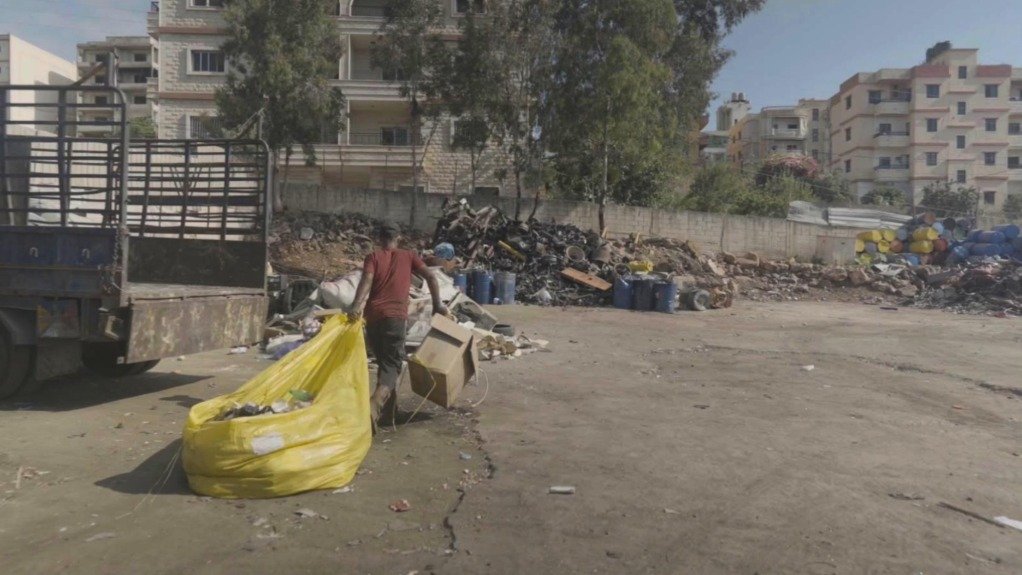
Lebanon’s recurring waste crises are not isolated environmental failures; they are manifestations of a structurally fragile economic model. The country remains locked in a predominantly linear system characterised by import dependence, weak enforcement, disposal-oriented infrastructure, and the externalisation of environmental and social costs. Over the past decade, numerous circular economy initiatives have emerged through donor-supported programs, circularity reports, municipal experiments, industrial efficiency projects, and cleantech entrepreneurship. Yet these efforts remain fragmented and insufficiently anchored in regulatory reform.
The core challenge is not the absence of initiatives, but the absence of systemic consolidation. Circular economy in Lebanon continues to function as a collection of pilots rather than as an economic governance framework. Without binding mechanisms, particularly Extended Producer Responsibility (EPR), fiscal alignment, and municipal cost-recovery reform, progress remains limited, and market distortions persist.
Regional experience shows that EPR systems in MENA are often introduced gradually, starting with priority streams such as plastics and packaging, with varying levels of enforcement and institutional maturity (e.g., Tunisia’s Eco-Lef system, Egypt’s emerging plastic EPR framework). This reinforces the need for phased implementation in Lebanon (OECD, 2016; LDK Consultants, 2025).
This policy brief argues that circular economy must be understood not as an environmental agenda, but as a justice-oriented recovery strategy. In the context of economic collapse, currency devaluation, municipal fiscal distress, and labour informality, circular reform represents an opportunity to stabilise secondary material markets, redistribute responsibility across value chains, protect informal workers, and expand sustainable consumption, production and recycling reducing structural import dependency. Lebanon does not need additional isolated projects. It requires sequenced regulatory reform that consolidates existing momentum into enforceable and economically coherent policy architecture.
Oxfam’s engagement in this transition is conditional. It supports circular economy reform where it is grounded in equity, accountability, and social protection. This includes advocating for polluter-pays mechanisms such as Extended Producer Responsibility (EPR) with strong anti-capture safeguards, ensuring that costs are not disproportionately shifted onto households during crisis conditions, and protecting informal waste workers through rights-based integration. Oxfam does not support reforms that reinforce monopolistic structures, weaken labour protections, or operate without transparency, public reporting, and accountability mechanisms. Circular economy must function as a tool for justice and resilience, not only efficiency (Kirchherr, 2017) .
Lebanon’s transition requires a sequenced and enforceable approach, beginning with priority waste streams and simple, verifiable rules under a “minimum viable enforcement” model. This includes phased implementation of Extended Producer Responsibility (EPR), targeted fiscal instruments, and strengthened municipal capacity, building on existing sector momentum in plastics, construction and demolition waste, and e-waste. By starting small and scaling based on demonstrated enforcement, reform can move from fragmented pilots to a credible national system.
Report by Oxfam
EMAIL THIS ARTICLE SAVE THIS ARTICLE ARTICLE ENQUIRY FEEDBACK
To subscribe email subscriptions@creamermedia.co.za or click here
To advertise email advertising@creamermedia.co.za or click here


