





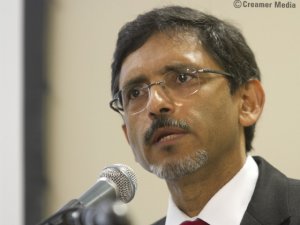
A new form of ‘PPP’, or ‘public–public partnership’, is in the process of being forged around South Africa’s multibillion-rand infrastructure programme, Economic Development Minister Ebrahim Patel reports.
Speaking at the Industrial Development Corporation’s (IDC’s) results presentation on Monday, Patel said that South Africa had made a conscious decision to use the infrastructure programmes of State-owned entities such as Eskom and Transnet to stimulate the reindustrialisation of the South African economy.
“When a society spends as much [as South Africa is] on expanding the physical platform for growth, it must have, at the end of that process, more than ports and railway lines and dams. Of course it must have those, but it must also have a dynamic set of industrial activities in the economy,” Patel said.
In some instances, industrialisation will be unlocked by the presence of adequate infrastructure. But the immediate PPP focus would be to use the building process itself to spur industries that could supply inputs and components to the build programme.
“There are some interesting examples of what we call new PPPs, public–public partnerships, that are beginning to develop,” he said, adding that details would begin emerging soon.
High-level engagements were already under way between the CEOs of organisations such as the IDC, the Development Bank of Southern Africa, Eskom and Transnet to identify the opportunities for increased localisation.
The idea would be for the power and logistics groups to align their procurement strategies with the investment capabilities and mandates of the development finance institutions.
A ‘PPP’ was being consolidated in the green-energy milieu, where the IDC had become active as a funder of wind and solar projects, as well as in supporting the development of import-substituting industries.
Some 30% of its approvals, worth R13.5-billion in 2011/12, were directed towards green-economy initiatives, including participation in 12 of the 28 projects that advanced to preferred-bidder status, following the first bid round.
IDC CEO Geoffrey Qhena indicated that, in the coming four years to 2016, manufacturing and localisation opportunities surrounding South Africa’s R860-billion public infrastructure programme would receive priority attention.
EMAIL THIS ARTICLE SAVE THIS ARTICLE FEEDBACK
To subscribe email subscriptions@creamermedia.co.za or click here
To advertise email advertising@creamermedia.co.za or click here


