FOREWORD Minister of Safety and Security
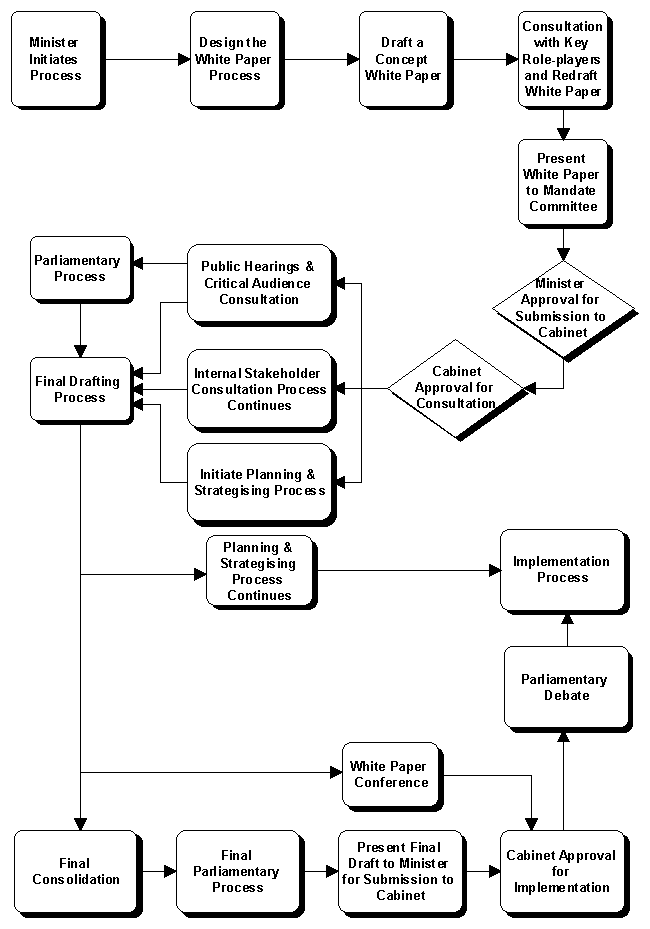
- Diagram 1: The drafting process
SECTION I Confronting crime in democratic South Africa
- Diagram 2: Crime prevention framework
SECTION II Policy priority: Law enforcement in a democracy
- Improving criminal investigations
- Visible policing
- Providing adequate service to victims
SECTION III Policy priority: Ensuring effective crime prevention
- National Crime Prevention Strategy Centre
- Towards an integrated system
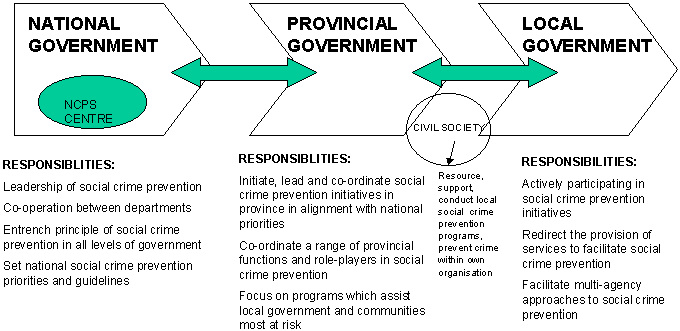
- Diagram 3: National, provincial and local
- Government relationship for crime prevention
SECTION IV Institutional reform at national level
- Accountability and service delivery
- Departmental structure: Roles and responsibilities
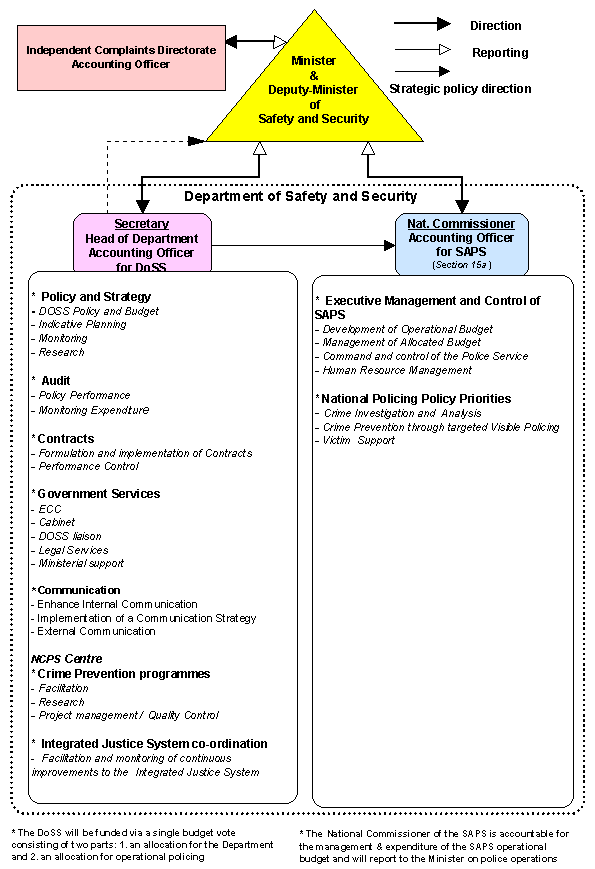
- Diagram 4: National institutional reform
SECTION V Institutional reform at provincial and local level
- The role of provincial government
- The role of local government
- Delivering crime prevention at local level
- The role of community police forums
- Diagram 5: Relationships at local level
SECTION VI Costing implications of the White Paper
APPENDIX 1 Department of Safety and Security key policy initiatives
- 1994-1997
APPENDIX 2 Participants in the White Paper Consultation Process
It gives me great pleasure to present the government"s White Paper for Safety and Security. The White Paper provides the means of realising our vision of improving the safety of our citizens.
At the heart of the White Paper lies the challenge of enhancing the transformation of the police so that they are able to function effectively within the new democracy; and enhancing social crime prevention activities to reduce the occurrence of crime. This requires, on the one hand, focusing on issues relating to the role of the police within the constitutional order, their legitimacy and the delivery of an effective service to the public. On the other hand, this also requires a dedicated focus on preventing citizens from becoming victims of crime.
The advent of democracy in April 1994 ushered in what is, without doubt, the most optimistic era in the history of our country. Whereas apartheid obliged policemen and policewomen to disregard the human rights of fellow South Africans, they have now been offered a place of pride in the process of building a new and better life for all. The advent of democracy brought about the potential for unprecedented progress for our country and held out the promise that our people would be able to live their lives in prosperous peace.
The challenge of transformation addressed in this White Paper is therefore, a call to the future. All South Africans, irrespective of the role they played in the conflicts of the past, have the potential to contribute positively to the process of change which is unfolding in our country.
In the immediate post-1994 period, the government"s policy agenda on safety and security was shaped by two objectives: firstly, to rehabilitate the police to ensure they became protectors of our communities; and secondly, to mobilise our people to participate in the provision of safety and security.
Critical to this process was the establishment of effective mechanisms of civilian oversight to, firstly, support the Minister in providing clear policy direction to the police and, secondly, to ensure, through monitoring, that the police served the people of the country.
This initial policy direction was laid out in the 1994 Green Paper, which emphasised three key policy areas – democratic control, police accountability and community participation in issues of safety and security. The Police Service Act of 1995 concretised these new policy objectives by, amongst other things, establishing a Secretariat for Safety and Security.
Then in 1996, Government adopted the National Crime Prevention Strategy (NCPS). The NCPS provided a framework for a multi-dimensional approach to crime prevention. Amongst other things, the NCPS provided a means by which government departments could integrate their approaches to problems of crime control and crime prevention.
We have come a long way in meeting our initial objectives. We have created a single police service from eleven separate police forces and have succeeded in laying the foundation for making this police service accountable and community-oriented. This was achieved by, amongst other things, the demilitarisation of the rank structure of the new police service and the appointment of skilled civilians into key positions in this service. We have also established functioning mechanisms of civilian oversight and channels for community participation. We have placed crime prevention firmly on Government"s agenda and a structure dedicated to the implementation of the NCPS is now a component of my department. We have also learnt a great deal in the last four years and have received informed input from a wide variety of international and local role-players.
The principles of the Green Paper and the NCPS continue to frame the development of policy within the department. However the emphasis has now shifted towards improved service delivery. This means that the Department"s approach continues to be underpinned by the philosophy of community policing. These have at their heart the principle that a partnership between the police and communities is essential to effective service delivery.
Therefore this White Paper presents policy proposals intended to establish a stable and effective department, capable of fulfilling its mandate to the people of South Africa.
I have taken a conscious decision to ensure that the focus of the White Paper is limited to those areas which will have maximum impact in improving the quality of service delivered to the public. This is motivated by the need to dedicate resources and capacity to specific goals to ensure delivery.
However, this does not detract from the necessity of developing policy interventions in important areas not directly addressed in this White Paper. Therefore, urgent attention is required for policy interventions in areas in which a lack of dedicated research has meant that not enough is known to ensure adequate policy development. An example here is the issue of rural safety and security. I will therefore direct my department to prioritise the development of policy related to the provision of effective and efficient law enforcement and crime prevention in the rural areas.
In keeping with the approach outlined in the National Crime Prevention Strategy, the White Paper advocates a dual approach to safety and security – effective and efficient law enforcement and the provision of crime prevention programs to reduce the occurrence of crime.
The White Paper also advocates institutional reform which will create a clear separation between the political responsibility for policy formulation on the one hand, and the managerial responsibility for the implementation of policy on the other. This implies that government will take firm control of the policy environment within which the police are required to operate and, at the same time, provide greater managerial autonomy for the police to execute their operational mandate. This will, in effect, ensure greater accountability for improved service delivery.
The work of fighting crime is becoming more complex and, therefore, more challenging. Criminals are becoming more organised and more sophisticated, operating with little regard to national boundaries. Foreign criminal groups are extending their operations as organised crime becomes increasingly globalised and South Africa is not impervious to this development.
Therefore, the SAPS faces new challenges within the increasingly sophisticated, technological and international crime arena. To meet these demands the SAPS needs to upgrade the skills, competencies and capacity of its members and its ability to gather and use crime intelligence. Therefore implicit in the institutional reform outlined in the White Paper is the development of our human resources in terms of their ability to meet the complex challenges of constantly changing crime. This institutional reform will also ensure that the Police Service becomes representative of the communities it serves.
I am aware of the enormous challenges faced by members of our police service. Many police officers have become victims of violent crimes. It must be acknowledged that police officers in South Africa have a much greater chance of being victimised by violence than do citizens. However, some of us have lost sight of the commitment and huge sacrifices being made by thousands of policemen and women. We need to appreciate and encourage the efforts of those police officers who often go beyond the call of duty to ensure the safety of their fellow citizens. The Department must therefore ensure that adequate support systems function effectively to assist police officers in this regard. This must ensure that police officers are able to continue high levels of service delivery to the public. We must also ensure that the dedication and performance shown by professional police officers is developed and promoted throughout the country.
Those, other than the police, who have been involved in crime prevention have also been challenged in ensuring a wider recognition of the fact that crime is more than a security issue, and in facilitating an inter-departmental and multi-agency approach to crime prevention. The consolidation of joint interdepartmental projects is now beginning to show positive results, particularly with regard to the Integrated Justice System. This approach to crime prevention has indicated that greater participation is required from all spheres of government and this is developed in the White Paper.
While the public rightfully demand improvement in the quality of service delivered by the police, members of the public also have a responsibility to assist the police to deliver a better service. Here, co-operation with the police is essential as is restoring the morality that prevents participating in or encouraging unlawful activities".
Thus, the responsibility for further reducing crime rates to acceptable levels is a heavy one. However, we have conducted an extensive public consultation process throughout the country, believing that when shared, the burden will be lighter. We have received an overwhelming response from a diverse range of organisations and people. Each submission and input has enriched the policy proposals in this White Paper, and has enhanced our collective capacity to transform South Africa into a country in which we may enjoy a safe and secure environment. The challenge now is to implement the policy priorities outlined in this White Paper.
It is my vision that the provision of safety and security will be improved for all the people of South Africa, and I believe that this White Paper for Safety and Security provides the necessary policy interventions to achieve this.
F S MUFAMADI
MINISTER OF SAFETY AND SECURITY
VISION The vision of the Department of Safety and Security is that the people of South Africa will enjoy greatly improved levels of safety. MISSION Real reductions in crime will be attained through, firstly, more effective and efficient policing as part of an effective justice system and, secondly, through a greater ability to prevent crime. |
The Green Paper for Safety and Security issued in 1994, set out a basic policy guide for the transformation of the Department of Safety and Security. Since then a number of policy programmes have been initiated to bring the activities of the Department into line with the Constitution and the needs of policing a democracy.
To review these programmes and set the policy framework for the next five years, the Minister of Safety and Security approved the development of a White Paper in June 1997. A mandate committee, consisting of the Minister, Deputy Minister, Secretary for Safety and Security and the National Commissioner of the South African Police Service (SAPS) was established to provide direction to the work of five ministerial committees set up to provide content to a Draft White Paper.
The five committees, in which local and international experts and senior members of the SAPS participated, were:
The committee to investigate safety and security issues in South Africa was referred to as the "core drafting team" and functioned to co-ordinate and integrate the input from the other committees. This committee referred the work of the other committees to the mandate committee and, in turn, provided direction and input from the mandate committee to the White Paper drafting process. The core drafting team also referred work for comment to a critical readers group of experts and stakeholders.
Each committee submitted a final report which contained policy recommendations based on its deliberations. The recommendations contained in these reports were integrated and released for discussion among internal stakeholders in November 1997. These stakeholders included the mandate committee, SAPS management, the chairpersons of the National Council of Provinces Committee on Security and Justice, the National Assembly Portfolio Committee on Safety and Security, the MECs for Safety and Security, the Secretariat for Safety and Security"s National Crime Prevention Strategy team, and the Independent Complaints Directorate.
The Minister released the final Draft White Paper for public consultation after Cabinet approval in May 1998. Extensive consultation was undertaken with key stakeholders, role-players and civil society in the following concurrent phases:
1 Provincial public hearings
Public hearings were held in each of the provinces to ensure that the final policy recommendations of the White Paper reflected the views of provincial stakeholders, role-players and the public.
2. National hearing
A national hearing was held over the 3rd to 5th August 1998 in Parliament. A number of submissions were made, and provincial reports on the submissions received from the public hearing process were presented. Joint meetings of the National Portfolio Committee on Safety and Security and the National Council of Provinces Committee on Security and Justice deliberated on the issues raised through the public consultation process on the 18th and 21st of August. These deliberations informed the final drafting of the White Paper.
3. Consultation with critical audiences
Extensive consultation with critical audiences was undertaken as outlined below:
- A Local Government Conference was held on 24 July 1998 at which local government initiatives related to crime prevention were reviewed, experiences on the safer cities projects shared and the interventions outlined in the White Paper discussed.
- Meetings were held with most of the political parties in Cape Town to discuss relevant issues raised by the White Paper.
- A workshop was held with the National Crime Prevention Strategy partners on issues relevant to crime prevention as outlined in the White Paper.
4. Internal consultation process
- The South African Police Service circulated the Draft White Paper extensively within their structures, and received numerous submissions. A consolidated report on these submissions was compiled by the Divisional Commissioner: National Management Services and sent to the Secretariat.
- Valuable meetings were held with most of the national government departments.
- The key trade-unions relevant to safety and security were also consulted.
The final White Paper was presented to the Cabinet Committee for Safety and Intelligence prior to the Cabinet meeting of 9 September 1998 when the White Paper was approved. Parliamentary debates on the White Paper were held during September 1998.
A White Paper Conference was held on 11 September 1998 at which a report back on the submissions and how they were incorporated was presented.
A user friendly booklet is being developed which will explain the policy shifts contained in the White Paper and what it means for the stakeholders and role-players in safety and security in South Africa.
DIAGRAM 1: WHITE PAPER DRAFTING PROCESS
In the new democratic order, South Africans demand and deserve accountable, effective and service oriented policing. The rights enshrined in the Constitution, enacted in 1996, aim to ensure safety by protecting citizens who come into contact with the law, and by obliging the state to provide adequate security from those who perpetrate crime. In the past, the majority of citizens were concerned with abuse by agencies of the state. With the advent of democracy, the public now also demand the effective provision of safety. This means that policing in a democracy requires professional law enforcement which does not infringe upon human rights. It also requires a concerted effort by government, in partnership with civil society, to prevent crime before it occurs.
The immediate challenge of the new government in 1994 was to create a legitimate police service out of the eleven police forces constituted under apartheid. Along with this challenge, political leaders had to ensure that the police would support the new democracy, rather than oppose or undermine it. Key to this process was ensuring that the police in future would act in ways which won the trust of citizens who had once feared them.
The first democratic election in 1994, however, did not bring a system of policing which was well placed to meet these objectives. Policing in South Africa was traditionally highly centralised, para-military and authoritarian. While these characteristics ensured that the police were effective under apartheid in controlling the political opponents of the government, it meant that they were poorly equipped for crime control and prevention in the new democracy. Under apartheid rule the police force lacked legitimacy and functioned as an instrument of control rather than as a police service dedicated to ensuring the safety of all citizens. Thus, historically, the police have had little interest in responding to crimes within "black" areas; in 1994, 74% of the country's police stations were situated in white suburbs or business districts.
Those police who were situated in "black" areas did not aim to provide greater safety and security for their inhabitants. Police presence in townships was used to anticipate and respond to collective challenges to apartheid. Such interventions typically involved the targeting of police resources for short periods of time in response to resistance to apartheid rule. This mode of policing necessitated the mobilisation of force, requiring skills and an organisation very different from that needed to police a democratic order in which government seeks to ensure the safety of all citizens. This inheritance has had a number of important consequences which have weakened the ability of the Department to combat crime:
Continuing the process of transformation of the Department of Safety and Security requires a concentration on these and related areas. The White Paper is central to this process. It is the overarching policy framework of government in relation to safety and security for the period 1999 to 2004. The White Paper draws conclusions for the future policy orientation of the Department of Safety and Security. It aims to guide the policy direction of the Department over the next five years to ensure reductions in crime. It points to areas where other government departments and authorities – at national, provincial and local level – should be involved in ensuring a safer society for all citizens. In doing so, it seeks to create a coherent policy framework for effective and accountable policing. In addition, by providing appropriate principles and an appropriate framework for crime prevention, the White Paper aims to impact upon the root causes of crime. It also recommends reform to the Department of Safety and Security"s institutional arrangements to ensure effective service delivery.
In this regard, the principles outlined in the Green Paper continue to inform the broad policy thrusts of this White Paper – particularly, the principle of community participation as embodied in the philosophy of community policing, and the principles of democratic control and accountability as envisaged in the Constitution. This focus is directly in line with international trends in policing which demonstrate that the participation of communities and community policing form the bedrock of effective law enforcement.
The objectives of the White Paper are to outline:
|
Fundamental to the development of appropriate policing services in South Africa has been a shift from an inheritance of authoritarian law and order responses, to a broader concept of safety and security for all citizens. This was the vision spelt out both in the Green Paper and in the National Crime Prevention Strategy released in May 1996. The strategy motivated for a new paradigm for safety and security: a change in emphasis from an exclusive focus on crime control to include crime prevention.
Given its scope and multi-agency approach, the NCPS is the most important current initiative aimed at achieving sustainable safety in South Africa. The Department of Safety and Security has been entrusted with ensuring the implementation of the NCPS. This, therefore, ensures that the vision of the NCPS continues to frame the guiding principles of departmental policy.
In line with these principles, the White Paper views the concept of safety and security in terms of two broad and inter-locking components: that of policing or law enforcement, and that of crime prevention, and particularly social crime prevention, which is aimed at undercutting the causes of crime. This twin approach to fighting crime is critical: law enforcement and crime prevention are not mutually exclusive but reinforce each other.
On the one hand, law enforcement initiatives will be weakened if conditions in which they are carried out continue to spawn high levels of criminality, which the police are only able to react to and not pre-empt. On the other hand, international experience has shown that sophisticated crime prevention strategies have only a limited effect when the state institutions of policing and criminal justice are poorly developed, with little deterrent effect.
What is required are social crime prevention programmes which target the causes of particular types of crime at national, provincial and local level. More generally, such an approach also recognises the impact of broader government economic, development and social policies for crime prevention. Thus, the effective delivery of basic services such as housing, education and health as well as job creation, have in themselves, a critical role to play in ensuring living environments less conducive to crime. This suggests that greater lobbying, planning and co-ordination is required at national, provincial and local level, specifically on the question of crime prevention and its links to a wider array of other government functions.
These requirements have profound implications for how the Department of Safety and Security and other government departments reorient themselves, conduct their business and reallocate their resources. It suggests a renewed concentration on law enforcement within the police service itself. It also requires the involvement of a wider number of new role-players in safety and security.
Another important element of safety and security in democratic South Africa is the necessity to enhance the spirit of voluntarism in our country. There are many important partners in the fight against crime. These include, among others, organisations of civil society, particularly business and community organisations, citizens who volunteer for service as Police Reservists as well as the private security industry which performs a useful role. The role of such players is, in principle, one of partnership with the State. For this reason, greater attention will be paid to their role in the safety and security environment in future policy processes.
In particular, it is envisaged that the role of the private security industry, including in-house private security, will be developed through legislation as provided for in the Security Officers Act. Given the nature and scope of the private security industry, this legislation should be preceded by an all inclusive process of consultation and contribution by all stakeholders.
Important also, is the need to strengthen partnerships and co-operation with those key departments involved in crime prevention and those Departments which have valuable skills and resources to offer, such as the South African National Defence Force.
Given the scope of these issues, the structure of the White Paper is as follows:
Section I provides an overview of the extent and nature of crime in the country, and the implications for future policy. Drawing on this analysis, Section II outlines key areas of intervention in relation to law enforcement. Section III examines the challenges of implementing crime prevention. Sections IV and V provide guidelines for institutional reform at national, provincial and local level. Finally, Section VI outlines the cost implications of the White Paper.
| Focus areas |
Reducing crime is one of the leading challenges of South Africa's democratic government. Some success has been achieved in this regard with most categories of recorded crime stabilising from 1996. Appropriate law enforcement and social crime prevention interventions are urgently required to reduce crime from current levels.
Recorded crime statistics, while they do not always reflect the true extent of crime in any society, are still useful in presenting broad crime trends. In turn, victim surveys – an independent means of verifying police statistics through questioning a representative sample of the population – also provide useful insights into the extent of crime. In South Africa, recent victim surveys suggest that police statistics may be more accurate than has been generally assumed. Much effort is being directed within the Department to ensure that the quality and reliability of crime statistics is further enhanced. A Committee of Inquiry into the collection, processing and interpretation of crime statistics has just completed its work and several of its recommendations are being implemented. However, data key to ensuring effective crime prevention on issues such as domestic violence, the relationship between alcohol and offending, and the role of youth in crime, is currently not available.
CRIME AND SAFETY AND SECURITY IN POST-APARTHEID SOUTH AFRICA
SAPS statistics suggest that crime in the country increased from 1985. This began to change in 1996 when most categories of crime showed a stabilisation. Despite this trend, current levels of crime remain high and continue to breed insecurity in the country. Crime has severe implications through the costs of victimisation which undermine economic and social development. Also, fear of crime often changes lifestyles, negatively affecting the quality of living.
The causes of crime were analysed in some detail in the NCPS. Among others, the NCPS identified these as being: gender inequality; proliferation of arms; social-psychological factors; vigilantism; inadequate support to victims of crime; youth marginalisation; economic underdevelopment and inequality; poverty and unemployment; institutionalised violence in the society; and, the encroachment of international criminal groups. Given that these have already been covered in the NCPS, which frames the content of the White Paper, this analysis will not be repeated here.
It should be noted, however, that high levels of crime often accompany transitions to democracy. This is not to say that crime is necessarily a feature of democracy. Instead, dramatic changes in societies which move from authoritarian rule to democratic governance often weaken state and social controls, generating increased levels of crime. In addition, as experience from other societies in transition suggest, this enhances opportunities for more sophisticated and organised criminal operations which must be countered by equally sophisticated government responses. This implies improving technological systems and human resource capabilities.
Organised criminal activity, while present before 1994, was not recognised as a concern. Countering organised crime has now become a key goal of government. Police statistics suggest a large number of organised crime syndicates operate in the country. These groups, many of whom have regional and international links, engage in a number of illegal activities including the trafficking of drugs and arms, vehicle theft and armed robbery. Government is therefore required to respond to the regional and international character of crime by strengthening regional and international co-operation.
Despite these challenges, international evidence suggests that states in transition to democracy are seldom immediately able to counter crime. On the one hand, authoritarian governance is usually accompanied by policing methods inappropriate for crime prevention in a democratic environment. On the other hand, the new state is often faced with the dilemma that it is required to govern the society with the same instruments which were used to enforce authoritarian rule.
As has been outlined earlier, this was the case in South Africa. The advent of democracy in 1994 heralded dramatic legislative and policy changes in the safety and security environment. Primary among these was the enactment of the Constitution which provides a framework for the structure, political control, accountability and oversight of the national police service.
Key interventions were the establishment of the National and Provincial Secretariats, charged with oversight and monitoring of the police service, and the creation of the Independent Complaints Directorate (ICD) tasked with the investigation of police misconduct, including deaths resulting from police action and deaths in police custody. Given that the ICD began its operations in April 1997, it is too early to rigorously assess its functioning. However, there can be no doubt that the effective functioning of the ICD will deter the abuse of police powers.
Reducing crime however entails more than policing, an effective system of criminal justice and appropriate systems of oversight. Also required are new forms of governance and social control. In South Africa this process is well underway with the establishment of elected government at all three levels. These developments have all contributed to the stabilisation of crime.
In addition, it should be noted that broader socio-economic factors such as rapid urbanisation, high levels of unemployment and inequality between communities all influence safety and security. To counter this, economic growth and social development must ensure that opportunities for some categories of crime are limited. Crime control and prevention strategies must therefore be underpinned by complementary social and economic policies.
These and other interventions are required to ensure sustained reductions in crime levels in the medium and long term. Since 1994, however, the pressures of attempting to meet both the Constitutional criteria for police restructuring, as well as the challenges of policing in a democratic environment, have dominated the policy environment.
THE CHANGING POLICY ENVIRONMENTThe transformation process in the police along with the pressures of crime, have resulted in a multiplicity of strategies and plans within the Department of Safety and Security (see Appendix 1). An analysis of these suggests that progress has been attained in many areas and that the transformation of the Department to achieve greater effectiveness is underway. The transformation agenda set by the democratic government since 1994 continues to present important challenges to the Department of Safety and Security. The most important of these relate to the development of a professional and representative public service.
Particularly relevant here are the White Paper on the Transformation of the Public Service (Batho Pele), the White Paper on Affirmative Action and legislative interventions related to employment equity issues. The Batho Pele White Paper sets out a number of priorities, amongst which, the improvement of service delivery is outlined as the key to transformation. This is because the public service will be judged, above all, on whether it can meet the basic needs of all South African citizens. This White Paper lays down the following eight principles for the transformation of public service delivery:
The White Paper on Affirmative Action outlines the additional corrective steps which must be taken in order to ensure that those who have been historically disadvantaged by unfair discrimination are able to derive full benefit from an equitable employment environment. Thus, affirmative action programmes must contain the following mandatory requirements:
The policies above demonstrate that improving service delivery is directly related to the creation of a representative, democratic and accountable Department of Safety and Security.
Furthermore a focus is needed on developing an integrated human resource development strategy concentrating on, among other areas, training, mechanisms to improve the recruitment of appropriate personnel and a performance-based incentive system. Formulating such a strategy will form an immediate priority for the Department.
It is clear that the Department of Safety and Security needs to strengthen its efforts in transformation. However, some success has already been achieved in important areas. In particular, the task of amalgamating separate police forces and reorganising the service into national and provincial structures is progressing well. A fundamental component of the amalgamation process is the demilitarisation and civilianisation of the new police service.
A large number of strategies related to the above are being pursued within the Department of Safety and Security. However, safety and security policy more generally is determined through the overriding framework and programmes of the NCPS.
The NCPS is intended as a comprehensive multi-agency approach to crime prevention. It aims to influence the operations of the Departments of Safety and Security, Justice, Correctional Services, Welfare, Defence, Intelligence, Health and Education. Given that the justice system is a single enterprise, the NCPS has established new co-ordination structures including joint decision making by Directors-General and Ministers of NCPS departments.
The NCPS, as it has evolved, has the following components:
Much has been learnt since 1994 about the development of such policy approaches. In particular, experience suggests that while co-ordination between departments of the justice system is important, improvements here will not in themselves solve internal problems of capacity. The effectiveness of the justice system relies not only on co-ordination, but also on the success of individual departments in performing their line function responsibilities.
TOWARDS EFFECTIVE LAW ENFORCEMENTThe formulation of policy over the last four years has resulted in a sophisticated and diverse set of objectives. This has reflected the complexity of both the crime prevention exercise and the demands of achieving effective policing in the context of political transition.
Building a legitimate and effective law enforcement organisation is an essential part of this process. In particular, this requires an investment in, and focus on, the institutions which are essential to show that the state can, and will, act against criminals. Nowhere is this more clearly required than in the area of police investigations.
While the new constitutional order makes the job of the police more complex, by providing checks on their power and protecting the rights of citizens, it does not prevent police from fighting crime. Instead, police investigation practices – as in other democracies – require greater sophistication and training. In South Africa this shift has been slow and is reflected in a comparatively small number of cases which are successfully prosecuted.
While the police are only one component in securing a conviction, police investigators have a key role to play. Unless investigations are properly conducted and the work of prosecutors adequately supported, declining convictions will continue.
The consequences of inadequate criminal investigations should not be underestimated if criminal justice agencies are to show the public that the state can act against crime. In the case of sophisticated and, in particular, organised crime, there is little choice but to improve the investigative capacity of the police. This also requires strengthening the link between police investigators and prosecutors to ensure the conviction of offenders. This is highlighted in Section IV.
Importantly also in the context of a rights based society, is how best to meet the needs of citizens and in particular victims, in the event of serious crimes. This requires an increase in the standards of professional service provided by the SAPS.
In addition, improving the standard of police service delivery requires targeting corruption within the Police Service and the justice system. Fundamental to dealing with corruption is creating and sustaining effective management systems that aim to strengthen administrative controls and to improve morale.
Given the new focus on law enforcement in a democracy, a key policy challenge is now to reduce crime in a way that does not divide South Africa further along lines of race and privilege.
While a basic standard of enforcement – well above the present level – is required, this must be balanced in the long term by measures that reduce the number of people entering the justice system in the first place. This does imply a trade-off between resources for law enforcement and social crime prevention.
TOWARDS EFFECTIVE SOCIAL CRIME PREVENTIONTo rely on law enforcement alone will incur huge costs associated with investigation, prosecution and imprisonment. Therefore, without an adequate focus on crime prevention, the justice system will remain overburdened. International experience suggests that it is more cost effective in the medium to long term to invest in projects which prevent crime, than in simply spending more on the institutions of policing, courts and corrections. These reactive responses to crime, in addition to proving more expensive in the longer term, also do little to improve the quality of life of the country's citizens.
The importance of such preventive interventions is emphasised by two factors. First, not all crime types can necessarily be solved by policing. In particular, crime in poor communities can often be traced to socio-economic circumstances which cannot be addressed by the police acting alone.
Secondly, as is emphasised in the NCPS, the causes of crime need to be disaggregated for the purposes of preventive interventions. Particular types of crime have different causes; these in turn may vary from locality to locality and thus require specific solutions. It is also necessary to focus on strategies - although relatively little data is available in this area - to counter "crimes of greed"; such as "white-collar"; and commercial crime.
Thus social crime prevention is aimed at reducing the social, economic and environmental factors conducive to particular types of crime. Targeted crime prevention strategies must focus on the individual offender or victim and the environment in which they live.
For example, research in the Northern Cape which is supported by police docket analysis suggests that high alcohol consumption (a result of historic distribution policies in wine growing areas) plays a key contributing role in some types of crime, particularly, assault, domestic violence, rape and murder. Thus, a multi-faceted strategy is required to effectively undercut these crimes. This may require new alcohol control and distribution policies, programmes that will consider environmental factors (the position of shebeens in relation to schools), victim support as well as policing (regular patrols of high crime areas and enforcing of alcohol related laws). It is clear that policing alone will do little to resolve many of the Northern Cape"s crime problems. In fact, the Northern Cape has the highest police/citizen ratio in the country. This example of the potential effectiveness of social crime prevention is not isolated to the Northern Cape.
Such an example suggests that successful crime prevention is critical to the poor, both because they are least able to cope with the consequences of crime and because the socio-economic conditions at the root of many crimes are often found in underprivileged areas. The government will, therefore, specifically build the needs of the poor into any evaluative framework for crime prevention programmes.
This section highlights the need for critical policy choices to be made. It is important to again stress that these do not ignore the current interventions dealing with police transformation, including issues of affirmative action and community policing. Such ongoing initiatives underpin the policy proposals of the White Paper.
In order to achieve a safer and more secure
society, intervention is now required in two key areas:
|
These policy priorities are addressed in Section II and III respectively.
| CRIME PREVENTION
All activities which reduce, deter or prevent the occurrence of specific crimes firstly, by altering the environment in which they occur, secondly by changing the conditions which are thought to cause them, and thirdly by providing a strong deterrent in the form of an effective Justice System. |
DIAGRAM 2: CRIME PREVENTION FRAMEWORK FOR WHITE PAPER
CRIME PREVENTION THROUGH EFFECTIVE |
SOCIAL CRIME PREVENTION |
| Reduces the opportunity for crime by
making it more difficult to commit crimes, more risky or less rewarding. Effective law enforcement creates a strong deterrent to crime. HOW IS IT ACHIEVED?
WHO IS RESPONSIBLE:
|
Reduces the socio-economic and environmental factors
that influence people to commit crimes and become persistent offenders. HOW IS IT ACHIEVED?
WHO IS RESPONSIBLE:
|
Focus areas
|
The previous section motivated the need for law enforcement to meet the safety and security requirements of democratic South Africa. If policing is to improve safety and security, it will do so through arresting and bringing suspects to court with good evidence. If effective, this will act as a deterrent to potential offenders and counter the perception of impunity and lack of respect for the law which exists in South Africa.
To achieve this, the following is required:
Goal: To increase the effectiveness and efficiency of criminal investigations
One of the primary focus areas for policing in the course of the next five years will be on improving the quality of criminal investigations. Improving the capacity of the SAPS to do this means allocating sufficient resources to detection and developing the skills and techniques of the relevant SAPS personnel. In particular, the needs of the police with regard to the management of investigations and information as well as technical support must be met. In addition, it is acknowledged that adequate service delivery to victims of crime is an essential component of successful investigations (see Focus Area 3 below).
It should be noted, however, that the responsibility for securing a conviction once a suspect has been brought to court, rests both with the police (who collect the evidence) and with the prosecution (who must argue the case). Thus, effective deterrence depends on support from criminal justice agencies outside of the SAPS. This requires improved co-operation between the Departments of Safety and Security, Justice, Correctional Services as well as the intelligence community. This in turn emphasises the importance of the Integrated Justice System project currently being implemented through the NCPS. The Integrated Justice System project, a flagship project of the NCPS, aims to enhance the effectiveness of the justice system through greater co-ordination and, particularly, improving the flow of information across the relevant departments.
It also points to the Department"s commitment to ensuring a policing and justice system that is technologically advanced.
Specific interventions to improve investigations
Increase numbers: International comparisons of the ratio between the number of detectives and the total number of cases under investigation, suggest that the detective components of the SAPS are understaffed. Therefore, the number of personnel involved in investigations should be increased to improve the ability of the police service to deal efficiently and effectively with the case load.
Training: Detective training currently lacks practical application and there is little structured mentoring for detectives once appointed. The establishment of the SAPS Detective Academy will go some way in addressing these problems, specifically with regard to the skilling of specialised investigation units. However, the appointment of large numbers of new investigators will require a more extensive and practical training programme.
Detective management: The management of the detective function must be enhanced to improve deployment and performance. The roles and authority of management must be clarified. Performance indicators for detectives need to be set and monitored.
Crime intelligence: The effective use of crime intelligence is fundamental to law enforcement. While the crime intelligence functions of the SAPS are separate from those of detection, close co-operation and co-ordination is required. The collection, analysis and management of crime intelligence must be improved. These functions are crucial, particularly to proactive investigations which focus on, among other things, organised crime. Regarding the collection of crime intelligence, the following should be noted:
The value of crime intelligence is that it performs a critical pro-active function. Thus, the effective application of intelligence requires co-operation between the SAPS, the National Intelligence Agency, the South African Secret Service and the intelligence functions of the Department of Defence. Further, enhanced international co-operation is required particularly for dealing with organised crime. Effective co-operation is also required with the Independent Complaints Directorate in relation to internal investigations.
Specialised investigation units: Special investigative techniques are required for dealing with a range of complex crimes. Specialised units should continue to be established where a high degree of skill, particular techniques, experience or knowledge are required. However, clear criteria for the establishment of specialised units must be formulated.
Such units should only be constituted where the crime problem requiring attention is sufficiently serious, but not such that it would be more cost effective for all members of the SAPS to be skilled in its resolution. The degree or seriousness of any crime trend or type should be determined by:
Sharing the burden: The appropriateness of shifting some investigations to other role-players and spheres of government will be examined as a matter of urgency in order to allow experienced detectives to focus on serious crimes. An example here would be the shifting of responsibility for the investigation of road traffic accidents and offences to local government where local government has the required capacity. Clearly, however this requires a detailed assessment of the appropriateness of shifting such responsibilities, an analysis of the capacity to assume such functions and an understanding of the legal ramifications of doing so.
Goal: To target visible policing to address specific crimes and the fear of crime
Comparative evidence suggests that where visible policing programmes are vigorously implemented and offenders arrested, crime and the fear of crime decrease.
For visible policing to be effective, police officers on the beat need to assertively perform their policing functions. This entails communicating with members of the public and engaging in street level law enforcement. Because effective visible policing entails vigorous law enforcement, it relies on the support of the local community. It therefore must be conducted in terms of the relevant principles of the Batho Pele White Paper (see Section I). Police training would also need to incorporate these elements.
Accurate crime information regarding the locality and nature of crime in a particular area is central to effective visible policing. To ensure that these interventions reduce crime, the establishment of an overt crime analysis and information capacity must urgently receive attention at local level.
Given the renewed focus on crime investigation and the consequent increase in personnel involved in investigations, it is essential that the capacity to implement visible policing be augmented through partnerships with local government.
Implementing effective visible policing
Visible policing can be conducted in various ways to achieve specific objectives:
Preventive patrol: This consists of a constant uniformed police presence in an area targeted on the basis of analysis of crime patterns. Officers on patrol activities can also respond to incidents reported by the public – the immediacy of the response being determined by the seriousness of the incident. This type of patrol has been found to be most effective in major urban areas. Municipal police services have an important role to play in this regard (see Section V).
Directed patrol: This involves the assignment of patrol officers to provide a visible presence in a specific location for a limited period and for a particular purpose. Directed patrol relies on crime analysis to provide timely information on crime patterns in any area.
Sector policing: This entails the division of areas into smaller managerial sectors and the assignment of police officers to these areas on a full time basis. These police officers regularly patrol their own sector and are able to identify problems and seek appropriate solutions. Sector policing encourages constant contact with members of local communities.
Directed patrol and sector policing should be:
High density policing: This entails the saturation of areas experiencing high levels of crime with patrolling police officers. Policing of this nature is often required to stabilise high crime areas so that normal policing can resume. Such interventions go beyond merely saturating any area with police. They entail increasing the number of police officers for a particular purpose, which includes making arrests.
In South Africa, high density policing is largely performed by the public order units of the SAPS. These units are tasked with the primary function of managing incidents of public collective action. Given the shortage of policing resources and the relatively well organised and disciplined nature of the public order units, these constitute an important resource, which should be used strategically, drawing on the accurate and timely provision of intelligence.
Goal: Improving the quality of service delivery to victims of crime
Victimisation constitutes a violation of human rights. Empowerment of victims of crime therefore restores human rights and is an important element of police service delivery.
International experience has shown that effective management of both direct and indirect victims and witnesses of crime is a vital part of successful police investigations. This is, in itself, integral to community policing which seeks to build relationships between the police and local communities.
Victims and witnesses play an important role in assisting the police in the collection of evidence and through participating in the process of prosecution. This means that improved victim support and empowerment can assist investigations and serve as a means of altering public perceptions of police effectiveness. Thus, the link between victim support and successful investigations is critical to improving service delivery and therefore to enhancing public confidence in the police.
It should be recognised that the police themselves are disproportionately victims of violent acts during the course of performing their duties. Specific responses to support these officers and their families will continue to be developed.
The Department subscribes to internationally accepted victim"s rights, which include the following:
These principles imply the following for police service delivery:
Specific interventions in the areas listed above must take cognisance of the existing work of the NCPS Victim Empowerment Programme driven by the Department of Welfare.
Focus areas
|
As indicated in the previous section, effective law enforcement by the police and the criminal justice system play a vital role in preventing and deterring crime. However, law enforcement alone cannot reduce the social and economic factors which contribute to crime. These require a different set of preventative interventions.
Crime prevention and, particularly, social crime prevention, not only targets the causes of crime, but in the longer term, does so in the most cost-effective way. It addresses those factors that contribute to the occurrence of crime, and requires a focus on three broad and overlapping target groups or areas:
Crime prevention strategies therefore focus on those groups most at risk of either offending or becoming victims of crime, for example, poor communities, the youth, women and children and the disabled. Comparative international experience, recently documented in the Crime Prevention Digest (International Centre for the Prevention of Crime, 1997) and a report to the United States Congress entitled Preventing Crime: What works, what doesn't, what's promising (Sherman et al., 1997), indicates that programmes focussed on the youth, families and communities as well as programmes focussed on reducing the opportunities for crime, have reduced delinquency, violence and insecurity in both the short and long-term.
The resources available to all levels of government are limited. Crime prevention must therefore emphasise more effective and efficient use of existing resources. Social crime strategies therefore need to optimise current initiatives and facilitate multi-agency networks through which experience, resources and functions can be shared.
Effective crime prevention strategies would therefore need to involve partnerships between government bodies and structures of civil society to address certain factors contributing to crime. Internationally, it has been demonstrated that the criteria for successful crime prevention through targeted partnerships include:
The target groups outlined above can be reached through social crime prevention strategies which fall into one or more of the following broad categories:
Implementing crime prevention in these ways requires targeting specific crime problems through multifaceted strategies that aim to combat and prevent a single offence or category of offences. Social crime prevention therefore requires a multi-departmental or multi-sectoral approach. Also, such interventions should be located at all levels of government and should include relevant organisations of civil society.
The key to implementing crime prevention lies at the provincial and local level (see below). However, national leadership, co-ordination and funds are required to provide incentives and guidelines for ensuring effective provincial and local implementation. This includes building the capacity to manage crime prevention projects in the short to medium term. The NCPS provided a national vision and framework for preventing crime. What is now required is to institutionalise the management and planning at national level to ensure effective implementation at all tiers of government and effective learning and information exchange.
In line with this, a National Crime Prevention Strategy Centre (NCPSC) situated within the Department of Safety and Security at national level, is required. This Centre will function to initiate, co-ordinate and facilitate crime prevention programmes. This includes the initiation of high impact nationally driven projects. In addition, the office will be responsible for ensuring continuous improvement of the justice system.
In order to give effect to this mandate, crime prevention legislation needs to be developed to determine roles and responsibilities across departments and sectors and to provide for incentives for delivery.
Goal: To establish a Centre responsible for both social crime prevention and facilitating improvements to the criminal justice system
The functions of the Centre will be twofold:
This Centre will therefore continue the mandated work of the Department of Safety and Security in the NCPS.
Functions of the National Crime Prevention Strategy Centre
Achieving effective social crime prevention and an integrated justice system requires:
The efficacy of the National Crime Prevention Strategy Centre strategic approach will be rigorously evaluated in the next three to five years.
Key to successful crime prevention, it has been argued, are not only national leadership and co-operation between national departments on the issue, but also ensuring that crime prevention becomes an entrenched principle at other spheres of government.
Provincial government, in particular, has a key role to play in this process by initiating and co-ordinating social crime prevention initiatives within provinces. This role involves co-ordination of a range of provincial functions and role-players -; health, education, welfare, transport and local government -; to achieve more effective crime prevention. Programmes at provincial level should focus on assisting local government and on those communities often most at risk (but least likely to receive crime prevention support), such as the poor in rural and peri-urban areas. Specific policy related to this will be urgently developed.
Provincial governments have already accepted their role in social crime prevention. The NCPS summits held during 1996 and 1997 emerged with innovative project plans in this regard. However, there is still some way to go in activating provincial crime prevention initiatives. This is partly because of the absence of an effective mechanism for implementation and co-ordination in most provinces, as well as a shortage of funding. The specific roles and responsibilities of provincial governments in this regard are outlined in Section V.
Local government, the level of government which is closest to the citizenry, is uniquely placed to actively participate in social crime prevention initiatives and to redirect the provision of services to facilitate crime prevention. Many issues of day-to-day governance and crime prevention are inherent to the functions of local government. The role and functions of local government in relation to crime prevention are outlined in more detail in Section V.
In addition to the above, civil society groups, such as religious institutions, non-government, business and community based organisations and trade unions, have a key role to play in resourcing, supporting and conducting local social crime prevention programmes. In particular, these organisations have the responsibility to ensure that preventing crime within their organisations becomes a priority.
The use of a variety of agencies which co-ordinate their activities in a concerted effort to prevent crime is the key to the success of local crime prevention. A multi-agency approach to developing and implementing crime prevention programmes increases efficiency and effectiveness by pooling resources and avoiding the duplication of services. Comparative international experience suggests that real reductions in crime can be achieved in this way.
DIAGRAM 3: NATIONAL, PROVINCIAL AND LOCAL GOVERNMENT RELATIONSHIP FOR SOCIAL CRIME PREVENTION
Focus area
|
As has already been argued, policing in South Africa before 1994 was authoritarian and characterised by weak accountability and a lack of civilian input into policing policy. The National Commissioner of the South African Police (SAP) was responsible for policy formulation, budgeting and operations and the police force thus maintained an extensive degree of autonomy.
In 1994 the government's assessment of the nature of the SAPS, and therefore the form that civilian oversight would take, was shaped by the realities of the immediate transition environment. Therefore civilian Secretariats were established at national and provincial level to provide oversight and monitoring over the new SAPS.
These institutional arrangements reflected government's concern with police commitment to the new democracy. The current context in which policing policy is made differs from that in 1994. The police need to be viewed as trusted vehicles of law enforcement in the new democracy. The focus of accountability is now primarily to ensure effective service delivery to the public and must be shaped to reflect those in other democracies.
Part of this process entails reforming the system in which policy planning and budgeting occurs within the Department of Safety and Security. Achieving this will ensure that South Africa reflects more accurately how this process is conducted in other democracies. In all democratic states the determination and allocation of the police budget, where it occurs at national level, is carried out by non-police or civilian officials who are also central - in conjunction with political representatives and the police - in determining policy priorities. Money is then allocated to the operational police organisation/s who conduct the actual police work. Thus, for example, in the United Kingdom, the Home Office (following the direction of political principals) determines high level policing policy and priorities and then allocates funds to a number of regional police agencies who conduct the operational police work.
In South Africa this means in effect that the Secretary for Safety and Security, a civilian appointment outside of the SAPS, responsible for high level policy advice and support to the Minister - instead of the National Commissioner of the SAPS as is current practice -should become the accounting officer for the Department of Safety and Security. Such a system allows not only an ability to match policy priorities with operational performance, but also ensures more effective monitoring of the police, while distancing the police themselves from the political wrangling necessary to secure their budget. The advantages and principles underlying this approach are spelt out in more detail below.
ACCOUNTABILITY AND SERVICE DELIVERYThe Minister of Safety and Security is responsible for the development, monitoring and implementation of policy and is accountable for all these dimensions. Comparative international experience has shown that conflicts of interest - particularly between the policy, monitoring and implementation functions - impact negatively on government"s ability to redirect delivery to priority areas.
Ensuring effective service delivery and systems of accountability thus requires a reorganisation of policy, monitoring and implementation functions. The role of the Minister (supported by the Secretary for Safety and Security) is to set policy objectives and measure the effectiveness and efficiency of the SAPS and the National Crime Prevention Strategy Centre in meeting these targets. By reorganising these functions, systems of accountability are improved and managerial responsibility is clearly allocated.
Such an approach aims at separating departmental service delivery functions from the determination of strategic policy and the setting of broad objectives at the political level. It also clarifies roles and responsibilities within the Department. This is particularly relevant to issues of safety and security, given the dual functions of policing and social crime prevention as outlined in the White Paper. Thus, institutional reform is intended to provide a clear delineation of the roles and responsibilities of the various actors in the delivery of safety and security, while recognising that their functions are closely and continuously inter-related.
Principles of institutional reform
The following key principles inform institutional reform:
The principles outlined above suggest a mode of accountability based on performance agreements between those responsible for service delivery and those responsible for policy and regulatory functions (in the latter case, the Minister supported by the Secretariat). A key element of this arrangement is thus developing, monitoring and maintaining a professional and performance-based relationship with those institutions in government tasked with the provision of law enforcement and the facilitation and delivery of crime prevention.
This approach means that the responsibility and accountability for the implementation of government policy related to social crime prevention and policing are allocated to institutions within the state. It also allocates executive functions to clearly delineate managerial responsibility and accountability as a means of improving service delivery. In effect, this approach positions the Minister as the champion of particular outcomes, while the heads of the Secretariat and SAPS are responsible for managing inputs to deliver on agreed performance outputs.
The approach allows for:
Institutional reform of the Department of Safety and Security at the national level is to be informed by the following outline of broad roles and responsibilities.
Minister of Safety and Security
Secretary of Safety and Security
The Secretary of Safety and Security will be a public servant directed by the Minister to function as Head of Department and Accounting Officer for the Department of Safety and Security. On behalf of the Minister, the Secretary will take responsibility for the following functions which constitute the activities of the Department:
South African Police Service
The objectives of the South African Police Service are to prevent, combat and investigate crime, maintain public order, protect and secure the inhabitants of the Republic and their property, and uphold and enforce the law. The SAPS is headed by a National Commissioner appointed by the President to fulfil the terms of a performance agreement outlining specific performance indicators as approved by the Minister of Safety and Security, for a specified period. This entails the following:
National Crime Prevention Strategy Centre
The National Crime Prevention Strategy Centre will be responsible for continuing the work of the Department of Safety and Security in relation to the NCPS, including co-ordinating and facilitating the Director"s-General and Ministers" joint decision-making structures.
The detailed function of the Centre as well as related crime prevention issues will be spelled out in future legislation.
Its head will be appointed on the basis of a performance agreement by the Department of Safety and Security and will be responsible for:
Given that crime prevention functions require co-ordination between a range of government line functions, a coherent and formalised relationship should be developed between the NCPSC and a number of government departments during the consultation phase. This is in any event an outcome envisaged by the NCPS.
Independent Complaints Directorate
The ICD functions independently of the Department of Safety and Security and reports directly to the Minister of Safety and Security. The capacity and public profile of the ICD must be enhanced to ensure it is able to carry out its mandate effectively. The ICD performs the following functions:
The Executive Director of the ICD is the accounting officer for the budget of the ICD which is received directly from Parliament.
For purposes of improving policy development and monitoring in the Department, it is necessary to strengthen the co-operative relationship between the ICD and the Secretariat for Safety and Security
DIAGRAM 4: NATIONAL INSTITUTIONAL REFORM
Focus area
|
Provincial and local government have a critical role to play in ensuring safer communities. In particular, provincial government has a key role to play in the monitoring of the police as well as the co-ordination of a range of agencies to ensure social crime prevention.
Local government has an important role to play in planning crime prevention initiatives and co-ordinating a range of local agents in ensuring implementation. This requires greater co-operation between elected local government and the police service in the determination of local objectives and priorities.
THE ROLE OF PROVINCIAL GOVERNMENTInstitutional reform at the provincial level should be informed by the principles outlined in Section IV. These are to be viewed as an affirmation of the roles, functions and powers granted to provincial governments by the provisions of the Constitution and the South African Police Service Act.
This legislation also affirms the key principles of a single line of direction, responsibility and accountability as well as a single line of command, control and communication within the operational structures of the SAPS.
The mandated role of provincial government, as outlined in the Constitution (Section 206.3) is:
To give effect to the intention of the legislation, the monitoring role envisaged for the provinces should be enhanced in terms of their potential to deliver considered recommendations to inform the development of national policing policy. Of particular importance in this regard is monitoring and analysis aimed at assessing the efficiency, effectiveness and appropriateness of the implementation of national policing policy in the provincial context.
The purpose of monitoring at provincial level is broadly to ensure that government policy is adhered to, government objectives are achieved and that the needs of communities are addressed. This requires a focus on:
The effect and impact of a focused monitoring programme based on national policing policy is critical. Comparative international experience has shown that adequate monitoring ensures better policy formulation and service delivery. Given this, the monitoring function should be integrated with the indicative planning process at national level.
In order to ensure integration and coherence regarding, in particular, the monitoring of national policing policy, a closer working relationship and administrative co-ordination is required between the National and Provincial Secretariats for Safety and Security. A national monitoring framework with jointly agreed upon guidelines will be developed to facilitate this process.
In addition to the monitoring role outlined above, provincial governments are tasked with the responsibility of leading social crime prevention in their provinces. The provinces must consolidate and prioritise social crime prevention initiatives and activities in alignment with national priorities.
Provincial crime prevention
To ensure effective crime prevention at provincial level, provinces should take responsibility for:
The decentralisation of policing functions to the lowest possible level within the SAPS has become a core policy tenet, which informs national policing policy. This focus on the empowerment of local policing aims to ensure that the diverse needs of communities are met by innovative responses from SAPS station commissioners. Thus, decentralisation will grant station commissioners more autonomy over their human resources and asset management, policing priorities and the strategies they adopt to meet them. This requires a greater emphasise by the Department on training and the improvement of management skills at police station level.
Public fear of crime has led many local governments to begin to consider ways in which the visible policing resources of the SAPS can be supplemented. In many cases municipalities have empowered their traffic and security departments to fight crime by providing visible patrols. Several local governments are also now considering the establishment of local government police services or municipal policing. However, this will largely be limited to major metropolitan areas where the problems are most pressing and the resources and capacity required for establishing such services are available.
The crime prevention functions of municipal police services will be primarily exercised through the visible presence of law enforcement officials by means of point duty, foot, vehicle or other patrols. Thus, the Durban City Police have operated for many years as an effective and well trained visible police service which has reduced crime and the fear of crime in that city.
Visible policing by municipal police services will include responding to complaints and reacting to crime in instances where a delay in activating a response from the SAPS could lead to loss of life, loss of property or the escape of perpetrators.
It should be emphasised that the establishment of municipal police services is not mandatory. Local governments should carefully consider the financial sacrifice required before taking such a step. Many local governments operate traffic and security departments, which carry out crime prevention functions outside of any regulatory framework. In contrast, legislation on municipal police services will provide an adequate system of oversight for the functioning of such services. Municipal police service officers will retain the same powers - that of peace officers - as currently held by traffic officers.
Where established, municipal police services will be responsible for the following in their areas of jurisdiction:
In order to ensure that visible policing conducted by municipal police services is effective, formal co-operation must be initiated with the SAPS in areas where such services are established. This will be achieved through joint information systems and the establishment of co-ordinating structures. It is also essential that adequate systems of accountability and control - as envisaged in the South African Police Service Amendment Bill, No.39 of 1998 - be in place.
The rationale informing the decentralisation of SAPS policing services applies also to the delivery of social crime prevention. These initiatives can only work if they are focused on meeting the specific needs of particular communities. Crime varies from locality to locality and requires different solutions in different places to reduce it. While national government can provide frameworks for encouraging and supporting crime prevention, implementation must take place at local level.
City and town government is the level at which planning can take the needs of local communities and their particular crime problems into account, potentially providing an effective link between local representatives, municipal departments and the SAPS. Many of the functions of local government relate, in any event, to issues of local governance. Thus, notwithstanding any specific interventions, local government has a key role to play in ensuring an environment less conducive to crime.
Apart from this role however, international experience suggests that without the co-operation of local government, social crime prevention initiatives targeted at specific problems seldom succeed on the ground. Cities and towns should be encouraged to establish strategies for crime prevention. These should aim not only to ensure internally or externally initiated crime prevention interventions, but also to align local resources and development objectives within a crime prevention framework. Crime and crime prevention should be seen as central to the planning and functions of all municipal department line functions.
The lack of crime prevention principles in current development projects initiated by local government is cause for concern. Initially, design interventions in these areas may amount to little more than assessing the linkages between urban layout, the positioning of government services, and the connection between increases and decreases in criminality. While the formulation of crime prevention principles is currently underway at national level, there is much to be gained from local co-operation between planners, architects, community representatives and the police. Development projects which do not subscribe to crime prevention principles run the risk of increasing the burden of the State, in particular the justice system.
Local government is well placed - provided the required resources and capacity are available - to design and implement programmes targeted at specific crime problems and groups at risk. Such prevention programmes can either be financially supported by local government itself or through business, donor and national government funding.
Already a number of cities have begun exploring ways in which city government can be become active in the field of crime prevention. Johannesburg, for example, has initiated a Safer Cities programme in conjunction with the NCPS structures, while Pretoria, Cape Town and Durban are pursuing similar initiatives.
In sum, local government involvement in crime prevention can take a variety of forms. These can be broadly summarised into a number of categories which span a spectrum of functions internal and external to municipal government. These areas do not exclude each other (indeed, there is a considerable degree of cross-over between them) and maximum impact will be achieved by a concentration in all areas. The areas have been ordered, as far as is possible, ranging from those that require the least financial commitment to those that require the most.
The local government crime prevention spectrum
The fostering of a crime prevention culture at local level in the context of limited resources will take time to achieve. The aim of the White Paper is to begin this process by placing the issue of crime prevention firmly on the agenda at local level. International experience has shown that much may be gained from "learning by doing" an incremental approach which emphasises the development of a culture of innovation and experimentation. Thus it is envisaged that the shape and structure that crime prevention programmes or initiatives take at local level across the country may vary from place to place.
Notwithstanding this, national and provincial government have a key role to play. Among others, this will include:
As mentioned earlier, community policing forms the bedrock of effective law enforcement and crime prevention. Importantly, as has been demonstrated in South Africa and internationally, problem-oriented partnership strategies for policing produce positive results in terms of reducing crime.
In fulfilling the crime prevention functions as outlined above, local government should work in conjunction with Community Police Forums (CPFs). Indeed, local government and CPFs are uniquely placed to complement each other. Local government, although police boundaries do not always match those of the municipal authority, is well placed to work with the area level of police management (or at least across a number of stations) in setting joint priorities and objectives in conjunction with community police area boards. CPFs on the other hand are confined to the precinct of only one police station area and have a key role to play in, among other areas, the determination of and participation in crime prevention programmes.
It must be clearly recognised that community police forums have played a valuable role in ensuring greater co-operation with the SAPS at local level. This must continue. But given that democratically elected local government has now been established, it is appropriate that the functions of CPFs be supplemented by duly elected representatives of local communities. This is particularly important in the formulation of local policing priorities and crime prevention initiatives.
Initially, CPFs were established at police stations across the country to ensure that station commissioners were more accountable to those they served. This was done primarily to build trust and legitimacy, particularly in those areas in which the relationship between the police and the community had been characterised by mistrust and conflict. Many CPFs function effectively and sound relationships have been built.
One of the positive developments in the creation of CPFs has been the innovative and supportive partnerships with organisations of civil society and the SAPS. This partnership approach should now be enhanced in co-operation with local government. In particular, it is clear that the relationship between local government and CPFs should be strengthened to ensure more effective crime prevention at local level.
CPFs should co-operate with local government by:
Given that the form that such partnerships take varies from place to place, the White Paper does not wish to be overly prescriptive in how these relationships are shaped. A detailed Policy Framework and Guidelines for Community Policing was released by the Department in April 1997. This will be reviewed in consultation with CPFs in order to provide clearer guidelines for co-operation between local government and CPFs.
More generally however, the National Secretariat, in consultation with the Provincial Secretariats, will continue to develop guidelines and investigate issues related to the funding and sustainability of CPFs.
The diagram below illustrates the relationship between local government, community police forums and the SAPS. It is clear that the building of such relationships at local level will take time to achieve. Discussion is required with the many role-players involved in achieving safety and security at local level. Among others, the Departments of Transport and Constitutional Development should be consulted.
DIAGRAM 5: RELATIONSHIPS AT LOCAL LEVEL
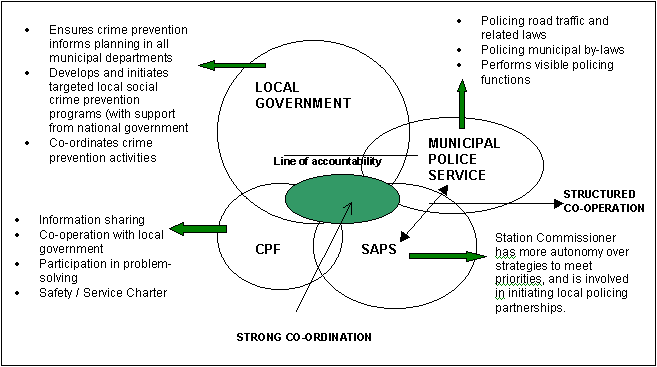
Focus area
|
The White Paper is the over-arching policy for the delivery of safety and security services over the next five years. It therefore provides the framework for the implementation of specific programmes and projects to be taken during this period. Given the high level policy focus of the White Paper, this section does not provide the details of the implementation of specific programmes and projects, but rather, suggests a framework for costing the White Paper. Thus, it is also necessary to undertake an extensive strategy process that will outline the fixed goals and time frames for action in the short, medium and longer-term. This will be completed as a matter of urgency.
It should be emphasised that the White Paper recognises that critical interventions are required to reduce the high levels of crime in the country as soon as possible. In particular, it is recognised that the public demand interventions that deliver immediate impact in order to secure a safer living environment. The White Paper acknowledges this urgency and, in some of the interventions outlined below, attempts to respond to this. The White Paper also acknowledges that continued medium and long-term strategic interventions are required to reduce crime. These should be based on sound research and analysis, which will determine where interventions will be targeted in the course of the next five years.
Given that the White Paper is a policy framework, it is difficult, without detailed analysis, to accurately cost its immediate implications. What follows is a broad overview of the process in which an accurate assessment can be made of the cost implications of the White Paper. This will entail analysing how current expenditure can be re-oriented before motivating for additional resources. However, given the proposals outlined in the White Paper regarding institutional reform at national level, greater detail is provided here in terms of the cost implications of this intervention.
The policy interventions outlined in the White Paper articulate a back-to-basics approach which emphasises a renewed and enhanced focus on the core business of the Department: reducing crime through the improved delivery of policing and the provision of effective crime prevention services.
Apart from the costing implications, which are outlined in more detail below, the policy priorities for policing and crime prevention as set by the White Paper need to inform decision-making at all levels of the Department and at all spheres of government. Specifically, the overall thrust in relation to the provision of a better service to the public cannot be easily costed and will form an integral component of planning at all levels of the organisation.
The primary issue addressed in the White Paper is the reduction of crime in South Africa. In addressing this critical issue, the Draft White Paper recommends policy interventions in three key areas, namely:
The White Paper prioritises enhancing the law enforcement capabilities of the Department, through improving the investigative function, targeted visible policing and victim support. The White Paper therefore advocates the optimisation of current resources and, particularly, the acceleration of training and personnel development in these areas. Given the need to enhance these functions, it is critical that the basic resource needs are also met.
Crime investigation: Interventions here require improvements in management systems, physical resources such as nation-wide information systems, and basic, specialised and management training.
Visible policing: Interventions here require improvements in crime trend analysis at local level, training and physical resources.
Victim empowerment: In relation to issues of victim empowerment, much can be achieved through a changed approach and an emphasis on service delivery at station level. It must be emphasised that this focus on victim empowerment should integrate with the Victim Empowerment Programme already running under the auspices of the NCPS. Should additional interventions be required, they will be funded through existing funds and international assistance. A number of agreements regarding such assistance are already in place.
The strategy for implementing of the crime prevention interventions in the White Paper must entail a data-driven learning process aimed at improving analysis of the causes of crime.
This would enable, firstly, an informed analysis of the external environment and specific types of crime; existing law enforcement and preventive responses to these specific crime types; and, secondly, the development of sound policies and strategies to reduce the occurrence of these crimes. This should be based on continuous learning through interaction with pilot projects.
The aim is to generate new data in order to inform the development of appropriate strategies to deal with specific high priority crimes. Further, the data generated in this learning exercise would inform and guide the building of the Department to ensure substantial improvements in the efficiency and effectiveness of service delivery over the next five years. This would also ensure that an integrated approach to the reduction of crime informs the development of future policy and strategy and that this process becomes institutionalised in the Department.
This strategic approach therefore has two components:
Importantly, however, sustained analysis around crime prevention should not be viewed separately from the process in which the capacity of the Secretariat is reinforced (see below).
It should also be noted that pilot projects in the major cities, which are currently being funded through allocations from the Department as well as input from foreign donors, and from which much is being learned, are already in the process of implementation. Such an integrated and ongoing approach to the reduction of crime would clearly form an essential element of empowering the Minister and the Department of Safety and Security to lead and inform crime prevention strategies at national, provincial and local level.
It should be emphasized that expenditure on informed and targeted crime prevention that is monitored effectively has substantial long-term saving benefits for the country. This applies specifically to savings in the criminal justice and health systems.
The institutional reform outlined in the White Paper enhances civilian oversight of the Department and integrates its activities. This is intended to ensure that the Department becomes geared to deliver on its political mandate and, therefore, that the South African public begins to receive an efficient value-for-money return on its investment in safety and security.
It should be noted that a pre-requisite for effective institutional reform would be a comprehensive audit of the current functions, capacity and institutional structure of the Department to inform the envisaged institutional reform and implementation of the White Paper. Such an audit implies that the functions of the Department be streamlined and clearly delineated, which requires a process of function rationalisation within the SAPS and Secretariat.
It is estimated that for the Secretariat, the institutional reform at national level as outlined in the White Paper would entail a complement of some 60 line-function staff - approximately 30 members of staff in addition to the current complement. This would ensure an enhanced capacity in the following key areas which are currently either under-resourced or non-existent: policy, planning, monitoring, financial management and efficiency monitoring, performance evaluation, legal services, communication and the National Crime Prevention Strategy Centre.
Given the analysis contained in the White Paper, it is clear that under-resourced civilian oversight over policing and a poor understanding of crime reduction strategies in the Department has weakened government"s ability to fight crime.
Resourcing the Department in the manner proposed by the White Paper will ensure enhanced civilian oversight over policing; an enhanced analytical capacity to inform policy formulation regarding policing and crime prevention; a greatly improved ability to audit performance and expenditure on policing and crime prevention; and, an enhanced strategic leadership capacity on issues of crime prevention.
The Minister would like to thank the following organisations for their
support and assistance in the process of drafting the White Paper on Safety and Security:British High Commission Business Against Crime Canadian High Commission Centre for Scientific and Industrial Research European Union GTZ Institute for Security Studies International Centre for the Prevention of Crime Police Research Group (British Home Office) Swedish Embassy United Nations Development Program |