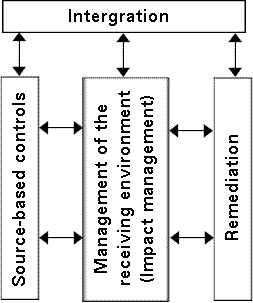
Figure 1: A functional approach to integrating pollution and waste management |
Vol.417, No.20978, 17 March 2000
GENERAL NOTICE
Notice 227 of 2000
DEPARTMENT OF ENVIRONMENTAL AFFAIRS AND TOURISM
on
The White Paper on Integrated Pollution and Waste Management outlines government's new thinking in relation to pollution and waste management.
In line with international trends and our national objectives of efficient and effective management of our nation's resources, priority is given in this new approach to prevention. Unlike previous policies that focussed predominantly on so called "end-of-pipe" treatment, this White Paper underscores the importance of preventing pollution and waste and avoiding environmental degradation.
Effective mechanisms to deal with unavoidable waste will remain necessary, but much greater attention must be directed to the introduction of preventative strategies aimed at waste minimisation and pollution prevention. Ever increasing urban and industrial development throughout the world is leading to levels of pollution which seriously threaten the natural resources upon which humankind depends for its survival. The Reconstruction and Development Programme also highlights the sub-optimal use of natural resources, and unacceptably high levels of air and water pollution as one of the major problem areas regarding the environment. Although South Africa has extensive environmental, pollution and waste management legislation, responsibility for its implementation is scattered over a number of departments and institutions.
The fragmented and uncoordinated way pollution and waste is currently being dealt with, as well as the insufficient resources to implement and monitor existing legislation, contributes largely to the unacceptably high levels of pollution and waste in South Africa This White Paper will implement co-operative governance as envisaged in the Constitution. The current fragmentation, duplication and lack of co-ordination will be eliminated. The White Paper on Integrated Pollution and Waste Management will result in a review of all existing legislation and the preparation of a single piece of legislation dealing with all waste and pollution matters.
Pollution and waste management is not the exclusive preserve of government. The private sector and civil society have crucial roles to play. The fostering of partnerships between government and the private sector is a prerequisite for sustainable and effective pollution and waste management to take place. Similarly, the spirit of partnerships and co-operative governance between organs of state is equally important due to the crosscutting nature of pollution and waste management.
Monitoring and collection of information on pollution and waste generation are crucial for the implementation of pollution and waste reduction measures. Moreover, the sharing of such information and creating awareness about the issues will enable all stakeholders, including communities, to gain a better understanding of the relation between pollution, waste management and the quality of life.
The White Paper proposes a number of tools to implement the objectives of the policy it sets out. The most significant of these is a legislative programme that will culminate in new pollution and waste legislation. This proposed legislation, amongst other things, will address current legislative gaps, and clarify and allocate responsibilities within government for pollution and waste management. The importance of drafting such legislation in a manner that continues to build on the participation of all stakeholders who were involved in the development of this White Paper is emphasised.
The Ministry and the Department of Environmental Affairs and Tourism would like to thank the Department of Water Affairs and Forestry for being an equal partner in the development of the White Paper. Sincere gratitude is extended to all those who contributed to this policy process.
Mohammed Valli Moose
Minister for Environmental Affairs and Tourism
1.1 Definition of Integrated Pollution and Waste Management
1.2 Scope and Purpose of the White Paper
1.3 Vision for the Policy
1.4 Purpose of the Policy
1.5 Policy Principles
1.6 Why is an Integrated Pollution and Waste Management Policy necessary?
1.7 The Integrated Pollution and Waste Management Policy Development Process
1.8 National Waste Management Strategy and Action Plans
2.1.1 Global concern about pollution
2.1.2 South Africa as part of the world economy
2.1.3 International obligations and agreements
2.2.1 The Constitution
2.2.2 White Paper on Environmental Management Policy for South Africa
2.2.3 Reconstruction and Development Programme
2.2.4 Growth, Employment and Redistribution Macroeconomic Strategy
2.2.5 Legislation
3.1 Water Pollution
3.1.1 Salinisation of fresh waters
3.1.2 Enrichment of fresh water bodies by nutrients
3.1.3 Microbiological quality of water
3.1.4 Sediment and silt migration
3.1.5 Harmful inorganic and organic compounds
3.1.6 Diffuse water pollution
3.1.7 Marine pollution3.2.1 Industrial and domestic fuel consumption
3.2.2 Dust problems
3.2.3 Vehicle emissions
3.2.4 Air quality management
3.2.5 Noise pollution
3.3 Land Pollution
3.4.1 Lack of priority afforded to waste management
3.4.2 Fragmented legislation and ineffective enforcement
3.4.3 Unacceptable safety, health and environmental practices for pollution and waste management
3.4.4 The absence of integrated waste management options
3.4.5 Insufficient involvement and empowerment of people
4.1.1 Achieving prevention and minimisation
4.1.2 Benefits of the shift to pollution prevention
4.1.3 Implications of the shift
4.2.1 Water pollution
4.2.2 Air pollution
4.2.3 Land pollution
4.2.4 Waste
4.2.5 Integration
4.2.6 Education and training
4.2.7 Public participation
5.2.1 Goal 1: Effective institutional framework and legislation
5.2.2 Goal 2: Pollution prevention, waste minimisation, impact management and remediation
5.2.3 Goal 3: Holistic and integrated planning
5.2.4 Goal 4: Participation and partnerships in integrated pollution and waste management governance
5.2.5 Goal 5: Empowerment and education in integrated pollution and waste management
5.2.6 Goal 6: Information management
5.2.7 Goal 7: International co-operation
6.1 Constitutional Setting
6.2 White Paper on Environmental Management Policy for South Africa
6.3 Roles of Government
6.3.1 National government
6.3.2 Provincial and local government
6.3.3 Authorisations
6.3.4 Impact management through ambient standards
6.3.5 Monitoring
6.3.6 Regulatory instruments
6.3.7 Capacity building
6.3.8 Information systems
6.3.9 Research and development
6.4.1 National Environmental Advisory Forum
6.4.2 Business and industry
6.4.3 Labour
6.4.4 Community based organisations
6.4.5 Non governmental organisations
6.4.6 The public
6.4 7 Appeals and complaints
7.1 Administrative Actions
7.2 National Waste Management Strategy
7.3 Legislative Amendments and Implementation of Legislation
Appendix 1: International Conventions, Agreements,
Treaties and Protocol, which Pertain to Pollution and Waste Management
Appendix 2: Principles from the White Paper on
Environmental Management Policy for South Africa
Appendix 3: Glossary of Terms and Abbreviations
Appendix 4: Acknowledgements
This chapter defines the concept of integrated pollution and waste management that government will use in its national policy on pollution prevention, waste minimisation, impact control and remediation. It also describes the scope and purpose of this integrated pollution and waste management policy, together with the consultative process used in developing this policy.
The government's national policy on integrated pollution and waste management (IP&WM) sets out the vision, principles, strategic goals and objectives that government will use for integrated pollution and waste management in South Africa.
This White Paper on Integrated Pollution and Waste Management for South Africa serves the following two purposes:
1.1 Definition of Integrated Pollution and Waste Management
Pollution is defined as: the introduction into the environment of any substance property (including radiation, heat, noise and light) that has or results in direct harmful effects to humanity or the environment, or that makes the environment less fit for its intended use.
Environment is defined as: the biosphere in which people and other organisms live. It consists of:
Integrated pollution and waste management is a holistic and integrated system and process of management, aimed at pollution prevention and minimisation at source, managing the impact of pollution and waste on the receiving environment and remediating damaged environments.
This White Paper on Integrated Pollution and Waste Management for South Africa represents a paradigm shift from dealing with waste only after it is generated (i.e. "end of pipe") towards:
1.2 Scope and Purpose of the White Paper
Appendix 1 lists international conventions, agreements, treaties and protocols relating to integrated pollution and waste management.
Appendix 2 contains the principles from the White Paper on Environmental Management policy for South Africa.
Appendix 3 contains a glossary of key terms and abbreviations used in this policy.
Appendix 4 contains acknowledgements of all those who contributed to the development of the government's integrated pollution and waste management (IP&WM) policy.
The vision of the government is:
to develop, implement and maintain an integrated pollution and waste management system which contributes to sustainable development and a measurable improvement in the quality of life, by harnessing the energy and commitment of all South Africans for the effective prevention, minimisation and control of pollution and waste.
The IP&WM policy is a subsidiary policy of the overarching environmental management policy, as set out in the White Paper on Environmental Management Policy for South Africa, and further supported by the National Environmental Management Act (No. 107 of 1998).
This IP&WM policy accordingly subscribes to the vision, principles, goals and regulatory approach set out in the environmental management policy and Act and details the government's specific policy for pollution and waste management.
This IP&WM policy applies to all government institutions, society at large, and to all activities that impact on pollution and waste management. One of the fundamental approaches of this policy is to prevent pollution, minimise waste, and to control and remediate impacts. The management of waste will be implemented in a holistic and integrated manner, and will extend over the entire waste cycle, from "cradle to grave", including the generation, storage, collection, transportation, treatment, and final disposal of waste.
The government aims to:
Policy principles are the fundamental premises government will use to apply, develop and test policy and subsequent actions, including decision-making, legislation, regulation and enforcement. The overarching principles of this White Paper on Integrated Pollution and Waste Management for South Africa are those of the Constitution and Bill of Rights, as well as those in the National Environmental Management Act (as per those in Appendix 2).
In addition, the following three principles specific to pollution and hazardous waste management have been adopted:
1.6 Why is an Integrated Pollution and Waste Management Policy necessary?
South Africa is emerging from a period of unsustainable and inequitable development, one outcome of which was environmental degradation, which has significant economic and social impacts. Part of effecting a transformation to development that is economically, socially and environmentally sustainable is to redefine the way in which pollution and waste will be managed in South Africa.
Much-needed economic growth can be supported by more appropriate and efficient use of natural resources, within a framework of integrated pollution and waste management. This will help to protect the people of South Africa and the environment without a continuous degradation of natural resources.
Although government has promulgated extensive legislation and regulations over the last few years to address threats to environmental and human health, a number of limitations have become clear:
The problems that arise due to a lack of integrated pollution and waste management are addressed in more detail in Section 3. This White Paper on Integrated Pollution and Waste Management is aimed at addressing these shortfalls.
1.7 The Integrated Pollution and Waste Management Policy Development Process
1.8 National Waste Management Strategy and Action Plans
A National Waste Management Strategy (NWMS), which will form the basis for translating the goals and objectives of the policy into practice, has been developed, together with short-term (five-year) priority Action Plans for the following key elements of the strategy:
The anticipated short term deliverables from the Action Plans have been incorporated under the goals and objectives of this policy. In addition, an Implementing Instruments Project Plan has been developed to support the implementation of the short-term priority Action Plans.
It is important to note that a similar national strategy and action plans for managing pollution have not yet been formulated. These will be developed during 2000-2001.
2.1. The International Context
2.1.1. Global concern about pollution
International concern about growing pollution world-wide has escalated over the past 20 years, particularly in the last decade. This is evident in the many international protocols and conventions that have arisen, and countless reports and conferences from significant bodies including the report of the World Commission on Environment and Development and the 1992 Rio Conference, where 178 countries agreed on Agenda 21 as a blueprint for sustainable development. This IP&WM policy is part of the South African government's efforts to meet the goals of Agenda 21.
Certain international agreements, such as the Framework Convention on Climate Change, dealing with greenhouse gases, and the Basal Convention, which addresses transboundary movements of hazardous waste, impose specific requirements on South Africa These are being addressed as part of the IP&WM policy process.
2.1.2. South Africa as part of the world economy
South Africa's reintegration into the global economy and the international and southern African political arena necessitates an improved pollution and waste management system. The country's economic and industrial policy has also fumed towards export promotion as a pillar of South Africa's economic development. South Africa therefore has growing obligations to meet international commitments and to be a globally responsible country.
The government will accordingly promote an integrated approach to pollution and waste management as a key factor in achieving sustainable development, by ensuring that:
- South Africa meets all its international environmental obligations as rapidly as possible
- exporters are assisted in meeting internationally expected standards of environmental management
- international pollution control efforts are not used as unfair trade barriers against South Africa's exports, and
- South Africa's pollution and waste management interests are adequately represented in international forums.
2.1.3 International obligations and agreements
Some of the international treaties to which South Africa is a party relate specifically to the pollution of water, air and land environments; others are of a cross-cutting nature and impact on all three environmental media. The obligations imposed under these international treaties and their implications for integrated pollution and waste management are given in Appendix 1.
To date, 26 international agreements (17 conventions, 4 protocols, 3 treaties and2 agreements) pertain to integrated pollution and waste management, 19 of which have been acceded to or ratified by South Africa.
The following South African legislation fully or partially covers 12 of these international agreements:
- Prevention and Combating of Pollution of the Sea by Oil Act (No. 6 of 1981) and regulations
- International Convention relating to Intervention on the High Seas in Cases of Oil Pollution Casualties Act (No. 64 of 1987)
- Dumping at Sea Control Act (No. 73 of 1980)
- Prevention of Pollution from Ships Act (No. 2 of 1986) and regulations Conservation of Agricultural Resources Act (No. 43 of 1983)
- Nature Conservation Ordinances of the various provinces
- Antarctic Treaty Act (No. 60 of 1996)
- Nuclear Energy Act (No. 113 of 1994)
- National Water Act (No. 36 of 1998),
- Environment Conservation Act (No. 73 of 1989), and
- National Environmental Management Act (No. 107 of 1998).
2.2.1 The Constitution
The Constitution (Act No. 108 of 1996) is relevant to pollution and waste management for two reasons. Firstly, the Bill of Rights (Chapter Two of the Constitution) contains a number of rights relevant to integrated pollution and waste management, to the extent that an Act or particular statutory provision that does not uphold these rights, is unconstitutional. Secondly, the Constitution provides the legal basis for allocating powers to different spheres of government, and is thus relevant to the institutional regulation of integrated pollution and waste management.
Sovereignty
The Constitution states that South Africa is a sovereign, democratic State. In terms of environmental management, it is important to recognise that sovereignty includes the ability to limit sovereign powers by entering into international agreements where the need arises.
The Bill of Rights
The most pertinent fundamental right in the context of integrated pollution and waste management is the Environmental Right (Section 24), which provides that:
"Everyone has the right
- to an environment that is not harmful to their health or well-being; and
- to have the environment protected, for the benefit of present and future generations through reasonable legislative and other measures that -
- prevent pollution and ecological degradation;
- promote conservation; and
- secure ecologically sustainable development and the use of natural resources while promoting justifiable economic and social development. "
This section of the Bill of Rights specifically imposes a duty on the State to promulgate legislation and take other steps to ensure that the right is upheld and that, among other doings, pollution and ecological degradation are prevented.
Health Care, Food, Water and Social Security (Section 27)
This provision in the Constitution upholds the right to water, among other things. It envisages an equitable allocation of resources of an acceptable quality.
Access to Information (Section 32)
The Bill of Rights enshrines the right of access to information held by the State, or any other person, which is required for the exercise of any right. The section imposes a duty on the State to enact legislation to give effect to the right. This integrated pollution and waste management policy includes provisions concerning access to information insofar as it relates to future integrated pollution and waste management legislation.
Just Administrative Action (Section33)
The Constitution protects the right to fair, lawful, reasonable and procedurally fair administrative action and provides that where administrative action has adversely affected rights, written reasons must be given. However, in terms of Section 23 of Schedule 6 of the Constitution, Section 33 has not yet come into operation.
2.2.2 White Paper on Environmental Management Policy for South Africa
The White Paper on Environmental Management Policy for South Africa is an overarching framework policy, governed by the democratic values and principles enshrined in the Constitution. Through the White Paper on Environmental Management Policy the government undertakes to give effect to the many rights in the Constitution that relate to the environment. Furthermore, it defines sustainable development as a combination of social, economic and environmental factors. The White Paper accepts sustainable development as the appropriate approach to resource management and utilisation, thus entrenching environmental sustainability in policy and practice.
The vision of the White Paper on Environmental Management Policy for South Africa is one of a society in harmony with its environment. The policy seeks to unite the people of South Africa in working towards a society where all people have sufficient food, clean air and water, decent homes and green spaces in their neighbourhoods, enabling them to live in spiritual, cultural and physical harmony with their natural surroundings.
The White Paper on Environmental Management Policy for South Africa sets a number of objectives for integrated pollution and waste management, which will be addressed in this White Paper on Integrated Pollution and Waste Management for South Africa.
These objectives are:
- To promote cleaner production and establish mechanisms to ensure continuous improvements in best practice in all areas of environmental management.
- To prevent, reduce and manage pollution of any part of the environment due to all forms of human activity, and in particular from radioactive, toxic and other hazardous substances.
- To set targets to minimise waste generation and pollution at source and promote a hierarchy of waste management practices, namely reduction of waste at source, reuse and recycling with safe disposal as the last resort.
- To regulate and monitor waste production, enforce waste control measures, and co-ordinate administration of integrated pollution and waste management through a single government department.
- To set up information systems on chemical hazards and toxic releases and ensure the introduction of a system to track the transport of hazardous materials.
- To ensure the protection and proactive management of human health problems related to the environment in all forms of economic activity."
This integrated pollution and waste management policy is driven by a vision of environmentally sustainable economic development. This vision promotes a clean, healthy environment, and a strong, stable economy. By preventing, minimising, controlling and remediating pollution and waste, the environment is protected from degradation. By increasing the use of cleaner production technologies, avoiding accidental and operational releases and reducing the non-productive costs of treatment, disposal and clean-up, a more efficient and competitive economy and a healthier environment will be established.
The South African government is committed to a programme of sustainable development that will deliver basic environmental, social and economic services to all, without threatening the viability of natural, built and social systems upon which these services depend.
2.2.3 Reconstruction and Development Programme
The Reconstruction and Development Programme articulates the need to follow a path towards sustainable development. It affirms the need to manage economic development and human growth in such a way that the earth's life support systems are not damaged or destroyed. In addressing environmental issues, the Reconstruction and Development Programme recognises the need for government to work towards:
- equitable access to natural resources
- provision of safe and healthy living and working environments, and
- a participatory decision-making process around environmental issues which empowers communities to manage their natural environment.
2.2.4 Growth, Employment and Redistribution Macroeconomic Strategy
The long-term view of the Growth, Employment and Redistribution Macroeconomic Strategy is:
- a competitive, fast-growing economy which creates sufficient jobs for all workseekers
- a redistribution of income and opportunities in favour of the poor
- a society in which sound health, education and other services are available to all, and
- an environment in which homes are secure and places of work are productive.
The Growth, Employment and Redistribution Macroeconomic Strategy relates to the management of waste pollution in two main ways. Firstly, it emphasises that the South African economy cannot grow merely through exploitation of crude natural resources. Secondly, it states that the provision of basic household services is a relatively low-cost and effective form of public intervention in favour of the poor and consistent with the reduction of income inequalities.
The universal provision of basic household waste removal services, as outlined in this IP&WM policy, is therefore in accordance with the Growth, Employment and Redistribution Macroeconomic Strategy and provides an area of synergy between macroeconomic policy, waste management, health protection, and the redistribution of resources.
2.2.5 Legislation
The Department of Environmental Affairs and Tourism is currently engaged in a law reform process, to be completed by the end of 2000, which will address all outstanding environmental legislation and amend existing legislation where necessary, in line with new policies. The overarching framework for this process is the National Environmental Management Act (No. 107 of 1998). The law reform process will guide the amendment and expansion of the Act to ensure continuity in the application of environmental legislation in South Africa.
Among other things, NEMA:
- puts in place government structures for co-operative governance among environmental authorities
- legally obligates the principles in the White Paper on Environmental Management Policy for South Africa, and
- makes provision for control and remediation of environmental impacts and degradation.
The participative process followed during the development of this IP&WM policy highlighted a number of issues relevant to the three receiving media, i.e. water, air and land, and identified waste as a major source of pollution. This IP&WM policy was developed to address these issues.
The key water pollution issues are set out below.
3.1.1 Salinisation of fresh waters
The many impacts of excess salinisation on water resources include reduced crop yields, increased formation of scale and added corrosion in domestic and industrial water conveyance systems, as well as increased requirements for pre-treatment of water for selected industrial uses (such as boiler feed water).
3.1.2 Enrichment of fresh water bodies by nutrients
The accumulation of excess nutrients (e.g. phosphates and nitrates) in water bodies changes the composition and functioning of the natural biota, makes the environment less attractive for recreation and sport, causes the presence of toxic metabolises and taste and odour-causing compounds, and complicates water treatment.
3.1.3 Microbiological quality of water
Human settlements are the major source of deteriorating microbiological water quality. Disease-causing micro-organisms and parasites enter the water environment through (for example) partially treated sewage effluents, seepage and wash-off from inadequate sanitation, and leachate from waste disposal systems.
3.1.4 Sediment and silt migration
Many South African rivers carry a naturally high load of suspended solids, reflected in high turbidity. There are also many man-made sources of sediment and silt, which limit the light penetration of water, change natural productivity and affect the natural balance of predators and prey in biotic communities.
3.1.5 Harmful inorganic and organic compounds
South Africa is highly industrialised and hence at times carries the burden of industrial pollution, including trace metals and synthetic organic pollutants. Concern is not only for the potable use of water (since these compounds are not easily removed by conventional water treatment technology), but also for the aquatic blots and the organisms indirectly dependent on aquatic life, such as waterfowl.
3.1.6 Diffuse water pollution
Sources of serious diffuse water pollution include pit latrines, industrial seepage, agrochemicals in soil fertilisers and insecticides, run-off from farm lands, contamination from animal wastes, informal settlements, thermal pollution by power plants and leaking sewerage pipes.
3.1.7 Marine pollution
The marine environment is impacted by off-shore exploitation of marine resources, offshore air-lifting operations, the extensive relocation of sand dunes in the near-shore area, oil spills from passing vessels,, the seepage of sewage into coastal watersand sewage and industrial effluent discharge pipelines off the coast.
Sources of air pollution include: pollution from mines, agriculture, domestic waste, industries, indoor emissions vehicle emissions, crop spraying, smokers, low-grade coal, domestic cooking, the burning of garden refuse, sugar cane and veld,, and dust from roads. Common air pollutants and asbestos can have adverse health impacts if not managed.
3.2.1 Industrial and domestic fuel combustion
The highest levels of air pollution at ground level are found in black townships, due to the use of coal stoves for cooking and heating. Larger municipalities have made significant progress in reducing air pollution in the city centres and the more affluent residential areas, but the increasing number of sources of pollution and rapid urbanisation are hindering progress.
3.2.2 Dust problems
Sources of dust include construction, agricultural and industrial activities and asbestos mining. Dust from untarred roads in a large number of rural villages and black urban residential areas is a significant air pollution problem.
3.2.3 Vehicle emissions
Vehicle emissions from transport trucks and domestic vehicles contribute significantly to air pollution. Increasing dependence on private vehicle ownership and use exacerbates the problem.
3.2.4 Air quality management
The following significant deficiencies are perceived in current air quality management:
- Air pollution is not considered adequately in planning the placement of industries and residential areas
- Monitoring equipment is poorly maintained, and often non-operational
- Control of emissions is based on source control, without reference to the receiving environment
- Lack of prosecution of offenders
- Lack of incentive for not polluting or for minimising pollution
- Non-devolution of essential parts of the Atmospheric Pollution Prevention Act (No. 45 of 1965) (in particular Parts II and IV) to municipalities
- Lack of transparency in all aspects of air quality management
- The need for air quality management to take account of the growing international concern about climate change
- An emphasis on reactive control, rather than proactive measures to manage air quality.
3.2.5 Noise pollution
Noise pollution (from traffic, construction, mining, commercial recreation and industrial activities) is viewed as an escalating problem and there is little practical means of recovering the situation in terms of current regulatory structures.
Waste disposal sites, especially those containing hazardous, medical, and veterinarian waste, may result in land pollution problems. A few of the many other problem areas include the poor location and/or inadequate management of waste disposal sites, leachate, illegal waste disposal sites, a lack of suitable hazardous waste disposal sites and poor town planning.
Other major sources of land pollution include:
Key issues relating to pollution and waste are detailed below.
3.4.1 Lack of priority afforded to waste management
In the past, waste management was not afforded the priority it warrants as an essential function required to prevent pollution and protect the environment and public health. Consequently, insufficient funds and human resources were allocated to this function. In many instances this neglect has resulted in a lack of long-term planning, information, appropriate legislation and capacity to manage the waste stream.
3.4.2 Fragmented legislation and ineffective enforcement
Waste management legislation is currently fragmented, unfocused and ineffective, with a resultant lack of control in all aspects of waste management. In addition, a lack of government capacity means that the enforcement of existing legislation is frequently unfocused, especially with regard to waste disposal. Another area of concern is the importation and exportation of hazardous and radioactive waste.
3.4.3 Unacceptable safety, health and environmental practices for pollution and waste management
Environmentally and socially unacceptable practices currently characterise many aspects of waste management, particularly in rural areas where services are often non-existent. In many of those urban communities that have always had poor quality services, these services have collapsed as a result of non-payment and poor financial planning.
Examples of environmentally and socially unacceptable practices include:
- substandard, ineffective or non-existent waste collection and street-cleaning systems
- illegal dumping and littering
- waste disposal sites which are poorly sited, designed and operated, and thus impact negatively on both the environment and quality of life. Furthermore, there is often little or no control over their use, and general waste disposal sites are frequently used for the illegal disposal of hazardous waste, and
- the presence of pickers at landfill sites, who disrupt operations and are exposed to hazardous wastes and dead animals, all of which could affect their health.
3.4.4 The absence of integrated waste management options
The focus to date in South Africa has been on waste disposal and impact control. Concerns expressed about the inadequacies of this focus include:
- the lack of waste avoidance, minimisation and cleaner production technology initiatives, as well as the current lack of regulatory initiatives to manage waste minimisation, which, if in place, could potentially reduce the hazardous waste problem. Furthermore, there are no incentives for reducing waste and industries are not required to submit plans for waste disposal when they apply for permission to establish new enterprises
- inadequate resource recovery and a general lack of commitment to recycling. There is no legislation, policy or waste management culture that promotes resource recovery or makes it financially viable, and
- the lack of a variety of appropriate waste treatment methods.
Integrated waste management addresses these criticisms by focusing on four internationally steps, i.e. waste avoidance (prevention and minimisation), resource recovery (recycling and reuse), waste treatment, and waste disposal.
3.4.5 Insufficient involvement and empowerment of people
A major concern is the health and safety of workers, especially the vulnerability of contract/temporary workers who are exposed to general pollution, hazardous substances and waste in the workplace. Education and communication channels between sectors, especially government and civil society, are inefficient and inadequate. Ignorance of the connection between poor pollution and waste management and disease has resulted in community apathy about combating the effects of pollution and waste. A lack of a right to know, secrecy and misinformation have also been major contributory factors.
It is difficult to identify, consult with and involve interested and affected parties and stakeholders in pollution and waste management-related decision making. Issues to be addressed include stakeholder representation and the allocation of responsibility for finding solutions to pollution problems, since there are no appropriate guidelines for public participation by authorities and communities.
There is also a general lack of capacity building and empowerment with regard to integrated waste management, i.e. from generation, through collection and transportation to final disposal. There is thus a need for capacity building at all levels and in all sectors.
4. APPROACHES TO INTEGRATED POLLUTION AND WASTE MANAGEMENT
4.1 Shift to Prevention
The government believes that pollution prevention is one of the most effective means of protecting South Africa's people and environment. Pollution prevention eliminates costly and unnecessary waste and promotes sustainable development. It aims to reduce risks to human health and the environment by trying to eliminate the causes, rather than by treating the symptoms of pollution. This objective reflects a major shift in emphasis from control to prevention.
The IP&WM policy also stresses the need to make pollution prevention a part of everyday activities and decisions, by all sectors and individuals. This policy shows how the focus of environmental protection can be shifted from reacting to pollution towards the prevention of pollution at source.
4.1.1 Achieving prevention and minimisation
In order to achieve sustainable development, the historical focus on pollution impact management and remediation should shift to a management approach, combining pollution and waste prevention and minimisation at source, impact management and, as a last resort, remediation. Effective pollution prevention focuses not only on the installation of pollution abatement equipment in industry, but also on the shared responsibility of all sectors of society to protect South Africa's natural resources.
Pollution prevention:
- relates to innovation in product design and production
- encourages cost savings through efficiencies and conservation
- insists on sound management of persistent, big-accumulative and toxic substances and on eliminating their use where necessary.
While the implementation of pollution prevention will differ among sectors, the general techniques will include: policy and regulation, technical assistance and compliance monitoring, prioritising substances of concern, efficient use and conservation of natural resources, reuse and recycling, operating efficiencies, economic incentives and disincentives, integration of environmental concerns into land-use planning and urban development, training, household waste minimisation and recycling, product design, process changes, cleaner production, creating efficient information systems, life-cycle analysis, partnerships, raising awareness, building capacity, and developing strategies and tools to enable people to follow sustainable lifestyles.
Changes in behaviour are paramount to the pollution prevention approach. Government guidance and regulation are needed in this regard, to improve pollution prevention measures by means of a legislative framework for responsive pollution prevention programmes.
4.1.2 Benefits of the shift to pollution prevention
The shift to pollution prevention will:
- minimise and/or avoid the creation of pollutants and waste
- minimise and/or avoid the transfer of pollutants from one medium to another
- accelerate the reduction and/or the elimination of pollutants
- minimise health risks and impact
- promote the development of pollution prevention technologies
- use energy, materials and resources more efficiently
- minimise the need for costly enforcement
- limit future liability with greater certainty
- limit costly clean-up practices
- promote a more competitive economy
- reduce human impact on the environment
- enhance the quality of life, and
- ensure intergenerational equity.
4.1.3 Implications of the shift
The course of action that this White Paper proposes, i.e. to establish an integrated national pollution and waste management system, will have a significant influence on how South Africa's pollution and waste management goals and objectives are pursued in the future. The integrated pollution and waste management system will:
- assist the government in attaining its sustainable development goals
- ensure that the quality, quantity and accessibility of information are improved
- facilitate strong partnerships between the government, private sector, labour, non-governmental organisations and communities
- facilitate compliance with environmental laws and reduce the amount of bureaucratic delays, and
- build capacity and awareness.
4.2 Approaches and issues relating to Policy Implementation
The elements below are key to identifying pollution and waste issues and addressing them in a practical manner:
The following sections describe specific aspects of pollution prevention and waste minimisation that will be considered for each of the environmental media. The issues have been identified through the stakeholder participation process. Note that in each case, "issues relating to integration" refers to integration both:
4.2.1 Water pollution
The policy on water pollution management covers inland waters, both surface and groundwater, as well as estuarine and marine waters. Issues which will be considered in relation to policy implementation include:
- River catchments as basic management units
- Land uses affecting catchment water quality
- Water quality requirements as specified by the catchment water users
- Management of storm water from industrial and urban areas
- Point sources of pollution, e.g. sewage treatment works and industrial waste water treatment works
- Diffuse sources of pollution, e.g.:
- polluted base flow originating from industrial areas (including marine outfalls)
- polluted base flow originating from informal settlements, and
- leachate from waste disposal sites
- leakage from sewage reticulation systems and sewage works.
With regard to integration, the following issues will be considered:
- The regulation of water pollution by the Department of Water Affairs and Forestry
- Preventative and management measures by the Department of Minerals and Energy
- The agricultural and domestic use of herbicides, pesticides and poisons, and their contribution to the contamination of storm water run-off
- Soil erosion resulting in siltation of reservoirs and high silt loads in rivers
- Atmospheric deposition on land and the indirect impact on surface and groundwater
- Wind-blown dust and solids from tailing deposits and their impact on water quality.
4.2.2 Air pollution
The policy aspects relating to air quality management consider pollution on a local, regional, national and global scale. Atmospheric pollution, malodour generation and control, as well as indoor air pollution will be covered.
Issues which will be considered in relation to policy implementation are:
- Smoke (particulates) arising from coal and fuel burning (including particulates from power generation)
- Vehicle emissions
- Emissions from industrial activities
- Dust arising from mining and industrial activities
- Various sources of greenhouse gases
- Waste disposal sites
- Incinerator emissions
- Acid rain
- Noise.
With regard to integration, the following issues will be considered:
- The regulation of air pollution by the Department of Environmental Affairs and Tourism, the provinces and municipalities
- The pollution of water used for scrubbing air
- Air pollution arising from the disposal of solid waste.
4.2.3 Land pollution
The policy on land pollution considers urban, industrial, mining, rural and agricultural land. The loss of arable land through compaction or alien invasion is not discussed in this document. Soil erosion per se is also not covered, except under the water medium, where it is regarded as a pollutant (see Section 4.2.1).
Issues and land pollution sources, which will be considered in relation to policy implementation, are:
- Injudicious/overuse of fertilisers and agricultural chemicals
- Unsustainable farming practices
- Irrigation with sewage sludge
- Overirrigation
- The impact of agricultural chemicals such as pesticides, herbicides and fertilisers on surface water and groundwater quality.
- Agricultural wastes
With regard to integration, the following issues will be considered:
- The regulation of land pollution by the Department of Agriculture, the Department of Water Affairs and Forestry, the Department of Minerals and Energy and other pollution control authorities
- The impact of land pollution on water quality
- The impact of organic agricultural wastes on surface and groundwater quality
- The impact of soil erosion and agricultural management practices on water quality,
- Land pollution from liquid effluent disposal via irrigation
- The impacts of industrial activities or infrastructure on surface and ground water quality, in terms of related effects on land or soil
- The impact of sewage treatment works
- The impact of residential development
- Land application of sewage sludge
- The impacts of waste and hazardous waste disposal sites.
4.2.4 Waste
Those aspects of the policy relating to waste management will address domestic, commercial, agricultural, mining, industrial, metallurgical, power-generation, nuclear, medical and hazardous waste, as well as litter. Waste is considered to be a source of pollution and the policy will address the management of the entire waste handling process, from generation to final disposal. Issues which will be considered in relation to policy implementation are:
- Waste avoidance, minimisation and prevention
- Recycling and reuse
- Treatment and handling
- Storage and final disposal.
With regard to integration, the following issue will be considered:
- Regulation of waste by the Department of Environmental Affairs and Tourism.
4.2.5 Integration
The government will adopt a functional approach to integrated pollution and waste management (see Figure 1).
Figure 1: A functional approach to integrating pollution and waste management |
Source-based controls are used to control the generation and discharge of waste. Controlling waste discharges at source supports the management of the receiving environment. In some instances, source-based controls can be extended to prevent waste production altogether.
Management of the receiving environment (impact management) entails anticipating threats to environmental media, setting ambient quality standards and ensuring that source-based controls are put in place to control such threats.
Remediation entails retroactive intervention to reverse environmental damage and achieve a specific ambient quality.
4.2.6 Education and training
The government will promote the education and empowerment of South Africa's people with regard to integrated pollution and waste management by increasing their awareness of and concern for pollution and waste, and assisting in the development of the knowledge, skills, values and commitment necessary for successful integrated management.
4.2.7 Public participation
Public participation is considered a cornerstone for the development of this policy. The government's approach in this policy is to establish mechanisms and processes to ensure effective public participation and capacity building in integrated pollution and waste management.
Policy criteria are norms for evaluating the implementation of the policy principles. The following criteria will be used: