 Leonard Ramatlakane, MEC
Department of Transport and Public
Works WESTERN
CAPE
Leonard Ramatlakane, MEC
Department of Transport and Public
Works WESTERN
CAPE
|
| ACKNOWLEDGEMENTS |
Leonard Ramatlakane, MEC
Department of Transport and Public
Works WESTERN
CAPEThe Western Cape Department of Transport and Public Works held its first consultative conference in November 1994. This initiated the process which resulted in the release of the Draft Green Paper on Western Cape Provincial Transport Policy in June 1996.
Prior to the writing of the Draft Green Paper, letters were sent to 1 500 stakeholders throughout the Province asking them which were the important matters provincial policy should address. Many of the issues and concerns raised by communities, organisations and statutory bodies at the start of the project were addressed. In addition, an in-depth rural transport study was undertaken which examined the principal transport problems in over 35 different towns in the Western Cape and the accessibility issues confronting people in rural areas.
The Draft Green Paper was widely circulated and 4 000 copies of the abridged version distributed throughout the Province. Written comment was received from over 30 organisations and individuals and over 20 bilaterals were held, involving a large number of key stakeholders. This process of consultation and involvement culminated in the second consultative conference which was held on 14 September 1996, attended by over 300 invited representatives of community groups, authorities and organisations.
The Draft Green Paper was subsequently amended and issued as the Green Paper for broader public comment and input. The closing date for comments was 30 November 1996.
The constructive support and assistance that has been provided by numerous organisations and individuals and the many helpful suggestions and comments which have been received are gratefully acknowledged.

| INTRODUCTION |
In many areas, both urban and rural, people are mobility-deprived because of inadequate public transport and are unable to access even the most basic facilities on a regular basis. Other people are transport disenfranchised and could not afford to use public transport even if it were provided. Under such circumstances people become isolated and insular, cut off from other people, opportunities and information. Even in large urban areas, public transport services are seen by many to be inconvenient, unreliable and unsafe, offering limited choice, particularly for non-work trips with very few evening, night-time or weekend services.
A different set of concerns arises from growth in private vehicle usage. This has resulted in rapidly increasing congestion in urban areas causing delays to all road users, both private and public alike, and is leading to worsening environmental deterioration, especially in metropolitan Cape Town. The congestion which is experienced has led to pressures to expand the capacity of the road system. However, this has the concomitant risk of entrenching the inefficient and inequitable land use arrangements which gave rise to the particular growth in traffic demand in the first instance, thereby perpetuating structural dependency and impoverishment.
Despite these problems, the province is generally well endowed with movement resources. There is an extensive main road network joining all the major centres and a relatively dense network of gravelled roads joining rural settlements and farms. In the metropolitan area, there is a well-developed arterial road system and an established rail system. Road-based public transport services are provided by a large fleet of buses and minibus taxis. These movement resources represent a major investment in public infrastructure, essential for the economic well-being of the Western Cape, the quality and integrity of which must be adequately protected and maintained.
However, a major problem in the Western Cape is not the under-supply of transport facilities but the relative inefficiency and ineffectiveness with which services are provided and operated. Inadequate and poor performance are evident across a range of activities, including operational and strategic planning, accident prevention, public transport planning and operations, policy coordination, law enforcement, funding and subsidisation. The result has been a transport system which is in disarray. Responsibilities are badly fragmented and there is no coherent policy to address the many different issues which exist. Unless all these major issues are comprehensively addressed, transport will remain inefficient and far from realising the full potential of which the system is capable.
The promulgation of this White Paper on transport policy in the Western Cape is intended to redress existing imbalances and to provide a new sense of direction and purpose.
The declaration of public policy has profound implications. It commits a particular level or branch of government to a specific course of action which will determine priorities and form the basis for the future expenditure of public funds. Consequently, it informs other stakeholders, allowing them to position themselves to take advantage of the more positive aspects of policy and to minimise any possible negative consequences it may have for them.
Public policy is essentially hierarchical in nature, not vested solely in one level of government. With the devolution of responsibilities as stipulated in Schedules 4 and 5 of the Constitution, and as will be informed by any future Land Passenger Transport Act, it is important that each level of government declare policy consistent with its role and functions and area of jurisdiction, responsive to its own particular needs and circumstances, and those of its various constituencies.
It is intended that the policies of a higher level of government should guide and constrain the policies of a lower level of government through the legal and fiscal mechanisms which govern such relationships. Within this context, policies at the lower levels of government become increasingly detailed and specific and are successively contained within the policies of higher levels of government.
With the adoption of the national White Paper by the national
cabinet, overall policy direction has been established. The intention of
this provincial Transport White Paper is to build on this foundation and
to provide greater detail of specific intentions which are responsive to
the needs and opportunities which exist in this province, and which recognise
current and future competencies assigned to provinces and other spheres
of government under the Constitution.
| VISION AND MISSION STATEMENTS |
The establishment of an integrated, accessible, well managed and maintained transport system throughout the Western Cape, which is recognised as making efficient use of resources and being socially just, in a way which advances broader developmental aims and objectives.
Mission
To utilise available knowledge, skills and competence to advise and assist transport authorities throughout the Western Cape to realise their aims and objectives by :
| KEY PRINCIPLES AND PROPOSITIONS |
An essential principle of the RDP is the need for an integrated and sustainable programme which is aimed at redressing imbalances, increasing people’s abilities and skills and enhancing human dignity. This can only be achieved by adequate coordination between various sectoral policies, using all available resources in a coherent and purposeful way to achieve a common aim. It changes the nature of sectoral policy, such as transport, from pursuing its own, often narrow and inward-looking agenda, to becoming a tool which is used in the attainment of broader development policy. Consequently, sectoral policies become subservient to broader development needs and truly become the agents for development. The transport policy debate is broadened from current considerations of economic and operational efficiency to the particular role transport should play in the attainment of specific reconstruction and development strategies and the realisation of spatial development policy. This ensures that transport investments are developmentally effective and justified in relation to the opportunity costs of investments in other sectors. Accordingly, the emphasis changes from a planning process which is product-driven within sectors to one which is programme-driven between sectors, with a unified vision and common objectives to which all sectors subscribe for each programme.
This remains the essence of emerging provincial transport policy - transport must no longer be seen in isolation, but as a means to an end, namely the attainment of broader development aims. Unless policies which are essentially interventionist are adopted, inequities and inequalities will be perpetuated and the majority of our people committed to a life of structural impoverishment and dependency. This cannot be allowed to happen.
KEY PRINCIPLES
Based upon the realisation of a broader development agenda, there are a number of key principles which inform transport policy. These are to :
Establish a role for transport in employment creation. The nature of transport policy which is adopted has a major influence upon employment creation - directly, through the amount of employment generated, particularly within road-based freight and public transport sectors, and indirectly through the degree of access it provides to land and income generating opportunities and the resultant development response. Both are susceptible to manipulation and can have a major bearing on the developmental ‘well-being’ of an area.
Assess the distributional effects of transport programmes. The skew development between rich and poor, urban and rural, advantaged and disadvantaged, undermines our society. To achieve greater equity and accessibility in the provision of public goods, particularly relating to intended transport investment programmes, it is important that both the direct and indirect impact of transport programmes are fully explored. The actual beneficiaries of such programmes should be identified and the nature and extent of benefits each realises made explicit to avoid the perpetuation of inequalities and under-development. Discriminatory practices against specific groups, such as women and the disabled must cease, and their special needs identified and addressed in all transport plans and programmes.
Increase productive potential in the transport sector. There are two related dimensions - increasing the appropriate and efficient use of currently available movement resources and mobilising and empowering emergent transport skills and capacity, particularly from within previously disadvantaged communities. While the first is essentially technical, including both operational and spatial considerations, the second is people-centred, aimed at developing and sustaining the capacity of communities to respond to their own movement needs and requirements. Increasing the power of communities to control resources they themselves produce for the benefit of those who need them most requires careful support and encouragement but has the potential of creating substantial improvements at minimal cost, particularly amongst the most seriously disadvantaged and marginalised.
Establish accessible, supportive and responsive administrations. The RDP is a people-driven process, the various levels of government acting as enabling instruments in the realisation of the legitimate aims and aspirations of the people. For transport to fulfil its appropriate role, all levels of government involved directly or indirectly with transport must be responsive to the needs of the people. Progress in the establishment of appropriate structures should be maintained to ensure that government bodies are aware and informed of community transport needs and become actively involved in their realisation. In addition, given the serious backlog in transport service provision which exists and the need to deliver at scale, the management and implementation capacity of all levels of government must be significantly enhanced.
Use provincial monies, through the provision of services and subsidies, to benefit the poor. The provision of movement resources, particularly road space provision, has satisfied principally the movement requirements of a minority who enjoy high levels of personal mobility. Public transport provision has been a secondary requirement, motivated principally by the need to provide a minimum level of mobility to satisfy the labour needs of a developed industrial and commercial sector. The result has been urban and rural systems which often fail to meet even the most basic access requirements of the poor. In future, a more appropriate balance must be sought between protecting existing resources and meeting basic needs in ways which stimulate growth, development, reconstruction and redistribution to the benefit of all.
Set transport prices at appropriate and realistic levels, consistent with the aims of restructuring and redistribution. A key issue is the way in which transport prices and user charges are set. The determination of appropriate transport prices is an essential component of spatial restructuring and should therefore be an integral part of transport policy at a regional level. Current pricing bears little relationship to current economic or social reality. A more rigorous basis for determining prices is required which is made clear and explicit, based not only on economic considerations but upon social justice and need, and should form an essential element of an overall development programme. A general principle is that those able to afford it should meet a greater proportion of the direct costs of transport, both economic and social, and that subsidies and grants should be retained primarily for those who need them most, the poor and disadvantaged.
Ensure that decision-making is truly participative and democratic. The link between democracy, development and a people-centred approach to government is firmly entrenched in the RDP. Development occurs when government is closest to the people and is supportive, encouraging and enabling. To maximise development potential requires not only the decentralisation of decision-making and the participation of people in decisions that directly involve or affect them but a clear understanding of the distinct roles and responsibilities of the various tiers of government. It is therefore an obligation of the provincial Department of Transport and Public Works to distinguish between decision-making that is rightfully its prerogative and that of other tiers of government, to ensure that all decision-making at all levels is inclusive and participative and to help build capacity to enable the transportation and development responsibilities of each to be competently discharged.
MAIN PROPOSITIONS
Based upon these key principles, there are six main propositions upon which provincial policy is founded and which will guide the provincial Department of Transport and Public Works in the role which it intends to play in transport matters in the province. These propositions are reflected in the following statements of intention, being to :
Establish strong policy direction and guidance. A clear transport culture and ethic will be established throughout the province which is founded on explicit principles and values, responsive to public needs and requirements. These will guide and inform local planning initiatives. The provincial Department of Transport and Public Works will take the lead in defining such principles and values, in establishing an appropriate culture and ethic and in ensuring their consistent application. It will become a learning organisation, continually adapting and responding to changing opportunities and needs and always seeking to respond appropriately. Effective channels will be established to ensure the transfer of knowledge and information between the various tiers of government.
Provide for the maximum delegation of powers and functions. It is important that there is sustained progress in realising both national and provincial policies, within the context of the Constitution and other relevant legislation. The way in which these policies will be refined and extended, the particular strategies which will be adopted and the plans and programmes which will be proposed are local matters and it will be the responsibility of each transport authority to prepare formal transport plans and programmes in response to local needs and priorities.
Build capacity and capability in third-tier government structures. Where capacity should exist in the third-tier authority to undertake delegated technical aspects of transport powers and functions, technical assistance and support will be provided by the provincial Department of Transport and Public Works to enable appropriate levels of capacity and capability to be developed.
Adopt management-intensive rather than capital-intensive programmes. The emphasis for the immediate future will be placed on first making the best use of available resources, while major additions to the transport system will be considered only if in accord with overall developmental objectives. There is ample scope for improving both the performance and productivity of almost every aspect of transportation through organisation and management; achieving the optimum performance of the considerable transport resources which are currently available will take precedence.
Ensure that all transport actions are development based. Transport plans and programmes will always be linked to broader reconstruction and development aims, seeking to increase economic growth, redress existing imbalances and inequalities and be responsive to public needs.
Make transport part of an integrated
planning process. The strategic relationship
between transport policy and the spatial manifestations of development
policy in determining the overall demand for movement, the degree of efficiency
with which such demand can be met and the need for additional investment
in resources and infrastructure must be recognised in all transport plans.
In the move towards greater sustainability, targets will be established
for the growth in movement, particularly during peak periods, the degree
of utilisation of available movement resources and the preferred transport
intermodal mix. This will be underpinned by the appropriate management
of transport infrastructure and facilities to minimise the need for additional
investment.
| AIMS AND OBJECTIVES |
The strategic objectives are based on the national strategic objectives. These are as follows and have the intention of establishing values and direction for the provincial transport policy:
| COMPREHENSIVE INTEGRATED PLANNING |
There are three basic levels within which comprehensive, integrated planning should occur:
Integration between transport and spatial planning has never occurred because of the inability to engage with the underlying political dimensions of many land use decisions and a failure to grasp the complicated macro-issues associated with the functioning of such a complex system. In addition, the fragmentation of responsibilities within and between spatial planning and transport planning agencies has given rise to a land use-transport system which is far from economic or efficient. Neither is it effective. Due to the priority and importance given to land use decisions, transport is treated solely as a derived demand and consequently, the performance of the transport system has been essentially reactionary and has never been capable of being optimised. Because of these characteristics, anticipated economic and population growth in urban areas will seriously compromise the situation still further.
Integrated, comprehensive planning must now occur within a broader reconstruction and development vision which extends beyond spatial restructuring, important though that may be, and includes all those factors associated with meeting basic needs, such as job creation, housing, infrastructure provision, with investments in the transport sector being integrated with other sectoral investments in an appropriate and well-structured development programme. In addition, the manner within which planning occurs must recognise new realities - the importance of establishing people-driven processes which are genuinely inclusive and empowering with all levels of government responding to people’s development needs and aspirations.
POLICY STATEMENTS
Integration within the transport sector
Issue
It is important that transport policy development is both comprehensive and cohesive, that is, that strategic, reasoned decisions on all the interrelated transport policy aspects evolve together and are assessed collectively. In general, transport policy development has not been cohesive with policies on infrastructure investment programmes, public transport planning and operations and urban transport matters having evolved separately and to different degrees, often with no clearly defined links or broader relationship between them.
Policy
Transport policy must result in a single, comprehensive and integrated programme with mutual support and internal consistency between all transport variables. The key dimensions of integrated transport are:
Coordination within the transport sector
Issue
As well as policy integration between sectors within each level of government, there is also need for policy coordination within the transport sector between all levels of government. The intention is to ensure that there is consistency and agreement between them in order that the full resources of government can be brought to bear on any major initiative and to clarify the role and contribution each level of government is expected to make. Coordination on transport matters occurs between national and provincial governments in the form of MINCOM, a committee upon which the MECs in charge of transport in each of the nine provinces serve together with the national Minister of Transport. Technical coordination between national and provincial governments occurs within COLTO, the Committee of Land Transport Officials, and its various sub-committees.
Policy
It is intended to replicate this structure in the Western Cape, to bring together provincial government and third-tier government to discuss matters of common interest. It is intended to establish a provincial Transport Committee (PROVCOM), chaired by the MEC: Transport and Public Works, upon which political representation of third-tier government throughout the province would serve. In addition, it is intended to establish a provincial Transport Technical Committee (PROVTECH) comprising technical representatives of the third-tier government chaired by the Deputy Director-General: Transport and Public Works or his representative. It is through these two structures that coordination on transport matters between the various levels of government will be achieved within the Western Cape. The provincial Department of Transport and Public Works will provide strong direction and guidance on the nature of the transport policy it intends to pursue throughout the province and will prepare overarching plans and programmes which it will integrate with other sectoral policies through provincial Interdepartmental Committees and the provincial Development Council. Regional, district, metropolitan and local transport authorities will prepare transport plans in response to these policies, plans and programmes which will be integrated with broader developmental frameworks through both the local interdepartmental committees and the relevant development councils and development forums
Integration between transport and land use
Issue
There is a direct relationship between transport and the form of the land use structure. The demand for movement is a reflection of the spatial distribution of land use activities while the availability of transport facilities is a primary determinant in the location and nature of development opportunities.
It is just not possible to bring about improvements in the operation and performance of the transport system to the scale necessary through intervention in the transport system alone. This would be unaffordable and would merely perpetuate the existing inefficient and inequitable land use system which has generated such a distorted and unsustainable pattern of movement demand in the first instance.
Policy
Strategic consideration of the relative roles of transport and land use is required to establish efficient, effective and equitable urban systems. The relationship must be firmly described and defined in sufficient detail to guide and control both the spatial distribution of land use activities and transport decision-making. To produce a transport system which is truly efficient, viable and affordable, and is sustainable into the future, it will be necessary to adopt policies such as containment, densification and mixed land use, leading to a fundamental restructuring of the land use system to reduce the demand for movement. In addition, appropriate legislation will be established at the national and provincial levels to ensure that transport and spatial development are integrated and that land use development proposals are subject to an approved land use/transport policy framework. The Department of Transport and Public Works will not be party to land use decisions which are not in conformity with such policy framework.
Integration between transport and development planning
Issue
The past emphasis of the various levels of government has essentially been on ‘service delivery’, that is, the provision, operation and maintenance of a number of ‘service systems’ such as infrastructure (transportation, water, sewerage etc.), the administration of land use planning regulations and controls, and the provision of such basic services as refuse removal. However, the aims and intentions of the Reconstruction and Development Programme have focused attention on the urgent need to prioritise social, economic and environmental development functions which were historically outside the perceived role of third-tier government.
With the allocation of responsibility to provincial and third-tier government to engage with issues of growth, development, reconstruction and redistribution, the context within which service delivery should occur has changed considerably. It necessitates the establishment of integrated, coherent socio-economic policy frameworks at all levels of government which result from planning procedures which are genuinely democratic and participative. Within this context, the various aspects of ‘service delivery’, of which transport forms a part, are viewed as the strategic instruments to be used in the attainment of far broader reconstruction and development aims, not as ends in their own right. It requires the crafting of a development strategy and programme where all the required sectoral instruments are integrated into a developmental whole.
Policy
A partnership between each tier of government and civil society will be established in the development and execution of policy that recognises the different needs and aspirations of all stakeholder groups and attempts to reach consensus through cooperation and compromise. This will enable comprehensive, integrated planning to occur and allow issues of equity, efficiency and sustainability to be openly addressed and acknowledged within the planning process.
However, it will remain the responsibility of each level of government to develop sectoral policies and, through the relevant Interdepartmental Committee and Development Council structures, to ensure integration between these policies in order that a coherent development framework is produced. The application of such policies, the plans and programmes which are made, together with priorities and budget allocations, should respond to the recommendations of the relevant Development Council or Development Forum.
The development and execution of transport policy is an
integral part of this process and appropriate organisational structures,
based upon the recommendations of the Provincial Development Council Act,
will be developed at both second- and third-tier government levels to ensure
that this occurs. While final political responsibility for the development
and execution of policy will remain within government structures, such
as provincial, metropolitan, district, local and rural councils, provincial
support for proposed transport improvements will be dependent upon the
relevant Development Council or Development Forum having been consulted
and the proposals forming part of a fully integrated development programme.
| TRANSPORT AND URBAN DEVELOPMENT |
An urban system is extremely complex involving social, economic and environmental dimensions. There is an inherently stable relationship among these dimensions in any specific urban area which has a direct bearing on the way the urban system operates and how productive it is. No matter how efficient or inefficient, how equitable or inequitable, or how effective or ineffective the system is, this stability makes it extremely difficult to change. To do so requires planned intervention involving the reassessment of all policy variables - regulatory, pricing and investment - which are able to influence change in the spatial distribution of land use activities and the performance of the transport system as well as the relationship between the two.
For intervention to achieve the desired results a thorough understanding of the often difficult and complicated problems and issues confronting the urban areas of the Western Cape is necessary. Agreement on the broader development principles and internal consistency between these principles and spatial development and transport aims and objectives are fundamental requirements. The specific role of transport in improving current conditions should be established in terms of the agreed development principles through the process of comprehensive, integrated planning referred to earlier in this White Paper.
There are a number of structural problems related to the existing urban land use disposition which have produced generally low-density residential development and urban sprawl with opportunities largely concentrated in, or adjacent to, the more affluent and privileged areas. The majority of the urban population, especially the poor, live in remote areas with few economic opportunities or social amenities. This distorted and inequitable spatial development and economic structure favours growth in existing well-resourced areas and fails to produce sustainable economic growth on the scale necessary in the impoverished areas.
As a result many serious transport problems are evident of which the following are of particular concern. While most evident in the metropolitan area they are present to some degree in all the main urban areas.
POLICY STATEMENTS :
Spatial Development considerations
General principles of urban restructuring
Issue
There is need for fundamental reform centring on urban restructuring and the attainment of an efficient and effective urban system as the main requirements of future urban policy.
Policy
The Department of Transport and Public Works will assess land use/transport policy frameworks and urban transport plans on the contribution they make to urban restructuring and will allocate financial and other support only in instances when the following principles or urban restructuring are satisfied.
These principles are :
Issue
There is a need for a unifying aim or vision to be declared for each urban area, based upon commonly agreed principles and values, and expressed as a set of policies and strategies.
Policy
The vision statement will constitute the urban development aim for the area and will be used to guide and co-ordinate sectoral policy, including transport. The declaration of an agreed urban development vision is an essential and necessary component of all urban transport plans submitted for approval. The vision should derive from dialogue between each of the various levels of government and civil society.
The role of transport policy in job creation
Issue
One of the overriding considerations in any urban development policy is the creation of jobs. Urban transport policy can have a significant impact on employment creation, through the number of jobs which can be provided directly within the transport sector itself and indirectly through the creation of development opportunities through the increased accessibility and effective use of land resulting from transport improvements.
Policy
The generation of employment within the transport sector will be an important consideration of provincial transport policy. The assessment of proposed urban transport plans will include an analysis of the net change in direct employment in the transport sector and the degree to which income generating opportunities have been broadened. The extent and nature of the changes which are anticipated to occur must be made explicit in all plans submitted for approval.
The use of transport routes as key structuring devices
Issue
The existing urban structure in all major urban areas in the Western Cape is distorted and fragmented. The need for restructuring and reintegration to produce urban systems which are both more equitable and efficient and better suited to the needs and requirements of the majority of people is generally recognised and supported.
Policy
An integral component of restructuring and reintegration will be the promotion of development corridors and nodes within which public passenger transport services provide the principal means of accessibility. Development will be discouraged in those areas currently less well served by public passenger transport services unless such areas form part of a longer-term strategic land use/transport plan which includes principal reliance on public passenger transport for accessibility.
Issue
While it is important that public transport should be used proactively in establishing development corridors, its role should extend to integrating areas and establishing local development opportunities as well.
Policy:
To achieve this will require the establishment of a relatively-dense, tertiary-order road network upon which area-based public transport services and short-distance local traffic can occur, enriching opportunities in currently impoverished areas by integrating them into the broader urban framework. The establishment of development corridors integrated with such a network of lower order roads in each urban area where current deficiencies exist is a key aspect of provincial transport policy.
Issue:
It is important to achieve the optimum utilisation of existing transport resources before consideration is given to expanding capacity. Limitations exist on the rate at which the transport system can be expanded and the form which such expansion can take and greater emphasis must be placed on ensuring greater conformity between the spatial distribution of land use activities and the carrying capacity of the various movement resources.
Policy:
The Department of Transport and Public Works will assess urban land use/transport policy frameworks and urban transport plans on the degree of efficiency with which currently available movement resources are used. The intention of such policies and plans should be to utilise existing spare capacity as much as possible rather than necessitating the provision of new additional infrastructure. They should help to locate work, shopping and leisure activities as an integral part of residential development, so that walking can emerge as a feasible means of urban transport with public passenger transport able to satisfy the balance of journey needs.
In metropolitan Cape Town, a Metropolitan Spatial Development Framework has been adopted by the Cape Metropolitan Council which is based upon these principles. It is expected that this will form the statutory basis for future spatial planning in the metropolitan area. While the principles upon which it is based and the ideals it seeks to attain should inform all other urban planning exercises undertaken in the Western Cape, its proposals should not be seen as a physical model for all applications. Sensible translation and adaptation must take place in each area.
The role of pricing instruments in the performance of the land market
Issue
Urban development policies must recognise the importance of integrating land use and transport proposals into a single strategic plan. Bringing well-located undeveloped or under-developed land into productive use is of strategic importance as it contributes to redressing existing imbalances in access to opportunities.
Policy
A suitable combination of regulatory, pricing and investment policy instruments must be adopted to influence the behaviour of the land use market to ensure conformity with the land use/transport place framework and the urban transport plan and to ensure that the spatial distribution of land use activities adhere to that plan. Pricing instruments which should be used include the introduction of land use levies and grants. The introduction of various land taxes and grants to influence the price of land and advance the required objectives of spatial re-ordering is necessary to enhance the effective and equitable functioning of towns and cities. Concurrence will be sought between the relevant National Ministers and Western Cape MECs.
The levies and grants could take the following form:
Issue
The intention of urban restructuring is to bring about a more equitable and efficient urban system in its entirety - encompassing social, economic and environmental factors. Increased efficiency in all these attributes will result if the demand for movement can be restrained and more productive use made of existing movement resources. A key component of the overall demand for movement is the length of trip involved. If average trip lengths can be reduced, there is a proportional reduction in the total requirement for movement resources.
Policy
The Department of Transport and Public Works will assess land use/transport policy frameworks and urban transport plans on the contributions that land use policies make to the reduction of average trip lengths in each urban area. For those areas where average trip lengths for the journey to work are greater than 10 km, a target of 20% reduction by the year 2010 will be adopted. In addition, a land use disposition must be adopted which minimises the amount of additional transport infrastructure which is needed by maximising the use of existing spare capacity.
POLICY STATEMENTS: TRANSPORT CONSIDERATIONS
General principles of urban transport policy
Issue:
The overall intention of the provincial transport policy is to bring about a more effective and efficient urban system, primarily as a result of significant changes in urban form and structure. Existing movement demand should not be the primary informant for upgrading transport facilities where it entrenches spatial inefficiency. A strategic understanding must be reached and a balance struck between the needs of urban restructuring and meeting existing movement needs and requirements.
Policy
The Department of Transport and Public Works will assess land use/transport policy frameworks and urban transport plans on the contribution they make to urban restructuring and will allocate financial and other support only in instances when the following principles of urban restructuring are satisfied. The principles are to :
Issue
While many less-developed areas are under-resourced with transport facilities, the urban areas of which they form part are relatively well endowed with major movement resources, both road space and public transport movement systems. However, because of the inefficient distribution of land use activities, all such movement systems are under-utilised, resulting in low levels of productivity and cost recovery. In addition, inadequate attention is often given to ensure that the optimum productivity of which the existing system is capable is being achieved before proposals are made to extend the system.
Policy
A rigorous, systematic and comprehensive approach will be adopted in each urban area to improve throughput on all links of the movement system by the widespread application of transportation system management and system engineering measures. The existing utilisation rates of all current movement assets will be required to be defined in all transport plans and a specific strategy adopted to increase utilisation rates. These strategies must be made explicit and the specific contribution urban management measures are expected to make in improving overall traffic conditions stated.
Approval will be withheld from any urban transport scheme or programme which has as its primary aim the facilitation of trips longer than the target average trip length for the transport area. This provision will not be applied if the scheme or programme is directed towards integrating new areas or realising strategic reconstruction and development objectives. Improvements can be considered where the primary intention is to improve system utilisation, that is to utilise existing spare capacity inherent in the system, either by removing a bottleneck or by the addition of a new link in the system. The extent and distribution of the improvement in system utilisation resulting from such an improvement should be demonstrated.
Increase in system capability should be targeted towards improving public transport operating conditions either through increasing the overall capability of the road system by general traffic management measures or through strategic investment in improvements specifically targeted at improving public transport throughput.
More equitable distribution of available road space resources
Issue
Increases in system capability should be targeted towards improving public transport operating conditions, either through increasing overall capability by undertaking specific traffic management measures which also benefit general traffic or through strategic investment in improvements specifically targeted at improving public transport throughput.
Policy
Increases in system capability will be targeted towards improving public transport operating conditions. Where public transport shares the same road space as general traffic, the allocation of available road space will be based upon the principle of maximising person-throughput rather than vehicle-throughput.
Restraint on private car use, particularly during peak periods
Issue
There has been a rapid increase in the use of private motor vehicles, particularly during the peak periods, with more trips and longer journeys occurring in most urban areas. This has resulted in a rapid increase in fuel utilisation and ever-worsening journey conditions. In metropolitan Cape Town this growth in trips and longer journeys has resulted in a rapid deterioration in environmental conditions, particularly atmospheric pollution. These high motorisation rates have also impacted negatively on the performance of the road-based public transport system in the metropolitan area, increasing operating costs and decreasing its attractiveness. However, there still remains considerable scope for increased car ownership if judged by world standards, with car ownership rates possibly doubling that of current levels within the foreseeable future. If the vehicle growth rates of the 1980s are retained throughout the 1990s, total vehicle volumes will have increased by a further 50% by the turn of the century, with the total number of cars having doubled in less than twenty years.
This will have a very negative impact on road network performance in most major urban areas with far higher private vehicle usage and higher levels of congestion and a significant reduction in operating speeds. This will result in an untenable position unless informed intervention takes place now and a measure of sustainability is achieved.
International experience has shown that an appropriate and rigorously enforced parking policy is one of the most effective measures in restraining growth in the use of private vehicles in urban areas and for encouraging greater use of public transport. It is anticipated that additional measures may be necessary over time such as access restriction for private cars, road pricing and area licensing.
The proposed parking policy must be consistent with the required modal split, the provisions for which will be contained in the transport plan. An integral component of such a plan will be the qualitative and quantitative improvements necessary to satisfy the needs of an expanding public transport market.
Policy
All transport plans will include a comprehensive parking policy indicating the amount of parking it is intended to provide on a zone by zone basis and the schedule of charges it is intended to adopt. This must be consistent with the required modal split and the amount of road space available for trips that terminate in each area. A register of all long-term parking bays must be kept and all public long-term parking must be charged. In addition levies will be imposed on all long-term parking, both public and private, on-street and off-street. Province will ensure that parking prices and parking levies are set at realistic levels in terms of Section 21 of the Urban Transport Act, as amended, or any other related Act.
Alter modal split in favour of public transport
Issue
Total trips and the distribution of trip lengths determine the total demand for movement. Mode choice determines the way in which such demand is to be accommodated, while the land use distribution determines the degree of relative efficiency with which movement resources can be provided. These are all susceptible to planned intervention. It is one of the strategic objectives of the national White Paper that the use of public transport should be promoted over private car travel, "with the goal of achieving a ratio of 80:20 between public transport and private car usage". The current mode choice figure in metropolitan Cape Town for the journey to work is 49:44:7 (public:private:walk). The actual figures for other large urban areas in the Western Cape are not known but are probably significantly lower, in favour of private transport.
Policy
The goal of altering modal split to achieve a greater
proportional use of public transport must be actively pursued in all land
use/transport policy frameworks and urban transport plans. For all urban
areas, the existing modal split for the journey to work must be determined
and realistic modal split targets established, consistent with other policy
variables and with the intent of the national strategic objectives. Progress
in the realisation of the stated modal split target must be regularly monitored
and the target amended, if necessary, when the urban transport plan is
reviewed.
| TRANSPORT AND RURAL DEVELOPMENT |
According to the 1991 census the province of the Western Cape has the second most urbanised population in South Africa, with about 87% of the total population living in urban areas. It is dominated by the Cape Town metropolitan area which has 66% of the total population and 71% of the urban population. Other urban areas account for 21% of the total population of the province. While only a small percentage of the total population, 13%, live in rural areas, this represents about 500 000 people, the majority of whom are poor, living on farms and in small rural settlements, which are remote from economic and social opportunities and from essential public services such as health, welfare and education. Also, the reliance by rural dwellers on walking as the principal means of transport and the absence of separate pedestrian facilities on rural roads, exposes them to excessively high safety risks, particularly at night.
The relative economic strength of each settlement is a function of the degree of specialisation which exists. Given a strong agricultural base in the Western Cape, and in the light of increasing export opportunities, the economic strength of rural settlements which possess a strong market-orientated infrastructure and resources is likely to grow. However, this potential must be viewed against a general decline in the economic performance of rural settlements throughout the province, relative to economic growth in the metropolitan area. Among the multitude of contributing factors, not least are the dual demographic and economic structure which exists in most of the settlements and the resultant system of economic dependency which has been established. Regulatory measures and the decline in rural manufacturing have resulted in an increasing impetus towards growth in the larger urban areas.
The increasing dominance of the metropolitan area and other major urban areas is exacerbated by the rapid deterioration in the quality of much of the rural road network, both surfaced and unsurfaced, which is further isolating many rural settlements and increasing rural production costs. These factors, together with the virtually complete absence of any form of public passenger transport service, are discouraging both investment and settlement and inhibiting the emergence of a viable economy.
POLICY STATEMENTS
The early establishment of a Rural Development Strategy
Issue
The relationship between transport and development is as important in rural circumstances as in urban, if not greater, due to the absolute nature of poverty, the fragility of many existing rural systems and the scarcity of adequate structures and organisations to take responsibility for improving the situation. Consequently, transport initiatives must be part of a broader rural development strategy and be integrated with other sectoral initiatives into a structured development programme and plan.
Policy
An appropriate Rural Development Strategy for the Western Cape will include plans for the growth and development of small towns as one of the highest priorities and will require cooperation and collaboration between all provincial departments as well as district, local and rural councils. It will recognise the need to create balance in the system of settlements and recognise transport as one of the primary instruments. It will address local needs and nurture local initiatives, encouraging value-added production through the establishment of local processing industries, and facilitating the mobilisation of the full economic capability of rural settlements and increasing the retention of wealth. To this end it will advance the formation of periodic markets to encourage local production, to strengthen the economic base and to act as a focus for the provision of mobile social services. It will ensure that people living in rural areas have access to the full range of essential public services to which they are entitled and social and economic opportunities through which development can occur.
The provincial Department of Transport and Public Works will actively encourage the establishment of a Rural Development Strategy for the Western Cape and will assist in the production of district development plans, if requested. District and local transport plans will form an integral part of such development plans, which require the approval of the provincial Department of Transport and Public Works. Because of the of the distinct and sensitive nature of rural transport issues and the degree of support anticipated to be necessary to encourage local initiatives, a Sub-Directorate: Rural Transport will be established in the provincial Department of Transport and Public Works.
Encourage a creative approach to transport provision
Issue
The transportation problems which are experienced in rural communities are numerous, but are generally characterised by remoteness, dependency and unaffordability. Distances to many basic services are great, making them either totally inaccessible or else accessible only at high transport costs, as the supply of public transport is restricted and a small number of service providers tend to exploit this situation. As a consequence, even where public transport does exist, it is often so expensive, in relative terms, that inaccessibility and immobility persist. In addition, because of the extent of poverty and the degree of remoteness which exist, farm workers are often totally reliant on farmers to provide for their most basic needs, including transport to the nearest small town.
Policy
The vital role of transport in ensuring the sustainability of emerging economic activity and in attaining minimum standards of access to public facilities is recognised. It is anticipated that transport proposals will form part of strategic approaches to development and will be endorsed by the relevant district development council. The support of the provincial Department of Transport and Public Works for such proposals will concentrate on :
The provincial Department of Transport and Public Works
will have the responsibility for ensuring that effective rural transport
infrastructure facilities, including roads and services, are provided.
It will also be responsible for granting permission for inter-provincial
public transport services. The provincial Department of Transport and Public
Works will give financial support to ensure the provision of socially necessary
public transport services.
| PUBLIC TRANSPORT PLANNING AND OPERATIONS |
Urban public transport problems and issues in the Western Cape have a long history and are complicated and diverse. They have their origins in the inefficiencies and inequities of the land use disposition which makes it virtually impossible to operate a viable public transport system at reasonable cost due to the nature of travel demand which has to be accommodated. Low average residential densities, long trip distances and unbalanced flows have together resulted in low system utilisation with high costs of service provision and low cost recovery.
The operation of public transport in the Western Cape has never been a local authority responsibility, having been provided by a number of privately-owned bus companies and minibus taxi operators and, in the metropolitan area, a state-owned rail authority. Thus, public transport matters were relegated to secondary concern with the quality and extent of public transport services available being considered as matters essentially outside of local concern or influence. Consequently, appropriate organisational and institutional structures were not established to take local responsibility for the effective management of public transport and to ensure that it was operated in the broader public interest. As a result, until recently, there have been no substantive efforts to improve the overall quality of public transport or to integrate the broader issues of public transport planning and operations into the broader urban transport policy debate.
These factors have given rise to a multitude of very negative public perceptions towards public transport relating to quality of service, costs, safety, crime, crowding, frequency, reliability, shelter, and the availability of information. With the important role ascribed to public transport in future urban policy making, this is no longer acceptable and a major effort is required to significantly improve the situation.
Central to the intent of urban restructuring is a much-expanded role for public transport through the adoption of a ‘public transport first’ policy which gives preference to public transport over general traffic and at all levels from policy consideration to the provision of infrastructure. The policy encourages the establishment of a vastly improved and extended network of public transport services which better address user needs and offer a genuine alternative to private mobility for the majority of people at prices which are affordable.
A truly viable and sustainable system will not come about unless there is absolute commitment to this course of action with broader spatial and transport policies being adopted which are consistent and supportive of this position. For a just and equitable transportation policy to be established, public transport must become the primary determinant of urban transport efficiency. If an urban area works well, based upon the extent, range and quality of its public transport services, and is accessible and affordable to all, then the urban system can be said to be efficient and the transport system just.
Public transport is under-financed and under-managed and is of secondary concern in the construction of policies and the ordering of priorities. Because the principle of sustainable transport does not rely on demand as the sole (or even primary) basis for policy, far greater attention must be paid to identifying the key problems requiring solution and to deal with them in a manner which achieves sustained, systematic improvements. In particular, every opportunity must be taken to improve and extend the range and quality of public transport services available to levels which are both socially acceptable and affordable while ensuring financial viability within the industry.
Unless an environment, in its widest sense, is created which is conducive to the establishment of truly viable and sustainable public transport systems, reconciling all policy variables to this common purpose, no amount of change within the industry itself will produce a system which is other than inefficient and costly.
POLICY STATEMENTS
The importance of planning
Issue
Public transport policies and strategies cannot be successful unless public transport is considered as an integral component of the land use structure and movement system necessary to support the overall development programme and specifically the spatial development programme.
Policy
For viable and affordable public transport systems to be established and to remain sustainable, public transport policies and strategies should form an integral part of overall developmental, spatial and movement policies contained in the overall land use-transport plan.
Consequently, full consideration must be given to the incidence and likely impact alternative movement and land use policies have on:-
Maximum delegation to local authorities
Issue
To be successful, planning should be comprehensive and integrated, involving all modes of transport together with spatial and development considerations and should be undertaken by the lowest competent level of government. In particular, lower levels of government need to be equipped to accept full responsibility for the operational and functional performance of all forms of public transport in their area of jurisdiction and to actively engage in resolving current problems and issues and ‘growing the industry’.
Policy
National and provincial government will provide resources and other forms of support, both to the industry and to the various transport authorities. Third-tier transport authorities will be equipped to accept full responsibility for the operational and functional performance of all forms of public transport in their area of jurisdiction. A number of ascribed provincial functions and responsibilities will subsequently be delegated.
The provincial Department of Transport and Public Works will retain responsibility for establishing overall policies, strategies and procedures and for determining appropriate norms and standards. It will also retain the responsibility for coordinating the activities of other transport authorities into an overall provincial programme and in assisting third-tier transport authorities in undertaking their responsibilities. It will, however, retain full responsibility for public transport services which cross areas of jurisdiction - for example, between regions and between provinces.
It is intended to delegate at least the following ascribed provincial functions and responsibilities to the metropolitan and local urban transport authorities:-
Issue
Public transport is a major strategic industry which not only provides the means of access to employment for about half the metropolitan work force, but provides the sole means of mobility for a multitude of other trip purposes such as shopping, business, recreation and social. It is an essential service for people needing to access medical and social welfare facilities. There is considerable instability in the industry and it will take much effort to restore confidence and create the conditions for growth and stability which are required.
Policy
Because of its vital importance to so many people, during this period of change and transformation, every effort will be made to create and retain conditions of stability, confidence and calm, and the maintenance of acceptable levels of service. This will only be achieved by full consultation and involvement between the public transport industry and each local or metropolitan transport authority. This will take time, particularly in the larger urban areas, and the amount of consistent, applied effort that will be necessary must not be under-estimated.
The programme of transformation throughout the province will be considered in three distinct phases, phases 2A and 2B running concurrently:
The role of rail
Issue
Metropolitan Cape Town is fortunate to have such a well-established, though ageing, rail system. Every effort should be made to enhance the performance of the system to ensure that the full potential of which it is capable is being realised. It must be satisfactorily integrated into the overall movement system and the existing infrastructure and facilities used optimally. This will require a comprehensive modernisation programme to ensure that the quality, availability and security of the service more closely meets existing and potential user needs and requirements. Any proposal to provide or extend mass public transport services, including rail services, must be consistent with overall development aims as well as issues of overall operational and economic efficiency.
Policy
Provincial government will be prepared to consider providing financial assistance for improving the utilisation of existing services, increasing the operating flexibility of existing lines, and in assisting in realising the full potential of the existing system. Before additional assistance will be considered for any proposal to extend mass public transport services, the development effectiveness of the proposal must be demonstrated, together with its operational and economic efficiency compared to a range of possible alternatives.
Issue
It is anticipated that the operational responsibility for rail services in the Western Cape will be devolved to province, but with the ownership of infrastructure and rolling stock being retained by the national transport authority.
Policy
Following the devolution of operational responsibility of rail services to the province, responsibility for the operation of the metropolitan rail services will be delegated to the metropolitan transport authority. Capital investment in new rail services will be a shared responsibility between national government and the metropolitan transport authority after consideration of the full range of possible alternatives at the metropolitan level, both within the transport market and between the transport and land use markets, and will respond to urban restructuring, the distribution of opportunities and the attainment of the broader principles of the RDP.
Operating subsidies should be on a "fixed formula" approach from central government and may be supplemented by contributions from both second- and third-tier government structures. Allocating financial resources between metropolitan areas on a common, defined basis would be seen as fair and just. In addition, it places responsibility for how the subsidy is applied, together with the consequences for transport and land use policies and the costs of rail operation where it rightly belongs - at the metropolitan level.
Restructuring the road-based public transport industry
Issue
The main problems facing the road-based public transport industry, comprising essentially buses and minibus-taxis, in metropolitan Cape Town are the lack of diversity and variety in the range of services provided and instability and violence in the minibus-taxi industry. At present, the industry is characterised on the basis of mode with little product or service differentiation within each mode. Growth in the public transport industry of the scale necessary will be unattainable unless there is increasing diversity in the range of services provided and a broader mix of vehicle sizes and capacities. The introduction of vehicle restraint measures and increased cost accountability within the private transport market through higher licence fees and parking charges will significantly increase the number of choice riders wishing to use public transport. International experience has shown that road-based public passenger transport is likely to be cost effective and meet passenger requirements and needs when there is product differentiation and a range of different services are provided. These different services may use a mix of different vehicles which meet the different levels of passenger demand for quantity and quality.
Policy
Each urban and rural area will establish a basic network of socially necessary services operating in the public interest. Appropriate norms and standards will be determined by the provincial transport authority in conjunction with metropolitan and local transport authorities and relevant user groups for both urban and rural applications. This basic network will be supplemented by a range of market-orientated services which respond to the broad mix of market need. Together with the network of socially necessary services they provide an area-wide network of integrated and coordinated services. The requirements for each type of service and the specific fare level which would apply to each would be determined as part of the operational plan for public transport. This is a form of regulated competition between different service types which may operate on the same route, or section of route. Competition on a route between the same services will not be permitted.
Broadening the service mix is based on achieving substantial growth in public transport through greater responsiveness to public demand. These characteristics of demand are constantly changing and new opportunities emerging. Transport authorities and operators alike must be sufficiently responsive to these opportunities and adaptive to changes in the existing market.
Specific support to the road-based public passenger transport industry
Issue
The central aim of provincial transport policy is the restructuring of the public transport industry and placing it on a sound operational and financial base. It encourages the establishment of a vastly enriched and diverse public transport system based upon maximising the utilisation of the existing rail system in the metropolitan area and with a significant expansion in the provision of road-based public transport services throughout the province.
Policy
The essential contribution of minibus-taxis in the provision of public mobility is recognised and is ascribed a key role in significantly expanding and improving the function which public transport must play in the metropolitan area and the province generally. Projected growth in the public transport industry will provide opportunities for reducing any imbalances which may exist in route allocation, permits and ranking facilities. An increasingly external, business-orientated focus with the essential aim of growing the industry and providing a far stronger economic base will be the primary objective.
However, the overriding intention is to establish a single, united road-based public passenger transport industry and to dispense with the artificial distinctions which currently exist based primarily on vehicle size and capacity. Rather than treating bus and minibus-taxis as two distinct modes, each subject to their own specific regulations and controls, the entire road-based public passenger transport industry should be encouraged to grow and develop into a single entity, comprising a number of formal, well-organised and well-structured business units, and subject to a common set of regulations and controls. The industry would offer a range of service types with a broad mix of vehicles, supplied by a number of formally constituted organisations and groupings. The aim of providing provincial support and encouragement is to assist in bringing this change about.
A genuine partnership will be established between the industry and the various levels of transport authority. The partnership will start empowering and building capacity within the industry through the provision of specific training and the creation of specific business skills and resources where the need is greatest. The provincial transport authority, through the various metropolitan and local transport authorities, and with national support, will furnish the necessary assistance to enable a number of services to be provided. These benefits will only be available to those formally established business units which are prepared to enter into the partnership and who observe appropriate codes of conduct.
The following services will be provided where necessary:
The role of local authorities
Issue
Ensuring the provision of a socially acceptable public transport service has never been a local authority responsibility in the Western Cape. However, Schedule 4 of the Constitution ascribes executive responsibility for municipal public transport to municipalities under the concurrent legislative and executive authority of national and provincial government. As well as operational and service considerations, this responsibility entails the provision of appropriate infrastructure and the introduction of appropriate traffic management measures.
Policy
Local authorities will be encouraged to make substantial improvements in the viability of public transport operations by providing priorities for public transport vehicles, such as dedicated lanes, bus pre-emption at traffic signals, and separate routes for the exclusive use of public transport vehicles.
In addition, existing public transport services will be actively promoted by strengthening their ‘presence’, principally through better bus- and taxi-stop facilities, and appropriately liveried shelters for protection from the weather. In addition, on all routes, adequate information will be provided at stopping facilities showing at the very least the routes served and the services operated. Considerable efforts will be made to produce usable timetables for scheduled services which include either intermediate timings or approximate headways, as well as to provide effective and well-designed information displays at key stops. Services will be distinguished by the adoption of appropriate liveries and routes distinguished by the use of route numbers and destination blinds.
All public transport routes will be surfaced and adequately maintained, not only to ensure adequate levels of user comfort but to minimise the costs of service provision. In addition, all modal interchange facilities including bus and railway stations, taxi ranks and terminals will be properly constructed and maintained, adequate for the demand they are expected to accommodate. This will include adequate provision for pedestrian and cycle movement, not only at interchange points, but also to allow safe and convenient access to public transport routes from adjacent areas. They will reflect an image of good design, cleanliness, convenience and security. Every opportunity will be taken to exploit to the fullest the trading opportunities and facilities present.
To pursue the ‘public transport first’ policy, every effort will be made to increase the attractiveness of the existing public transport services and to increase ridership. This is an achievable task which will involve significant improvements in both the quantity and quality of services which are available. Long-standing issues which have given rise to high levels of public dissatisfaction, such as safety and security, must be resolved. Given the necessary cooperation and collaboration between authorities and associations and the appropriate allocation of authority, responsibility and accountability to local and metropolitan transport authorities, significant improvements are attainable. However, a central issue is that of funding. While province may make contributions from the provincial Land Transport Fund towards the costs of provision and maintenance of public passenger transport facilities, it is expected that local authorities will make adequate financial provision themselves to enable improvements of the scale necessary to occur.
Safety and security
Issue
Concern about the lack of personal safety and security on public transport services is a long-standing issue. The high incidence of crime associated with the rail system, the widespread dissatisfaction with the operating safety of minibus-taxis relating to exposure to accidents and driver behaviour, together with periodic conflict in the taxi industry, are the aspects of most concern to public transport users. A totally unacceptable situation has been allowed to develop, which is of extreme concern.
Policy
The incidence of violence, particularly against women, children, and the elderly, in and around public transport facilities will be addressed as a priority. As well as a general improvement in the availability and quality of facilities, there will be far more widespread use of automatic surveillance equipment, such as closed-circuit television facilities, which will be supplemented by a higher police profile and presence.
The introduction of Transit Safety and Security Officers
as a joint effort between the South African Police Services, metropolitan
and local government and community policing forums will be pursued jointly
by the MEC: Transport and Public Works and the MEC: Safety and Security.
| FREIGHT TRANSPORT |
Responsibility for the regulation of road freight transport technically rests with the provincial Department of Transport and Public Works through the assignment of the Road Traffic Act. However, due to the need for standardisation as a result of its interprovincial characteristics, regulations governing virtually all aspects of road freight are determined by the national Department of Transport. Enforcement of these regulations, such as the licensing of vehicles, the issuing of operator permits, the transport of hazardous materials and abnormal loads, and the enforcement of vehicle weight restrictions does, however, rest with the provincial Department of Transport and Public Works as does the maintenance of infrastructure. The provincial Department of Transport and Public Works ability to discourage non-competitive and destructive behaviour is thus substantial.
POLICY STATEMENTS
Freight transport as an integral component of the overall movement system
Issue
Freight transport plays a key role in the provincial economy, linking markets to sources of production locally, provincially, nationally and internationally. Improved distributional efficiency at each of these levels would make a positive impact on the province’s competitive stance and encourage growth in the provincial economy.
Efficiency is a product of cost and quality of service. Reliability is an important service quality while customers and suppliers also seek increased cost-effectiveness in the supply chain through minimising delivery times. While this applies at all levels of freight transport, Cape Town harbour in particular, could take greater advantage of potential time savings. High value cargoes between the primary industrial centres of the country and western hemisphere countries could move faster through Cape Town harbour, both by road and by rail, than through any other South African port, provided that modal transfer and delays are minimised. At present, delays frequently occur and adequate levels of reliability are not attained, resulting in competitive losses and avoidable costs to society.
Policy
Both the rail and road freight industry will be encouraged to grow and to use available resources more efficiently. To ensure the efficient distribution of goods throughout the province, adequate road and rail infrastructure will be provided to accommodate the increasing growth in freight traffic and to reduce the costs of freight transport. Specific attention will be paid to integrating the freight sector into the broader movement systems in urban areas, in order to minimise delays. In rural areas, attention will focus on the provision of an adequate infrastructure to reduce the transport costs of agricultural products. Particular emphasis will be placed on encouraging the integration of road, rail and maritime transport at the Cape Town harbour. It is envisaged that additional investment will be required to provide efficient modal transfer facilities and the elimination of bottlenecks. While this is a national responsibility, close support and encouragement will be provided by the provincial Departments of Transport and Economic Affairs as well as the local business community.
The importance of freight transport in developing countries
Issue
The provision of road-based freight services is essentially white-owned and is geared to meeting the needs of the formal, established economy, mainly the organised business, commercial and agricultural sectors. There is, however, already a latent demand for goods transport in the less-developed informal economy which will increase substantially with the introduction of mixed land use, the redistribution of opportunities and the introduction of rural development initiatives. Inadequate provision for the movement of goods at this scale retards development, restricting access to wider markets for local producers while increasing input costs. The reluctance of the established freight industry to engage in this market with resultant limited competition is resulting in higher product costs for the poorer sections of society. High entry costs and working capital requirements, as well as a shortage of management skills, inhibit the development and growth of local and small scale distribution networks.
Policy
The developmental effect of improvements in freight transport in marginalised and economically disadvantaged communities will be emphasised. The provincial Department of Transport and Public Works will assist regional development councils and local development forums in investigating the potential impact that improved freight services would have on local development initiatives. The Department of Transport and Public Works may assist in the establishment of strategic distribution networks which are cost effective and will address ways of stimulating the establishment of local freight contractors, possibly through the provision of financial guarantees or such other forms of assistance as are determined by overall development policies.
Improved enforcement of regulations
Issue
The continued growth in the road freight industry, particularly since deregulation, together with intense competition for the more lucrative routes and products and a lack of adequate controls has resulted in considerable vehicle overloading which is causing extensive damage to the provincial road network. Operators who adopt such practices are imposing very high costs on society in terms of a rapidly deteriorating road network and consequent increased costs of rehabilitation. Every action possible must be taken to eliminate this anti-social practice in the province.
Policy
The provincial Department of Transport and Public Works will be the responsible body for implementing the Road Transport Quality System and for ensuring that appropriate standards are being achieved. A national timetable has been established for the introduction of the RTQS and the NaTIS which the provincial Department of Transport and Public Works will take steps to expedite.
Vehicle weight restrictions and prohibitions on vehicle
overloading will be rigorously enforced. The provincial Department of Transport
and Public Works will ensure the provision of adequate weighbridge and
vehicle inspection facilities throughout the province and the human resources
to ensure that they are continuously operational by the responsible authorities.
A new system of penalties will be introduced. Fines will be set at far
higher levels, which adequately reflect the extent of the damage which
overloaded vehicles cause. Fines for overloading will in future be paid
into a provincial infrastructure fund which will be used to rectify the
damage done by overloaded vehicles throughout the province and to contribute
to meeting the costs of increased enforcement. In addition, offences will
be recorded on the National Traffic Information System (NaTIS) and operators
who persistently overload will have their operating permits withdrawn.
Enforcement officers will be empowered to conduct full safety and roadworthy
tests on all vehicles operating in the province. Greater attention will
be given to enforcing the conditions related to the transport of hazardous
materials. At present both the public and the emergency services are placed
at risk by inadequate descriptions of hazardous cargoes which hinder and
delay the appropriate response in the event of leakage or spillage. Furthermore,
the provincial Department of Transport and Public Works will collaborate
with the South African Police Services to ensure the safety and security
of loads and to minimise the risk of vehicle hijacking. This will be achieved
by a more visible enforcement presence as well as the expansion of secure
overnight rest facilities.
| CIVIL AVIATION AND MARITIME TRANSPORT |
National government is the sole legislative and executive authority for domestic and international air transport, aviation safety and international and national airports. The former State airports and air traffic and navigation services were commercialised in 1993 by transferring the responsibility for the operation and management of the relevant infrastructure and services from the national Department of Transport to two companies, the Airports Company Limited (ACL) and the Air Traffic and Navigation Services Company Limited (ATNS). Cape Town International Airport is operated and managed by these companies. National government retains the sole legislative and executive responsibility for international and national airports unless otherwise resolved by national government to delegate responsibility to the provinces. An Airport and Air Space Management Sub-Committee of MINCOM has been established to determine policy and to set standards. Municipal airports are a local authority responsibility as defined in Part B of Schedule 4 of the Constitution but with national and provincial government retaining the concurrent legislative and executive authority to ensure effective performance by municipalities of this function.
Policy
A national policy on airports and airspace management is being formulated and, in future all stakeholders, including local authorities, will be consulted in the planning of airports. Provincial interest in airports centres on their contribution through business, freight and tourism to the provincial economy. The Department of Transport and Public Works is keen to ensure that facilities keep pace with anticipated growth in traffic, and meet the requirements of an increasingly sophisticated travel market. Each airport will be fully integrated into the broader urban movement system, both public and private, of which it forms part. Municipal airports will remain a local responsibility, but the provincial Department of Transport and Public Works will consider providing financial assistance where their continued existence is necessary to advance the overall development aims of the province and is consistent with an agreed development strategy. The provincial Department of Transport and Public Works will ensure that its interests continue to be represented on the Airport and Airspace Management Subcommittee of MINCOM and to ensure that adequate consultation occurs with the third-tier of government, where appropriate.
Background :
MARITIME TRANSPORT
The responsibility for port operation and administration is vested in national government. The three major ports in the province, Cape Town, Saldanha Bay and Mossel Bay, are owned by Transnet Limited, the port authority function being delegated to Portnet. It is the intention of national government to establish an independent port authority or authorities with the possibility of devolving the authority to provincial or metropolitan level. The responsibility for harbours, other than the regulation of international and national shipping, is a local government matter as defined in Part B of Schedule 4 of the Constitution but with national and provincial government retaining concurrent legislative and executive authority.
Policy
The provincial Department of Transport and Public Works
will encourage improvements in the competitive position of ports and harbours
in the province through the promotion of seamless intermodal operations,
the enhancement of both road and rail freight efficiency and effectiveness,
and integration of port operations into the local movement systems in order
to enhance the provincial economy. Land in many small harbours is owned
and administered by the provincial Department of Transport and Public Works
which is therefore a stakeholder in the use and future development and
growth of such harbours. It is recognised that the principal responsibility
for such facilities falls under other provincial departments. The provincial
Department of Transport and Public Works will ensure that its interests
continue to be represented on the Shipping Technical Committee of MINCOM,
and will also ensure that adequate consultation occurs with the third-tier
of government, where appropriate.
| THE PROVISION AND MAINTENANCE OF TRANSPORT INFRASTRUCTURE |
The transportation infrastructure of the Western Cape represents a major asset which is the operational basis of economic and social interaction throughout the province and beyond. To ensure that such an important asset is adequately maintained, meets user requirements and is expanded and improved where necessary, it must be effectively managed, administered and financed.
POLICY STATEMENTS
Allocation of responsibility
Issue
While the provision and maintenance of rail infrastructure is a national responsibility, the provision and maintenance of road infrastructure is divided among a number of road authorities, with overlapping responsibilities, operating under diverse legislation and with conflicting priorities, particularly in urban areas.
Policy
Road legislation will be simplified and consolidated with responsibility rationalised among the various tiers of government. The principle of delegation of responsibility will be followed, allocating responsibility to the lowest level of competence. In the metropolitan area, all roads deemed of metropolitan significance, in essence the metropolitan distribution system, will become the sole responsibility of the metropolitan authority. This is the strategic road network of the area and the detailed considerations of its operational performance and integration with the metropolitan spatial strategy are matters of metropolitan concern. However, it is possible that there may be certain metropolitan roads which are retained as a provincial responsibility. The principles upon which these retentions are based, will be determined through discussion and negotiation at PROVCOM. All the remaining roads in the metropolitan area, in essence the access system, will remain the responsibility of the local sub-structure in whose area of jurisdiction such roads are located. The provincial Department of Transport and Public Works will seek to act as agent on behalf of the National Department of Transport.
Outside of the metropolitan area, province will take responsibility for all regional distributors, that is those trunk roads upon which the majority of long-distance, inter-regional traffic is concentrated. In urban areas, outside of the metropolitan area, the local authority will be the road authority for all roads within its area of jurisdiction, with the exception of regional distributors which pass through its area which will remain a provincial responsibility, and national roads for which the provincial Department of Transport and Public Works will seek to act as agent on behalf of the National Department of Transport for all national roads within the metroplitan area.
All other roads in the province, that is all roads outside of the metropolitan area and other local authority areas and with the exception of all regional distributors and national roads, will be the responsibility of the various regional or district authorities in whose area of jurisdiction such roads are located.
The provincial Department of Transport and Public Works will continue to subsidise expenditure on transport infrastructure in municipal areas in terms of an approved transport plan, giving priority to normal maintenance together with rehabilitation and reconstruction in order to protect existing resources. Specific motivation will be required to receive financial support for transport improvements and the provision of new infrastructure, illustrating how such investment fits into a broader development programme. The allocation of responsibilities for transport infrastructure between the provincial Department of Transport and Public Works and district authorities in the Western Cape will be a matter of negotiation between these authorities.
Priorities for investment
Issue
The provision of infrastructure is concentrated primarily on meeting general traffic needs. There is inadequate attention being given to social and developmental considerations and there exists underprovision of resources for pedestrians, cyclists and public transport users, including such aspects as the provision of safe road-crossing facilities, adequate sidewalk and cycle facilities, and dedicated public transport lanes and routes. In addition, there must be a significant improvement in the quality of associated public transport infrastructure, from on-street bus and taxi stops to major modal interchange facilities.
Policy
Transport improvement schemes and the provision of new infrastructure which are strategic rather than tactical will receive support, those which incorporate the following main objectives receiving priority:
Issue
It is important that the standard of infrastructure which is provided should be of a consistent and uniform quality throughout the province, both urban and rural. For roads, this extends not only to the various elements of the travelled way, but also to all other aspects associated with the road cross-section including verges, sidewalks, drainage and landscaping, together with the various forms of street furniture. The required standards are not consistently met, resulting in a lack of uniformity and order, often at variance with the general environmental quality of the area through which the road passes. At public transport interchanges even the most basic facilities are often not provided, to the detriment of user and operator alike, as well as to be inconvenient to occupiers of adjoining properties.
Policy
The provincial Department of Transport and Public Works
will ensure that appropriate standards are maintained for all elements
of transport infrastructure through the issuing of provincial guidelines,
standards and targets and the dissemination of preferred professional practice
and design approaches to which all tiers of government, including national,
will be expected to conform. In addition, the Department of Transport and
Public Works intends issuing guidelines for equal opportunity tendering
for road maintenance, reconstruction and rehabilitation and the adoption
of labour-based technologies to transfer the maximum amount of skills and
resources into local communities.
The strategic objective in road traffic management is to promote and implement efficient, integrated and coordinated road traffic management systems throughout the province, involving the role players in all functional areas of road traffic management. The aim is to :
The promotion of traffic safety is the joint responsibility of three main disciplines:
POLICY STATEMENTS
Reallocation of functions of traffic departments
Issue
While the road accident rate in South Africa has reduced in the last decade or so, it remains unacceptably high and strategic intervention is urgently required and long overdue. The road accident problem is both an urban and a rural problem but with the overwhelming majority of accidents occurring in urban areas. The composition of road fatalities is heavily skewed towards pedestrian accidents and historically disadvantaged road users. The majority of serious and fatal road accidents occur at night with unacceptably high alcohol involvement.
Policy
The high incidence of alcohol involvement in road accidents is of particular concern and much greater effort must be made, both through more effective enforcement and through better road user education to reduce the incidence of drunkenness and to change social attitudes. To enable traffic departments to concentrate on these functions and to significantly increase their enforcement and education profile, it is intended to review the allocation of other functions which they currently undertake, such as traffic engineering and parking management. While traffic departments would retain a strong advisory role in these matters, these functions are essentially engineering functions and will be undertaken by the relevant engineering departments.
Restructuring of traffic departments and
the allocation of statutory responsibility
for road safety
Issue
A bad safety record is often indicative of uncoordinated and fragmented management structures and a lack of institutional capabilities. This is the case in the Western Cape. While the underlying problems are many and varied, the fundamental cause is that no single authority has the statutory responsibility for road safety at the local, district, metropolitan or provincial authority levels. With the confusion and uncertainty that this has given rise to, action has been fragmented with unclear allocation of responsibility, authority or accountability for accident prevention measures. It is imperative that traffic law enforcement be substantially improved and restructured throughout the province.
Policy
To significantly improve the traffic safety situation in the Western Cape, it is important that each transport authority accept full responsibility and accountability for traffic safety within its area of jurisdiction. The provincial Department of Transport and Public Works will encourage and coordinate the activities of all transport authorities to achieve a consistent safety strategy and safety management programme throughout the province and will take responsibility for those actions that are best undertaken centrally. In addition, it will promote the implementation of models, such as TRAFMAN, at all traffic control offices throughout the province to identify and prioritise the most critical offences as well as locations for enforcement purposes.
In the metropolitan area it is proposed that the various traffic departments be consolidated into a single Metropolitan Traffic Agency. This agency will be incorporated into the Cape Metropolitan Council as one of the function of the metropolitan transport authority. Its primary function will be enforcing the laws relating to moving-traffic violations and general traffic control. In the long term, all traffic departments outside of the metropolitan area will be rationalised, moving towards the establishment of a single provincial Traffic Agency which will incorporate all municipal traffic departments.
All engineering functions currently undertaken by traffic departments will be assigned to the engineering departments at each level of authority. The enforcement of parking regulations will remain a local authority responsibility. However, with a greatly extended enforcement and regulatory burden in terms of the nature of the proposed parking policies and the proposed decriminalisation of parking offences and stationary vehicle violations, consideration will be given to encouraging privatisation of all aspects of parking management and control.
Traffic departments will take over the function of responding to road accidents from the South African Police Service as part of the establishment and functioning of the accident bureaux. Additional capacity will have to be created within traffic departments to enable this situation to be achieved. This recommendation includes that traffic control services must be given the full powers and functions to investigate traffic offences, and that a traffic control service taking over these functions will provide a 24-hour service. For this purpose, traffic control services will be classified as emergency and essential services.
The Division of Traffic Safety Management will be established in the Department of Transport and Public Works to coordinate and evaluate road safety strategies and programmes in the Western Cape. It will undertake the following main functions:
Issues
To create safer conditions on roads, driver performance must be improved considerably, through the maintenance of adequate standards, through ongoing education and publicity programmes and sustained levels of enforcement, and through improved driver training and driver testing standards.
Policy
With assigned responsibility to province for driver testing, the standards of both driver training and driver testing will be increased. Legislation requiring all learner drivers to receive a specified minimum number of hours of formal training by a registered driving instructor will be introduced with the provision that membership by instructors of a recognised driver training control body, such as the South African Institute of Driving Instructors, will be a compulsory requirement. During the driving test there will be rigorous examination for both active and passive aggression on the part of drivers. The practical aspects of driver examinations which occur on public roads will be extended considerably to provide for this. The intention of the more extended testing is to ensure that defensive driving, characterised by care, courtesy and consideration, becomes ingrained and that aggressive driving is eliminated. Driver testing centres throughout the province must ensure the attainment of high standards. Provincial inspectorates must be established to control the quality of driver-training and -testing and to ensure that these standards are consistently achieved.
The role of the judiciary
Issue
There has been no major coordinated or systematic effort to address the road safety problem or to establish ‘benchmarks’ or accident reduction targets such as have been successfully adopted in other countries. Attempts have been frustrated by a lack of technical and judicial cooperation and an absence of political will. Reorganisation and restructuring, together with the specific allocation of statutory responsibility and the support of the proposed Directorate: Road Safety will do much to resolve this. However, to be successful, the judiciary must become a willing partner in the apprehension and punishment of transgressors. Currently this is not occurring due to a serious lack of staff and an unwillingness to accept modern enforcement aids, adopted and in common use throughout the rest of the world.
Policy
Given the delegated responsibility to province for road safety matters, the MEC: Transport and Public Works will approach the Minister of Justice and the Attorney-General of the Western Cape to request the following:
Issue
Little can be done to deal with the accident situation until the detailed nature of the problem is clearly understood. This in turn requires that accident data are collected and analysed in a systematic manner. An effective working partnership between all the various agencies involved must be established to ensure a coordinated and sustained approach.
Policy
It is intended to promote the establishment of Accident Bureaux covering the entire province, charged with the responsibility to prepare and carry out appropriate programmes of measures designed to promote road safety and assigned the authority to implement such measures. These will form part of the technical engineering responsibilities at each appropriate authority. Each bureau will be responsible for traffic safety on the roads under its jurisdiction, will have the authority to implement accident reduction programmes, and will be accountable for traffic safety performance. Financial support for the establishment and operation of accident bureaux will be provided by the provincial Department of Transport and Public Works. This support will extend to the rapid acquisition and training of suitable staff.
Each accident bureau will be appropriately resourced and staffed. High standards of investigation will be expected. Each fatal accident will be investigated immediately to identify the main causal factors and to remedy any engineering or design deficiency which may exist. All sites at which more than five personal-injury accidents occur each year will be subject to detailed investigation. The accuracy of accident recording will be significantly improved.
Each accident bureau will be responsible for undertaking a traffic safety audit regularly and for establishing a safety strategy and safety management programme which includes data processing, accident investigation, remedial scheme design, accident research and scheme monitoring. Such units will provide guidance on accident prevention, and the implementation of safety measures at all road works. They will initiate liaison and dialogue between the various bodies responsible for engineering, enforcement, education, environmental improvement, planning and the provision of public transport, emergency and welfare services. All accident bureaux will be required to maintain mapped databases of all road accidents to enable regular detailed statistical and geographical analyses to take place. A standard package will be adopted throughout the province, such as the Microcomputer Accident Analysis Package (MAAP), produced by the TRL, to enable comparative analyses to take place. The costs of installation, configuration and support, such as training, will be met by the provincial Department of Transport and Public Works.
A member of the appropriate accident bureau will be designated as road safety officer. On all road improvement schemes this officer will have the statutory responsibility for ensuring that adequate road safety standards are maintained and to approve the design of diversions, temporary traffic control systems, all temporary signs, protective devices and temporary carriageway markings. The attainment of adequate traffic safety standards at both road maintenance and road construction sites will form part of the engineering specification. Penalty clauses for non-observance will be included and enforced. All road signs throughout the province will be improved to meet the new national policy on road signs, particularly relating to safety performance.
Improved vehicle testing procedures
Issue
The average age of vehicles in South Africa is steadily increasing and there are far too many examples of badly maintained vehicles using public roads, and even relatively new vehicles show many obvious deficiencies and inadequate maintenance. These vehicles pose a threat to the travelling public. Subjecting such vehicles to roadworthy tests only on transfer of ownership is insufficient to achieve an acceptable standard of safety performance.
Policy
An annual roadworthy test will be introduced initially
for all vehicles five years old or older, proof of passing such test being
a requirement prior to annual licensing and registration. Privately-owned
service centres will be licensed to undertake such testing. Standards and
adherence to testing requirements by the service centres will be rigorously
enforced. Public service vehicles will be subject to a six-monthly Certificate
of Fitness (CoF) examination. Given the assignment of the Road Traffic
Act, the provincial Department of Transport and Public Works will introduce
the necessary amendments to allow for the revised testing of vehicles.
As resources for testing vehicles become established and the necessary
control mechanisms introduced, the initial period before which vehicle
testing is required will reduce to three years.
| ENVIRONMENTAL SUSTAINABILITY |
The relationship between people and their environment is a dominant concern of the late 20th century. It is generally accepted that continued population growth, accompanied in developing countries by continued urbanisation, is leading to increasing pressure on the environment and the deterioration and destruction of natural processes. The province of the Western Cape has a rich environmental heritage which must be well-managed if it is to be retained. While this includes the consideration of many factors, transportation merits primary consideration.
POLICY STATEMENTS
Issue
Inefficient urban land use systems have given rise to long average trip lengths and a disproportionate amount of travel. This has resulted in the environmental burden caused by transport being far greater than necessary. Growth in traffic, coupled with long trip lengths, has resulted in the rapid deterioration in operating conditions in the peak periods on most urban road networks. This has led to a rapid increase in vehicle emissions and the presence of large quantities of pollutants which is particularly noticeable in metropolitan Cape Town with the increasing incidence of photochemical smog.
Policy
A key determinant of the extent of the environmental burden which any urban area has to bear is the amount of travel which occurs on the road network. To move towards a position of environmental sustainability all urban transport plans will include the objective of reducing or to a least stabilising the amount of travel which occurs, particularly that occurring by petrol-engine vehicles, the main source of pollutants. This can be achieved by decreasing average trip lengths through more efficient urban structures, by increasing the proportion of travel which occurs by public transport, and moving towards the introduction of more environmentally sensitive methods of propulsion.
To encourage a reduction in pollution from petrol-engined vehicles, it is intended to study the effect of changing the basis of the annual private vehicle licence fee from mass to engine-capacity and the effect of offering discounts to vehicles fitted with catalytic converters.
The role of traffic and environmental management
Issue
The rapid deterioration in operating conditions on the main road system is also leading to many vehicles using local roads to by-pass areas of congestion. Such behaviour is environmentally intrusive, and reduces environmental quality and safety standards in residential areas. In general, meeting the needs and requirement of motorised traffic through the provision of transport infrastructure has been regarded as a priority resulting in a traffic-dominated environment which has failed to meet the needs of other road users and which places a high environmental burden on occupiers of surrounding land and property.
Policy
A balanced approach to the design and management of urban movement systems will be adopted where the needs of motorised traffic are reconciled with broader social, developmental and environmental considera-tions. Extraneous through-traffic is becoming an increasing nuisance in many areas and a matter of widespread public concern. Traffic and environmental management measures will be adopted to maintain adequate environmental and safety standards on all routes and in all areas. Urban transport plans submitted for approval will contain clear statements relating to the particular traffic and environmental strategies that have been adopted and the environmental management programme it is intended to pursue.
The attainment of consistently high standards of environmental quality
Issue
Some insensitive and inappropriate road design in both urban and rural areas has resulted in the provision of road facilities out of scale with the area through which they pass and which conflict with the quality of the general landscape. In addition, the quality of public space associated with the provision of transport facilities generally requires significant improvement. Dust pollution in many townships and rural settlements, particularly adjacent to roads carrying public transport services, results from the low standard of construction and maintenance of such roads. On other routes, land which constitutes part of the road reserve, which is not used for the passage of vehicles, is often derelict and unkempt, its quality and standard often starkly contrasting with the quality of adjacent private space. This is often attributable to the adoption of inappropriate road reserve width and building lines.
Policy
The attainment of consistently high standards of environmental quality within the engineering design process in both urban and rural environments will be allocated far greater importance in the future. While a number of documents have been produced nationally which deal with producing a more integrated approach towards environmental issues and the impact of development programmes, the inherent environmental quality of basic road designs needs to be improved significantly. Of particular importance are issues of scale, parallelism and curvilinearity. Accordingly, a number of Design Guides will be produced by the Department of Transport and Public Works for application on all road schemes in the Western Cape, illustrating the best aspects of professional practice and how detailed design requirements can be reconciled with environmental factors.
While the provincial Design Guides will improve the quality of route location and functional design, the principles and procedures of Integrated Environmental Management will be incorporated into the existing procedures for road development. A standard method of approach for the environmental evaluation of all roads which is replicable from scheme to scheme will be developed and will be incorporated into all the stages of the development process of roads.
Acceptable environmental standards of existing roads must
be consistently maintained. The Advertising on Roads and Ribbon Development
Act, No. 21 of 1940, has been delegated to the provinces and, in the Western
Cape, the provision of this Act will be strictly enforced in all environmentally
sensitive areas and on all environmentally sensitive routes in rural areas.
It is anticipated that new legislation will be promulgated to control roadside
advertising in all areas, including urban and peri-urban areas. In addition,
road reserve and building line requirements will be reviewed systematically
and adjusted where appropriate.
| SUBSIDES |
Operating subsidies
There is no definitive statement of the role and function of subsidy or the allocation of subsidy responsibilities between the various levels of government. The White Paper on National Transport Policy ascribes the funding of infrastructure and operations, including subsidisation, to provincial government apart from ‘some infrastructural projects in the national interest’. The ownership of rail infrastructure and rolling stock will be retained by the national transport authority with either the provincial or metropolitan transport authority taking responsibility for the concession system which will replace the current deficit financing system. In addition, funding of operations, including those services operated under contract, will also be the responsibility of provincial or metropolitan transport authorities.
Subsidy considerations tend to focus on urban issues alone and fail to address the need for subsidy for rural operations where the need is often greater.
POLICY STATEMENTS
The role of operating subsidies in urban restructuring
Issue
The current level of operating subsidies which are being paid throughout the transport market is of serious concern, not only because of the very large amounts of money involved but also because of the rapid increase which has occurred in subsidy payments in the last 10-15 years. The current subsidy system is generally regarded as inefficient, failing to target subsidies effectively at the poor and disadvantaged. Concern has also been expressed about possible internal inefficiencies on the part of those operators in receipt of subsidy with subsidies leading to lower productivity and leakage into larger staffs, wages and unit costs. In addition, there are obvious inconsistencies which result from the exclusion of minibus-taxi operators from receiving subsidy.
The amount of subsidy together with its rapid growth in recent years is a reflection of the degree of inefficiency inherent in existing land use arrangements within the metropolitan area. Subsidy policy must do more than lead to improved efficiency in current allocation procedures and must address issues of urban restructuring, reducing both operator and user costs and reducing the need for subsidy.
Policy
The growth in subsidy in the medium to long term will have to be curtailed through urban restructuring thus reducing the average length of passenger trips by public transport while increasing the utilisation of existing public transport services through the provision of more balanced flows, thereby using existing spare capacity inherent in the system. This should come about from the adoption of mixed land use development and higher residential densities along selected development corridors. This will contain the costs of service provision and reduce the need for subsidy by increasing fare revenue for service providers, and will increase profits as assets are utilised more effectively. The provincial Department of Transport and Public Works will actively encourage and pursue the attainment of this objective.
Transport policies will be used pro-actively to encourage the development of a chosen land use structure through the establishment of major public transport corridors, even when the demand for such public transport facilities may not be justified initially. This will require a specific category of contract service where a predetermined level of service is provided to improve accessibility along a particular route or corridor to encourage a specific development response. The aim of such ‘development subsidies’ is to encourage and stimulate the location of land use facilities by the provision of a particular level of public transport service and service mix and will attract financial support from the provincial Department of Transport and Public Works. All services which attract provincial financial support will be adequately monitored to ensure that such payments are achieving the desired result.
The role of prices
Issue
The payment of subsidies seriously distorts the overall performance of the transport market, under-pricing of the various transport products inhibiting investment and expansion, resulting in reduced standards and an impoverished transport market. There has been a marked tendency to ignore the potential of pricing as an instrument of transport policy. The pricing policies adopted have had a major impact on settlement patterns, the efficiency of the urban economy, and the welfare of the population. They have also influenced the way in which the demand for alternative transport modes has developed, the number of different modes which are available and consequently the call for new improved or expanded transport facilities. Artificially low prices stifle the emergence of potentially more efficient systems, particularly in the public transport market, leading to strong arguments for extending the less efficient, subsidised services as demand increases, resulting in still further increases in subsidy.
Policy
A review of transport prices will be undertaken to establish a consistent basis for such prices which will reflect broader provincial policy and strategy. Such subsidies as are retained will be applied in a manner that will promote welfare by increasing the efficiency of the provincial economy, particularly through the improvement of public transport. This will require recognition of the distributional effects inherent in both the fare structure of public transport and the prices charged for private transport, with policies being adopted which are designed to foster specific change in land use and settlement patterns, as well as an equitable distribution of user charges between public and private transport users.
The need for increased levels of financial support
Issue
While the introduction of competitive tendering will improve the internal allocation efficiency of subsidy, it will not remove the need for continuing financial support for public transport. The provision of public transport services based upon socially agreed standards and operated in the public interest is likely to lead to greater coverage than at present and longer service duration, certainly in the evenings and weekends. This will lead inevitably to a substantial increase in the costs of service provision and the need for increased levels of financial support.
Policy
The identification of sources of funds which can be earmarked for public transport and which are sufficient to realise the objectives of a viable and markedly improved and expanded public transport industry, operating in the broader public interest, will be pursued as a matter or urgency. An immediate concern will be to equip the provincial Department of Transport and Public Works to take over the responsibility for the distribution of subsidy to meet the new policy objective and to develop, as a matter of urgency, an appropriate implementation strategy.
Funding as a shared responsibility
Issue
The funding of public transport operations and infrastructure, including the payment of operating subsidies, is identified in the national White Paper as a provincial function and responsibility. Fiscal powers for provincial and local governments in respect of their functional responsibilities will be required. It is unacceptable that the financial responsibilities for meeting the costs of service provision should be borne entirely by the provincial transport authority.
Policy
Subsidy obligations will be viewed as a collective responsibility to be shared among national, provincial, metropolitan, district and local authorities in a way which reflects and advances each of their own specific objectives and responsibilities. While funding will be channelled through a single authority, this does not prevent the various levels of government from providing financial support to advance their objectives and to meet their responsibilities consistent with their specific role and function. For example, it is appropriate that central government should accept certain financial obligations for addressing the effects produced by national policy and in furtherance of its general welfare obligations. It can be argued that national government should continue to compensate people who are locationally disadvantaged because of apartheid policies by providing basic minimum levels of access and mobility in urban and rural areas.
Policy : Larger urban areas
The national government has an additional responsibility to ameliorate some of the consequences of rapid urbanisation. A basic network of socially necessary road- and rail-based public transport services are required to ensure that minimum service levels are provided throughout the metropolitan area based upon socially agreed standards. As provincial government also has general welfare responsibilities in ensuring that minimum levels of public mobility are achieved in the province, meeting the costs of service provision for the network of socially necessary services must be a shared responsibility between central and provincial government.
However, financial support from national government to establish this network of socially necessary services can not be an indefinite commitment in view of the risk of merely perpetuating existing inefficient land use arrangements with the resulting continuation in the escalation of subsidy payments. Incentives must be provided to promote the restructuring and integration of both urban and rural areas.
A defined formula which allocates subsidy resources from central government to the various metropolitan areas on a common, consistent basis should be derived. There are a number of ways in which this is done in other countries based upon specific, measurable urban characteristics such as population, route length, seat kilometres etc. for certain prescribed minimum levels of service. Such an approach, adapted to the specific requirements of South African metropolitan areas is an ideal towards which central government should move. The programme of allocation and the amounts which will be provided will then be fixed in advance and will provide a timetable within which improvements in urban restructuring should take place. Allocation procedures will be transparent and visible. The principles upon which the recommendations of the Fiscal and Finance Commission are based, as contained in the Constitution, will inform the development of an appropriate set of guidelines on how this distribution could be effected.
It will be a provincial responsibility to provide financial support to enable broadening of the public transport mix to occur in order to achieve a positive social and economic impact. The proposed supplementary network of limited-stop and express services together with area-bound services characterise those services which would qualify for provincial support. These services will be provided by contract and by permission, with the metropolitan transport authority and the industry itself sharing responsibility for demonstrating the need and justification for their provision. Financial support will be provided by province with the balance of the costs coming from metropolitan sources.
Policy : Smaller urban areas
In smaller urban areas, it is also necessary to provide a basic network of socially necessary services and to broaden the service mix. Province will provide financial support for local authorities to ensure that this occurs. Matching financial contributions will be expected from these authorities.
Policy : Rural areas
In rural areas the need for public transport service provision is more varied and diverse. Where there is some transport provision already occurring which could be extended to provide a basic and rudimentary form of public transport service, the Department of Transport and Public Works will investigate the form and extent of financial support necessary for those vehicles to fulfil a broader role and function. In rural areas which are severely transport disadvantaged and where the opportunities do not exist for extending the role and function of existing transport services, the provincial Department of Transport and Public Works will encourage local communities to promote their own public transport services through the establishment of SMMEs. In each instance, the motivation must come from the local or district council, be part of a broader development programme and approved transport plan and receive the support of the local RDP forum. The contract for the provision of the services will be written to facilitate the provision of dual services, possibly a mixture of goods and passenger services if required, and structured in a way which will enable people and communities too poor to acquire a vehicle on their own, to respond.
Supporting policies relating to capital subsidies
The main aim of provincial subsidies is to advance the overall intentions of provincial policy. This it will achieve through the planning response of lower levels of government and accordingly the provincial transport authority will support plans and programmes which advance these overall intentions. By ensuring adequate levels of coordination between different levels of transport authority, it is intended that the policies, plans and programmes of the different levels of authority are coincident. This is not an absolute requirement, but where programmes and plans are divergent from provincial policy, subsidy will not be provided.
The amount of money which will be available for both operating and capital subsidy will be determined to a degree by the amount of intergovernmental transfer which occurs, together with the amount which can be raised from provincial resources. The ability to forecast the amount and stability of the intergovernmental transfer will be dependent on the source of such funds from government which, in turn, will have a bearing on the stability of the provincial transport fund. Accordingly the provincial transport authority will attempt to increase income from financial resources currently available to it and lower levels of transport authority are strongly encouraged to follow suit by increasing income from currently available resources, particularly those prescribed in the Urban Transport Act.
Monies which become available from the provincial transport authority in terms of approved transport plans will be increasingly used towards subsidy programmes which are integrated with other sectoral programmes and attempt to achieve multiple objectives. It is intended to vary the degree of subsidy based upon the intentions of the programme and to move towards a block allocation towards each programme. It is intended to grant transport authorities certain discretionary powers of expenditure on projects within each programme.
Similarly, it is intended to move towards a fixed allocation between transport authorities, the aim of fixed allocations on programmes and between authorities being to introduce a measure of stability and forecastability on income from outside sources.
This method of provincial expenditure will be monitored
and periodically reviewed once a clearer indication of how the various
systems are responding are known, the allocation between authorities and
between programmes possibly being changed in the future.
| FINANCE |
Current levels of funding provided by all levels of government for transport, including the funds provided from national sources for subsidising bus and rail services, are diminishing in real terms. They are generally considered to be far less than those necessary to address present infrastructural, operational and service related shortcomings. In addition, there has been no clear basis for reliably assessing the amount of financial support which can be expected from national sources. This has made strategic planning and programming difficult and has led to policy uncertainty and confusion.
POLICY STATEMENTS
Uncertainty of funding
Issue
It is essential that adequate and appropriate funding is provided by all levels of government to ensure that realistic and appropriate transport policy, consistent with broader reconstruction and development principles, is developed and implemented. The funds provided by each level of government should be consistent with its perceived role and function and should be used to advance its own particular goals and objectives. The sources of such funding should be stable, equitable and sustainable, and earmarked for particular transport programmes such as operating subsidies, public transport infrastructure provision, traffic management measures, maintenance and the provision of other transport facilities etc., to enable appropriate policy development, planning and programming to occur. The basis of assessment and the distribution of funds between provinces should be on a rational and agreed basis. Financial transfers should occur directly between successive levels of government and should not bypass intermediate levels of government.
Policy
The MEC: Transport and Public Works will attempt to have these principles adopted as national and provincial policy. The provincial Department of Transport and Public Works will collate all requirements for financial assistance which originate in the province and will allocate all funds received, including those earmarked for particular projects or specific uses.
Issue
It is neither acceptable nor feasible to adopt policies which cater for growth in travel by providing new or expanded facilities, particularly given the existing inefficient and inequitable nature of the major urban areas of the Western Cape. The growth in the demand for movement in urban areas is many times greater than the nation’s ability, financially and environmentally, to match by supplying additional resources to meet the demand. Very real choices exist on the funding requirements of transport, the extent of the funding made available having a direct influence on the policy decisions which are made. While there is a basic minimum level of funding which is necessary to maintain existing transport resources and to carry out essential transport functions, the amount of additional funds which are required and the use to which such funds are put are strategic decisions.
Policy
The main thrust of transport policy will be sustainability; that is, the arrangement of transport variables to produce a situation which is increasingly stable over time. This requires the adoption of a broad package of policy measures, involving the use of regulatory, pricing and investment instruments in both the land and transport markets, to ensure that demand is reconciled with the transport resources and services which can be afforded.
Issue
Funding of public transport has not enjoyed a high priority in local authority financial provision as the planning and management of public transport has not been seen to be a functional responsibility of local government. Instead, it has been seen to be the responsibility of national government through subsidy obligations to private companies and state-run corporations. In addition, local authorities have placed undue emphasis on the provision of new infrastructure at the expense of the better management of currently available resources.
Policy
In future, the priorities for expenditure on transport in the province will be :
Issue
All authorities have failed to recognise or respond to the integral role of prices in transport policy and have consistently undercharged many items, particularly both long- and short-term parking charges and vehicle licence fees. In addition, many urban authorities have not made full use of the opportunities in existing legislation for imposing levies to act as vehicle restraint measures. Had a more realistic set of transport prices been adopted, particularly relating to private vehicle usage, not only would it have addressed many issues relating to efficiency and equity but would have provided considerable additional local sources of income.
Policy
Provincial Department of Transport and Public Works
In order to contribute to meeting the financial obligations of the provincial Department of Transport and Public Works, vehicle licence fees will be increased to more appropriate and realistic levels. Vehicle licence fees will be paid into a provincial Transport Fund and become an important provincial source of funding for the provincial Department of Transport and Public Works. Such fees will supplement other funds transferred from national government and any other allocations from provincial government. Fines collected for moving-vehicle offences on roads, policed by the provincial Traffic Agency, must be allocated to a provincial infrastructure fund. These two sources will create the basis for dedicated funds to enable the provincial Department of Transport and Public Works to adequately undertake the powers and functions assigned to it and to provide the necessary assistance and support to third-tier government.
At present there is a marked disparity between the marginal cost paid by vehicle users and the marginal social cost, taking into account such externalities as congestion, environmental damage, road accidents and traffic law enforcement, the costs of which are all attributable to the use of vehicles. The price adjustments which will be made will bring private and social costs into line and relate to the attainment of broader transportation policies.
Vehicle licence fees are a direct form of taxation on motor vehicles which accrues to the provincial government. By world standards, South African licence fees for private vehicles are amongst the lowest and it is intended that such licence fees will be increased substantially to bring them more into line. In addition, it is intended to review the basis for the licence fee for private vehicles. Current licence fees for commercial vehicles are based on the mass of the vehicle which is related to the amount of damage that is done by the vehicle to the road system. However, being based upon nett rather than gross mass, this gives rise to an obvious inconsistency which is particularly disadvantageous to public service vehicles. Accordingly, it is intended to review the structure of licence fees for all commercial vehicles.
Urban Transport Authorities
A primary source of income that could accrue directly to urban transport authorities is that resulting from more realistic short-term and long-term public parking charges, together with a levy it is proposed should be imposed on all long-term parking, both public and private.
Commercial vehicles which use designated on-street loading and off-loading facilities are currently not charged for using such facilities. A supplementary annual licence called the ‘C’ licence will be introduced which will entitle commercial vehicles to make use of such facilities. Those commercial vehicles which do not use on-street loading and off-loading facilities will not require such a licence. Light delivery vehicles will be considered as private vehicles unless a ‘C’ licence is produced at the time of registration. . The introduction of such a licence is to deter extremely large vehicles from undertaking deliveries in congested urban areas, to recover at least part of the costs of the provision of loading and off-loading facilities in urban areas and to meet part of the costs of enforcement. Further benefits are the more rational use of on-street loading and off-loading facilities and significant improvements in the performance of such facilities. Such a levy is permitted by the Urban Transport Act, the amount of the levy being determined or approved by the Premier. Enabling legislation will be introduced by the provincial Department of Transport and Public Works to ensure its application in all urban transport authority areas throughout the province.
All transport authorities will have to consider innovative
and imaginative approaches to ensure sufficient funds for additional infrastructure
and the provision of services. This will involve far greater public/private
collaboration either through joint ventures in infrastructure provision
or in concessioning for service provision.
| INSTITUTIONAL STRUCTURES |
The ability to respond to transport issues in the Western Cape is hampered by poor organisational arrangements with shared and overlapping responsibilities for land use and transport between different levels and departments of government. The result is inconsistency and confusion, imposing a severe handicap in the achievement of integrated and sustainable transport and land use policies and programmes. The assignment of various powers and functions from central to provincial government together with the rationalisation of local government provides a real opportunity for reorganising transport powers and responsibilities within the province. This will be achieved by creating a far more effective and appropriate management and institutional framework, properly equipped to undertake the necessary functions and responsibilities.
It is increasingly realised that it is in the area of institutional reform and the development of appropriate organisational and management structures that the greatest potential benefits lie in achieving substantial improvements in transport performance and productivity. The acceptance of subsidiarity and the delegation of transport functions, powers and duties to the lowest appropriate level of government is an important step in rationalising the exercise of powers and functions by the various levels of government and improving overall effectiveness.
It is the intention of the national transport authority to compile overarching land transport legislation which will detail the allocation and execution of national, provincial and local land passenger transport policies within the framework of the national White Paper.
POLICY STATEMENTS
The role of subsidiarity
Issue
Schedule 4 of the Constitution of the Republic of South Africa has allocated to the national and provincial governments concurrent responsibility for public transport, regional planning and development, road traffic regulation and urban and rural development. A municipality has executive authority in respect of, and the right to administer the local government matters in Part B of Schedule 4, including municipal public transport, subject to the restrictions of Section 155(6)(a) and (7). It is an inherent principle of the Constitution and the Transitional Local Government Act that land passenger transport powers and functions should be assigned to the lowest competent level of government.
The intention at all times must be to keep all necessary organisational and institutional structures, and the arrangements between them, as simple as possible. Authority, responsibility and accountability must be delegated to the lowest level of government to ensure that the best use is made of scarce technical resources and to remove all bureaucratic impediments which hinder implementation capacity and capability. If there is clear understanding of the roles and responsibilities of each level of authority, the need for coordination is kept to a minimum and is only required where there is a degree of overlap or where the involvement of other levels of authority adds value to a programme or project.
Policy
With the devolution of authority together with accompanying legislation, the provincial government becomes the principal transport authority in the Western Cape, providing the necessary guidance and direction in addressing transport matters in the area. This responsibility will be discharged by the provincial Department of Transport and Public Works which will act as the provincial transport authority for the Western Cape. While it will play a leading role in addressing the transport problems of the area by providing strong policy direction and guidance, it is through its enabling and facilitating role in assisting third-tier government authorities in achieving their goals that it intends realising its own aims and objectives. It is by creating competence at this lower level of authority to develop their own transport plans and programmes, in the context of broader developmental aims and objectives and responsive to community needs and concerns, that the greatest progress will be made. However, it is recognised that in certain instances adequate competence will not exist. Under such circumstances, the provincial Department of Transport and Public Works will assist by providing technical support and guidance on request.
Metropolitan, district and local councils will be designated as transport authorities in their own right and will be required either to develop adequate competence or to have the function undertaken on an agency basis by another transport authority. In the metropolitan area, a metropolitan transport authority will be established in terms of the Local Government Transition Act, 1993, and the Cape Metropolitan Council could fulfil that role. It is essential that transportation, one of the primary forces in shaping the broader metropolitan environment, is integrated with spatial and development planning and is subject to full political control. In other district and local councils, each council will become the transport authority for that area.
The functions and responsibilities of properly constituted transport authorities
Issue
It is important that the Department of Transport and Public Works as the provincial transport authority should have a clearly defined role to distinguish its role from that of other transport authorities and to provide a framework within which the transport authorities can operate.
Policy
The principal functions of the provincial transport authority will be to:
With the emphasis which has been placed on subsidiarity, it is important to achieve competence and capability at local level. Consequently, it is necessary there is common understanding and agreement on the functions and responsibilities which a properly constituted transport authority would be expected to undertake.
Policy
Attention will be given to ensuring that each transport authority is able to adequately discharge the following powers and functions. It is anticipated that appropriate internal reorganisation and restructuring will be necessary and that technical assistance and support will be required from the Department of Transport and Public Works by some authorities.
Policy coordination
| CHANGE MANAGEMANT |
Change management is the managing of the process of adaptation, by which organisations are equipped to develop a broader awareness and understanding of problems and issues, thereby enabling them to respond more appropriately and completely to current political and social reality and to do so in ways which are inclusive, participative and transparent, thus building credibility, trust and accountability with the communities they serve.
The adoption of the values and principles inherent in the Reconstruction and Development Programme, based upon the broadening of democracy and the principles of people-centred development, calls for a complete reassessment of the relevance and appropriateness of many current views and perceptions, including those relating to transport planning and operation.. The reassessment must include the examination of the current composition and structure of many organisations and institutions to respond appropriately, and the mix and range of views and opinions which are available within such organisations and institutions. An appropriate institutional framework for decision-making and a more complete understanding of the scale, extent and mix of issues must be established.
POLICY STATEMENTS
Issue
Many people feel that they are denied any real choice in matters of transport and are unable to influence decisions which potentially would have a profound effect upon their quality of life and the cost, convenience and safety of travel. Transport decision-making is seen to be non-representative and exclusive, being heavily skewed to an engineering approach to transport and primarily responsive to issues of road space optimisation and the overall efficient use of transport system capacity.
Policy
In the establishment of competent and able transport authorities at all levels of government in the Western Cape, close attention will be given to the professional composition of such authorities and the mix of skills which are available. While tactical and operational transport problems are often essentially technical in their nature, many transport problems are due to strategic considerations, being a product of the complex interaction between transport and spatial and developmental considerations. To resolve such problems needs the inclusion of a wide range of perceptions and understanding beyond those of physical planners, such as land use and transport planners, and include professional disciplines more concerned with social and community impacts of transport programmes on the poor, the use of transport in serving basic needs and the impact of transport on growth, development, reconstruction and redistribution. Such professional disciplines include sociologists, environmental planners, political scientists and development planners, being representative of disciplines concerned with equity and developmental considerations, especially the distributional effects and impact of policy.
The composition of such disciplines within any specific authority will not be prescribed but should be such as to encourage broad professional participation and involvement in transport decisions and a broadening of the skills base. Transport authorities will be expected to demonstrate a multi-disciplinary approach to the identification of transport problems and issues and their solution by the inclusion of an appropriate mix of professional disciplines within their strategic planning teams.
In addition, to increase the awareness and understanding of the entire range of transport issues which are confronted by people and their specific needs for assistance and support requires a thorough appreciation and understanding of community issues and the differing values and priorities which are involved. To enhance the appropriateness and relevance of proposed solutions, it is necessary to extend and enrich the range of perceptions available to transport authorities. To restructure organisations to more closely reflect the broader social and cultural structure they serve, affirmative action policies and programmes will be adopted to redress gender and race inequalities at all levels of management within the existing organisational and institutional structures involved with transport. Such programmes will be accompanied by appropriate skills training to ensure that participants in such programmes are not disempowered by lack of education and training. Skills training will include mentoring, and short-term intensive courses together with long-term technical and skills training. In addition, to allow equity programmes to function efficiently, multi-culturalism workshops to improve interpersonal and intergroup relationships and to improve existing organisational attitudes and perceptions will form an integral part of these programmes.
Issue
In the final Constitution, it is stated that public administration must be broadly representative of the South African people with employment and personnel management practices based on ability, objectivity, fairness and the need to redress the imbalances of the past to achieve broad representation. These Constitutional provisions will be reflected in all transport administrations in the Western Cape.
Policy
In the provincial Department of Transport and Public Works, the problem of employment inequality will be addressed and the following procedure will be adopted:
Issue
There is a lack of capacity and expertise in almost every aspect of transport planning and operations, particularly those associated with the better management and administration of existing transport facilities and resources. The existing movement system falls far short of the quality of performance and the levels of productivity and efficiency of which it is capable. However, there is also a widespread shortage of suitably qualified, trained and experienced staff to redress the situation. This will place very real constraints on the ability to substantially improve the situation within a realistic time frame, and is a cause of significant concern. Without an enhanced awareness and understanding of what constitutes a professionally competent traffic and transport office and the allocation of the necessary resources, together with strong political support, meaningful change and improvements of the scale necessary will not be forthcoming.
The absence of adequately trained staff will place a serious constraint on the ability to address the increasingly complex range of transport problems and issues in the Western Cape. This will inhibit the effective administration of powers and functions at most levels of government. For example, an Agency Responsibility Analysis which investigated the potential capabilities and resources which could be made available if a single metropolitan transport authority were to be established concluded that out of seven primary activities such a body could be expected to undertake, technical resources and abilities were deficient or inadequate in six. Similar, or even greater, potential deficiencies exist in all levels of transport authority.
Policy
It is essential that appropriate human resources development training programmes be established as a matter of urgency. Universities and Technikons in the province will be encouraged to enhance considerably the range of transport-related skills taught with particular attention being paid to highway engineering, traffic engineering, transportation planning, safety engineering and public transport planning and control. In addition, specialised international training organisations and agencies, with a proven record of practical experience in transport operation and management, will be approached to provide specialised training modules on particular aspects. The opportunities for establishing skills transfer programmes with transport ministries in other countries will be explored. These will be undertaken only once agreements have been reached on establishing appropriate organisational structures and determining adequate staffing levels.
Issue
The central tenet of change management is revisioning, establishing a new direction for an organisation in response to significant shifts in the external environment.
Policy
The organisational aims and intentions will be reassessed
and values and principles redefined. The organisation will be assisted
and helped to make that change. The involvement of both internal and external
stakeholders will be sought and the redefinition of internal structures,
policies and systems will be undertaken. It is only through revisioning
that a new environment can be created within which new skills, awareness
and understanding can flourish and new capabilities utilised to the full.
Procedures and processes will be established to enable this to occur at
each level of transport authority within the province.
| POLICY PROGRAMMING AND IMPLEMENTATION |
The proposed transport agenda for the province is extensive and ambitious, intended to produce measurable improvements in the quality and performance of the transport system within a realistic time frame. The range of issues it addresses is diverse, including many which had previously been outside of direct provincial control or interest. To adequately address these issues will require considerable adaptation and change by all organisations, agencies and governmental authorities involved with transportation in the province. Not only will this need significant shifts in attitude, perception, values and priorities, but also a marked increase in the range and competence of professional and technical skills available to undertake the greatly extended transport roles and functions of all governmental authorities.
An important priority is to initiate a systematic process of increasing implementation capacity through the combination of appropriate management structures and institutional capability and the creation of adequate skills and resource bases. The objective is to develop thoroughly professional transport administrations at each level of authority which will be able to competently discharge their full range of responsibilities. However, major policy shifts do not occur overnight; regrettably reform takes a great deal of time, consistency, commitment and constancy being essential requirements on the part of the reforming agency. Although the process can be accelerated, it significantly increases the amount of effort involved and exacerbates organisational and political obstacles.
PROGRAMME
The first three years following the adoption of these policies are critical. It is within this time period that additional funds will start to accrue to the provincial transport fund from the proposed increase in vehicle licence fees. The primary call on these additional funds will be to enable organisational and institutional transformation to be completed and adequate resource levels to be established to ensure that the priorities for expenditure in the province are realised.
key actions : Year 0 to Year 3
Prepare and issue provincial guidelines, standards and targets together with manuals on preferred professional practise, design approaches and management systems.
ensure the allocation of appropriate human resources, recognising the need for appropriate race and gender affirmative action;
build necessary skills and ability through intense training and broadening of the skills base.
establish integrated and coordinated planning processes and procedures;
identify agreed products of planning - objectives, criteria, standards and targets;
initiate reform in the public transport industry;
assist in establishing a Rural Development Strategy;
acquire and analyse information on system performance.
To ensure that implementation is not frustrated by an inability to direct efforts consistently towards the achievement of defined policies and objectives, an independent and autonomous body should be nominated by the MEC: Transport and Public Works to advise him on the effectiveness of policy, the appropriateness of planning and institutional responses which are occurring at all levels of government and to generally monitor progress. Accordingly, it is intended to establish a provincial Transport Board in the Western Cape to advise the MEC: Transport and Public Works. Its role and function will be as follows:
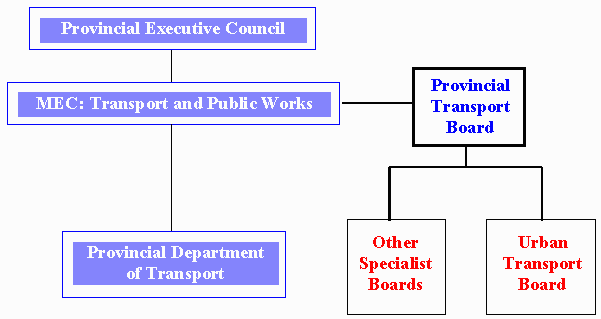
| COMMENTS RECEIVED ON THE GREEN PAPER |
| Alberts,
J
Association of the Physically Disabled: Western Cape BKS Incorporated Boland Voertruig Toetssentrum City Planner's Department, Cape Town Clanwilliam Transitional Council Coopers & Lybrand DEAFSA De Villiers, E M, Pr.Eng Department of Housing, Local Government and Planning, PAWC Department of Transport, Pretoria Department. of Transport and Public Works,
Department. of Transport and Public Works,
Department. of Transport and Public Works, Corporate Services, Personnel Management Elim House ESKOM Finance & Corporate Services, Province of the
George Municipality Greathead, G J R, Pr.Eng Greyhound Coach Lines Group Five Roads / Savage & Lovemore Western Cape |
Hopefield
Municipality
Interprovincial Co-ordinating Traffic Committee Jeffares and Green Incorporated Kantey & Templar Landbou: Weskaap Minister of Agriculture, Planning and Tourism, Province of the Western Cape Ministry of Housing, Western Cape Minister of Local Government Munisipaliteit Moorreesburg Municipality of Mossel Bay Municipality of Paarl NAAMSA Office of the Minister of Education and Cultural Affairs:
Sedgefield Municipality South African Bureau of Standards South African Road Federation South Cape District Council Test and Drive Tour Operators Association Uhlmann Witthaus and Prins Western Cape Education Department Wynherd, P Wynland Distriksraad V3 Consulting Engineers |