ISS
ISS (Institute for Security Studies) is an independent African research organisation focused on security, governance, conflict prevention and development across the continent. Headquartered in Pretoria, South Africa, the institute operates regional offices in Addis Ababa, Dakar, Nairobi and other African cities, reflecting its pan-African mandate. The ISS conducts policy research, provides training and advisory services, and publishes analysis on issues ranging from transnational crime and terrorism to peacekeeping, migration and regional stability. Its work informs policymakers, governments, regional bodies such as the African Union, and international partners engaged in African security and development. The institute is structured around thematic programmes covering topics including conflict prevention, organised crime, peacebuilding and governance, with researchers and analysts drawn from across Africa and beyond. Key functions include field research, data collection, policy dialogue and capacity building for security and justice institutions. The ISS is funded by a mix of donor governments, foundations and multilateral organisations, maintaining editorial independence in its outputs. It recurs in coverage of African security issues due to its authoritative analysis of armed groups, border security, smuggling networks and regional conflict dynamics, particularly in the Sahel, West Africa and the Horn of Africa. The institute was established in 1991, initially focusing on South African security challenges before expanding its scope continent-wide in the post-apartheid era.
ISS Updates
Elections 2026: is Zambia’s democratic success story beginning to fray?
By: ISS, Institute for Security Studies 8th June 2026 There is a danger that voters see the August election outcome as shaped by legal manoeuvring rather than the ballot. Zambia is one of the few... →
Industrial-scale meth production poses new security risks for Nigeria
By: ISS, Institute for Security Studies 3rd June 2026 Southwestern Nigeria has largely been spared major security threats – now it faces a troubling convergence of drugs and terror. Nigeria’s National... →
Why military gains are not weakening the ADF in eastern DRC
By: ISS, Institute for Security Studies 1st June 2026 The ADF’s resilience stems from kidnapping economies, forced recruitment and governance failures that military operations cannot address alone.... →
Will the US-Nigeria targeting of ISWAP’s deputy weaken terrorism?
By: ISS, Institute for Security Studies 27th May 2026 International and local experience shows that targeted leader killings tend to have more symbolic than practical impact. The joint Nigerian-United... →
Guinea’s May elections end its transition – but will they bring stability?
By: ISS, Institute for Security Studies 26th May 2026 Although authorities adhered to the ECOWAS timeline, Guinea’s return to democracy is mired in controversy. On 31 May, 6.8-million citizens will... →
Dear Mr President: to succeed, SA needs an excellent social development minister
By: ISS, Institute for Security Studies 25th May 2026 The department can no longer be treated as peripheral – its new minister must have empathy and a deep knowledge of social welfare. Dear President... →
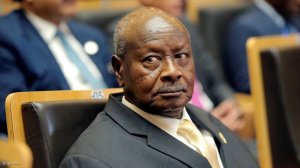
Uganda’s new foreign financing law further narrows the opposition’s chances
22nd May 2026 The law criminalising foreign political funding would only be justifiable if the country had a stronger democratic record. Uganda’s President... →
More instability for Somalia as another election deadline lapses
By: ISS, Institute for Security Studies 20th May 2026 Only a gradual consensus-based process can reconcile Somalia’s competing political systems and avert repeated election crises. When Somalia’s... →
Somali piracy returns: a warning from the Western Indian Ocean
By: ISS, Institute for Security Studies 18th May 2026 Joint naval patrols are stretched thin by the Middle East crisis, but their ability to eradicate piracy was always limited. Piracy has re-emerged... →
Ruto and Macron sing a duet in Nairobi
By: ISS, Institute for Security Studies 18th May 2026 Did France’s first Africa summit outside the Francophonie reset its relations with the continent? For two decades, Paris has seemingly been trying... →